Discover why customer loyalty is built through seamless experiences, not rewards programs or discounts that buyers quickly forget.
Looking for a Shorter Overview?
AI Summary
Key Moments
Rewards ≠ Loyalty
Coupons and points attract deal‑seekers but don’t build lasting trust.Friction Removal Powers Loyalty
Eliminating hassles makes switching costly, earning peaceful, loyal customers.Examples of Frictionless Design
Instant returns, clean media sites, and smooth checkout win trust and repeat visits.Strategic Shift Needed
Focus on solving pain points rather than bribing buyers for true loyalty.Walk into any boardroom, and you will hear executives obsessing over retention metrics. They launch massive reward programs, hand out digital coins, and force cashiers to aggressively ask for your phone number.
They call it a retention strategy.
But forcing consumers to collect a few coupons to get a free coffee isn’t building customer loyalty. Even when a consumer buys from a particular brand repeatedly, and they shift to a rival brand the moment it offers a flat 10% discount, they were never loyal.
They were just waiting for a better offer.
The Flawed Blueprint for Customer Loyalty
Most companies treat customer loyalty as an afterthought. It is usually a desperate, automated email sent thirty days after a purchase, begging you to come back with a promo code.
That is bribery. Not strategy.
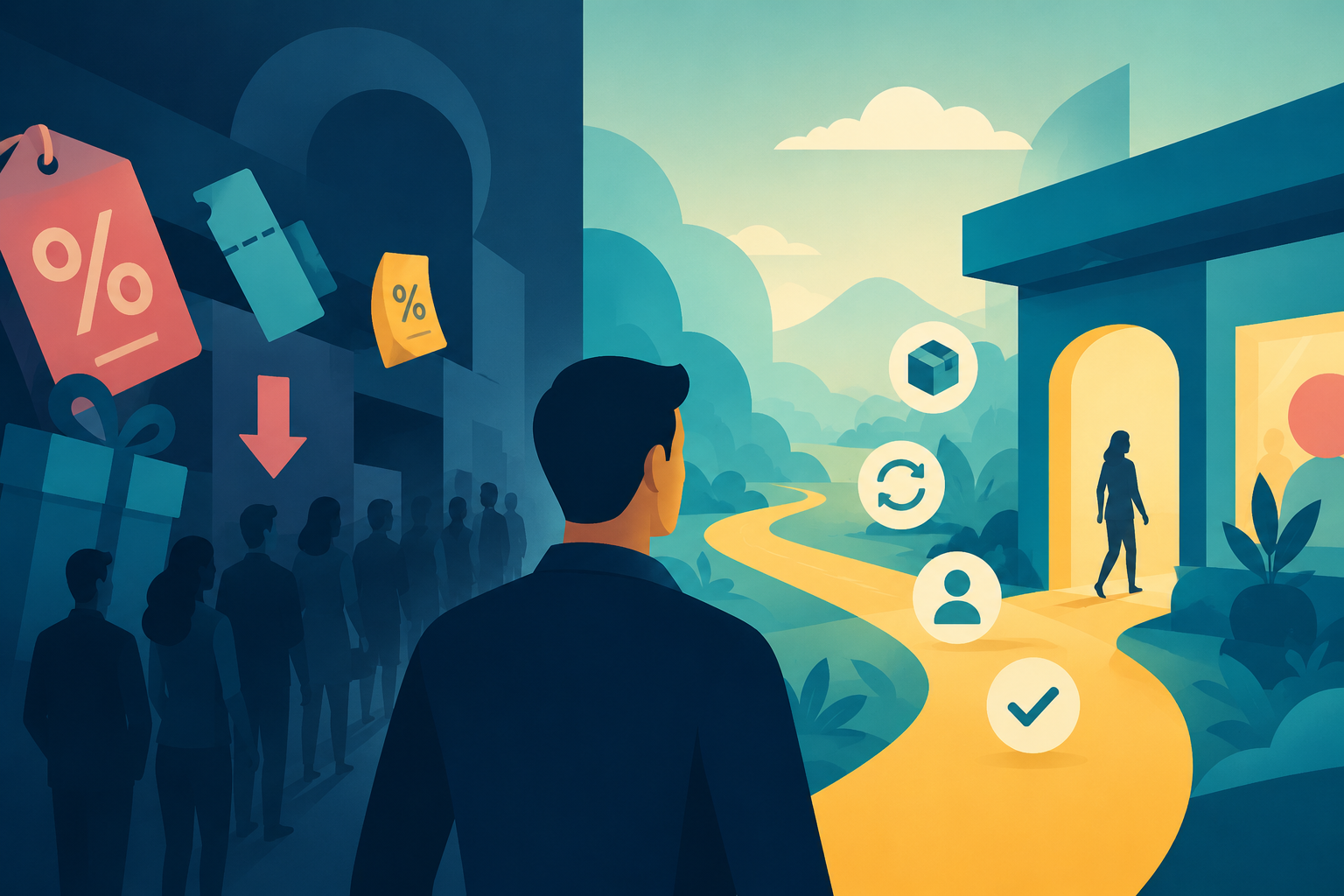
True customer loyalty has to be designed directly into the product experience from day one. It happens when a brand systematically eliminates friction so well that switching to a competitor feels like actual physical and psychological labor.
You don’t design for loyalty by adding things. You design for it by removing the headaches.
Look at how quick-commerce apps like Blinkit handle a damaged item.
If you receive a crushed box of eggs, you don’t have to draft a furious email or wait on hold with a customer service bot for twenty minutes. You tap two buttons on the app, upload a picture, and the money is back in your wallet before you even close the screen.
And the same goes with Myntra and Flipkart’s return and refund policy too. They don’t interrogate you. They don’t treat you like a potential scammer.
That instantaneous trust completely rewires a buyer’s brain. The next time you need groceries or a product, you don’t even check a competitor’s app to see who has a cheaper price tag or a lower delivery fee. You go straight to the brand that doesn’t waste your time.
The Lesson From the Media Industry
I spent a lot of time writing in the sports journalism space, and you see this same dynamic play out with readers.
Sports fans are naturally passionate, but they owe zero allegiance to any specific website. If they want the latest F1 qualifying times or a post-match breakdown, they have a hundred options.
The sites that win don’t rely on aggressive pop-up forms begging for email signups. They win through frictionless design.
They don’t force you to click through a six-page slideshow to read one interview quote. They put the most important information right at the top. They don’t block the screen with auto-playing video ads that you can’t mute.
They respect the reader’s time. And in return, the reader stops using Google to search for news and starts typing the publication’s URL directly into their browser.
That is the ultimate metric of success.
Stop Bribing Your Buyers
Marketing teams waste millions of rupees every year trying to win back angry customers with apology discounts.
Imagine if they had just spent that money fixing the broken return policy that made the customer angry in the first place.
Stop asking your team to launch another tiered rewards program. Instead, sit down with your product designers, find the single most annoying part of your customer journey, and completely eliminate it.
Loyalty isn’t bought with points. It is earned with peace of mind.
– Written by Rajnish Singh, a copywriter and strategist with a background in fast-paced journalism, who explores the gap between what brands promise and how consumers actually behave.