Too many choices kill sales. See how decision simplicity cures analysis paralysis and turns shopping carts into completed orders.
Looking for a Shorter Overview?
AI Summary
Key Moments
Too Many Choices Cause Analysis Paralysis
When customers face too many options, they become overwhelmed and abandon purchasesJam Study Proves Decision Simplicity
Research showed sales jumped when limiting jam options from 24 to 6Simplified Checkout Boosts Conversions
Guest checkout and one-click payments dramatically increase completion ratesClear Communication Builds Trust
Plain language and transparent policies remove purchase hesitationMost buyers abandon their online shopping carts not because the product is bad, but because buying it sometimes takes too much mental effort.
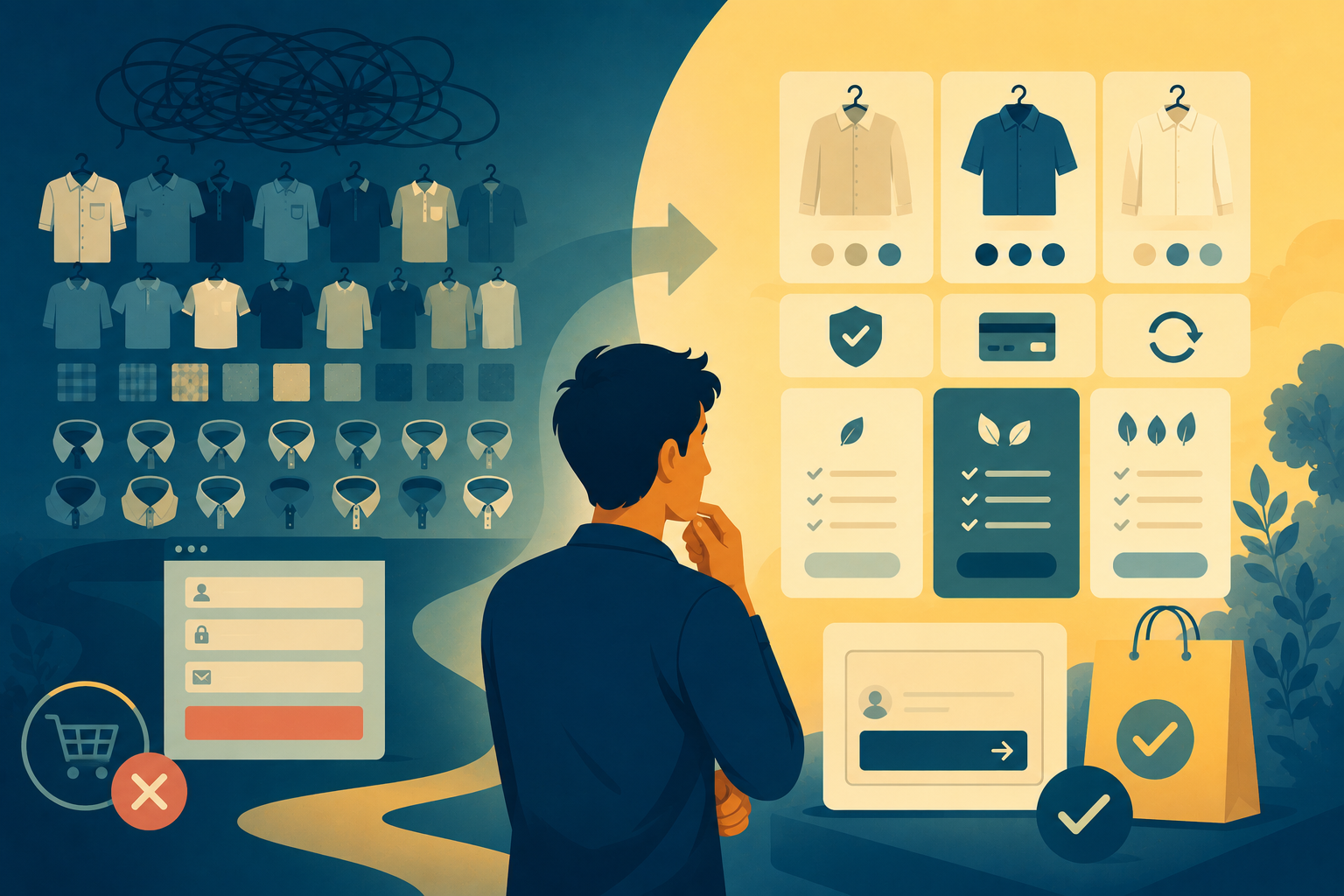
For example, a person decides to buy a plain white cotton shirt. After opening a popular clothing website, the screen suddenly displays forty different fits, fabric blends, and collar styles. The buyer only wanted a basic shirt, but now he feels completely overwhelmed and closes the app.
Smart retail brands recognise this modern problem and fix it using decision simplicity. By clearing away the clutter, decision simplicity makes it incredibly easy for a buyer to go from wanting an item to actually paying for it.
Why Decision Simplicity Wins Every Time
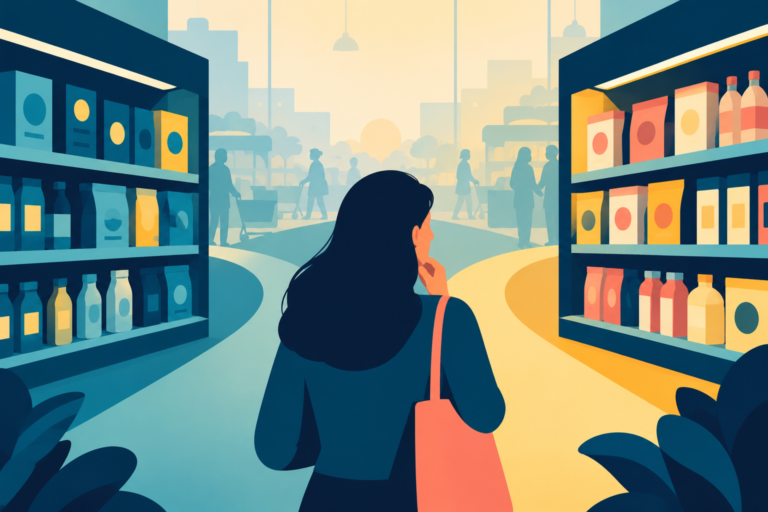
It may seem like a very appealing business idea for a brand to offer endless variety to buyers, but human psychology disagrees. In 2000, psychologists Sheena Iyengar and Mark Lepper proved this with a famous “jam study” experiment at Draeger’s Market in California. They set up a tasting table displaying twenty-four different types of fruit jam.
A huge crowd gathered to look, but almost nobody actually bought a single jar. Why? When a person’s brain faces too many choices, it feels completely overwhelmed. Instead of feeling happy about having so many choices, shoppers suffer from analysis paralysis. This means the mental effort required to compare twenty-four distinct items becomes so exhausting that buyers simply delay or ignore the choice entirely.
This ‘too much’ variety also triggers a strong fear of regret. More choices naturally heighten the fear of making a wrong decision. If a buyer picks one flavour out of six, that person only rejects five others. But picking one jar out of twenty-four means leaving behind twenty-three potentially better options.
However, when the researchers cut the display down to just six jams, actual sales jumped instantly. Giving buyers fewer choices creates powerful decision simplicity. It allows a shopper to evaluate the items quickly and pick a favourite without stressing about making a mistake.
This exact principle rules the digital checkout process today. A customer finds a great pair of running shoes and clicks the buy button. Immediately, a pop-up demands a new account creation, an email verification link, and a complex password. These annoying hurdles kill the buying momentum instantly.
To stop buyers from abandoning the order in the final stage of payment, modern e-commerce sites rely on decision simplicity. They add a quick guest checkout button and support one-click payment methods. By asking for less physical typing, decision simplicity dramatically increases the number of people who actually complete their orders.
Software and service plans also need this straightforward approach. Years ago, buying a digital tool was a very tiring process. Buyers had to carefully search for hidden fees or strict usage limits. They had to spend an hour trying to calculate the final monthly bill. Today, successful platforms solve this problem by offering very clear pricing tiers.
This smart application of decision simplicity completely removes financial confusion. A customer can look at a clean chart, understand the exact value of each category, and choose a plan in under a minute without needing a calculator.
Fear of making a mistake is another major barrier for consumers. If someone orders an expensive winter jacket online, it is only natural to feel anxious about the fit or fabric quality. If the website does not explain the return policy clearly and hides it deep in the terms and conditions, the shopper will simply leave the store.
However, displaying a bold, ‘no-questions-asked’ return policy banner builds immediate trust. That clear guarantee offers genuine decision simplicity. The buyer knows that returning an item will not create a major headache, which safely removes all the financial risk from the transaction.
Clear communication is another crucial factor in making decisions easier. Buyers hate reading long instruction manuals or complex technical paragraphs before buying a new gadget. If a company explains its core features in plain, everyday English, shoppers trust the brand much faster.
A confused mind almost always says no to a sale. When a business clearly explains what an item does and exactly how much it costs, people feel safe handing over their hard-earned money.
Businesses do not need pushy sales tactics to win over a modern crowd. It just needs to clear the path. The most successful businesses today are the ones that do not complicate the buying process.
Also read: How CRED Built Exclusivity Without Luxury
When a brand masters decision simplicity, it stops losing exhausted customers to rival websites. A buyer will naturally keep coming back to a store that makes spending money feel incredibly easy and completely stress-free.
Loved this article? Read more insightful articles on Brand Custodian.
–Written by Rajnish Singh, a copywriter and strategist with a background in fast-paced journalism, who explores the gap between what brands promise and how consumers actually behave.