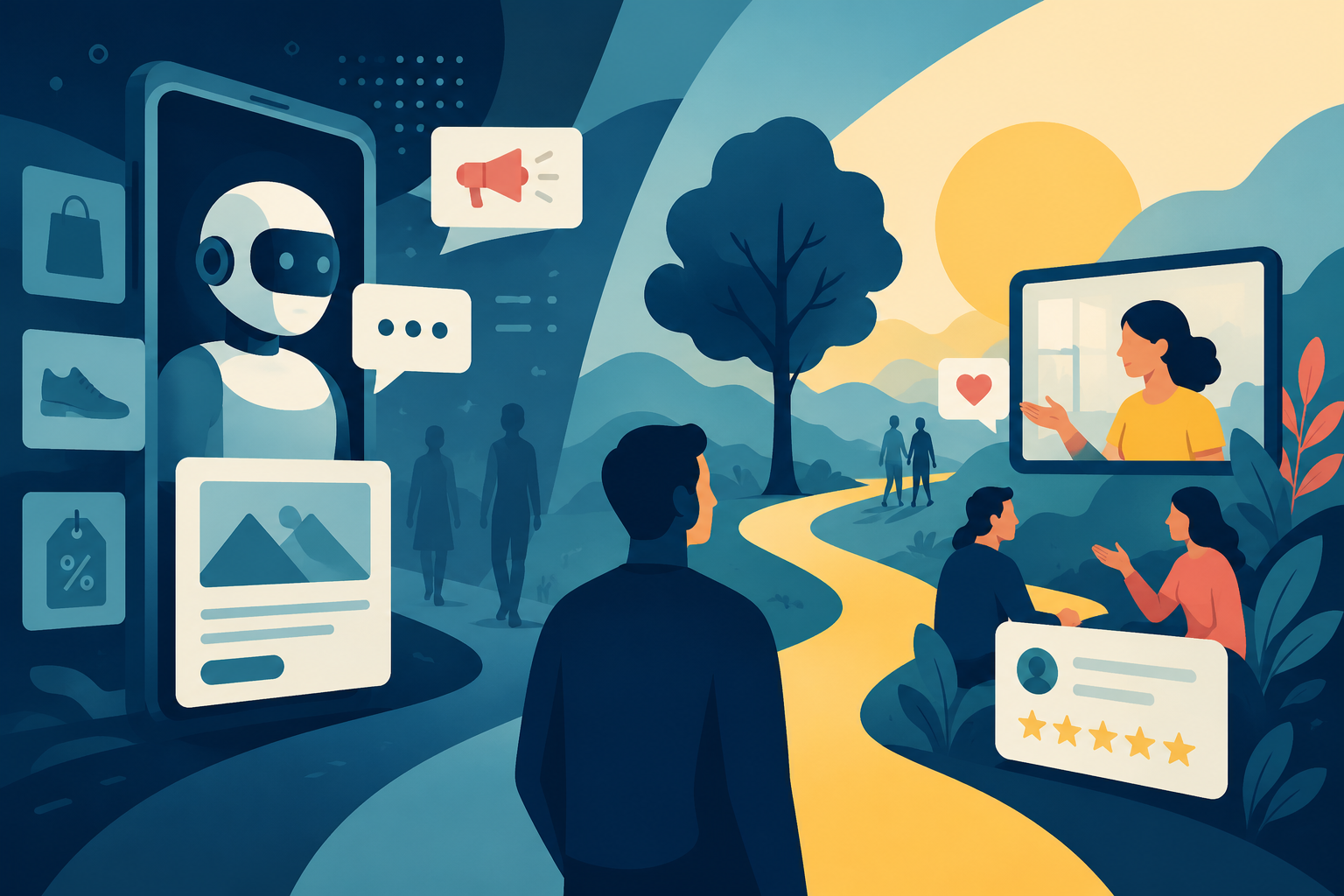
How AI is reshaping consumer behaviour as trust, authenticity, and genuine human experiences become the biggest drivers of purchase.
Looking for a Shorter Overview?
AI Summary
Key Moments
Trust deficit in digital shopping
Perfect AI-generated content triggers consumer skepticism and alarmSearch behavior shift
Users bypass sponsored results for authentic Reddit discussions and reviewsAuthenticity as competitive advantage
Brands win through genuine human connection rather than automated perfectionTechnology's true role
AI should solve logistics and service issues, not replace human interactionCorporate marketing departments have spent the last few years building the perfect automated sales trap. Executives have invested billions into algorithms designed to predict exactly what a shopper wants to buy before that person even clicks a button.
The underlying math is flawless. Yet when the targeted ad finally appears on a screen, the modern buyer simply refuses to click it.
Technology has evolved at an incredible pace, but the core drivers of consumer behaviour have made buyers more defensive than ever. The sheer volume of synthetic, machine-generated content has broken the internet’s trust system, and marketing teams are only now beginning to understand the consequences.
The Trust Deficit Shapes Modern Consumer Behaviour
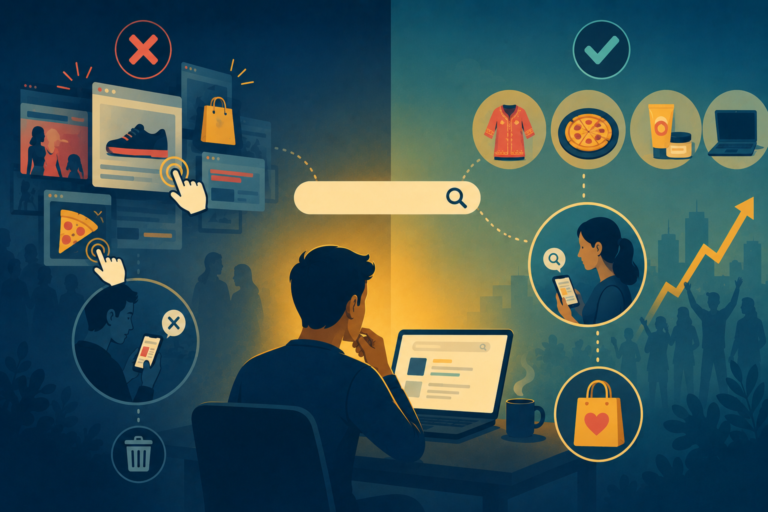
Log in to any major e-commerce website today. A chatbot instantly pops up in the corner, offering assistance. Product images look almost too perfect, and the descriptions are written in flawless grammar. But this synthetic perfection actually triggers alarm bells in the buyer’s mind.
When a buyer sees a flawless lifestyle image of a new smartwatch on Instagram, the first question is whether the image is real or AI-generated. The baseline of modern shopping is now scepticism. Customers increasingly assume a brand is exaggerating or misleading them until proven otherwise.
Look at how people search for information today. If a professional wants to buy a new office chair, they don’t simply type the query into Google and click the first sponsored result.
Instead, they type the same query and add the word “Reddit” at the end. Why? Because they want to read an honest, unfiltered opinion from a real person whose back genuinely hurts. People actively bypass AI-optimised corporate websites in favour of messy forum posts written by complete strangers.
This behavioural shift became so significant that it forced the technology industry to respond. Google noticed millions of users bypassing carefully curated search results to find authentic discussions instead.
In response, the company updated its search experience to prominently feature a “Discussions and Forums” section, while also signing a $60 million annual agreement to access Reddit’s data in real time. That corporate pivot demonstrates one simple fact: human authenticity has become one of the internet’s most valuable commodities.
This shift in consumer behaviour is rewriting the rules of selling. Brands continue to pour money into software that generates personalised emails. Companies believe that inserting a customer’s first name into a subject line creates a relationship. Buyers, however, see straight through it.
They know the same automated message was sent to thousands of other people at exactly the same moment. A software script cannot replicate a genuine human connection.
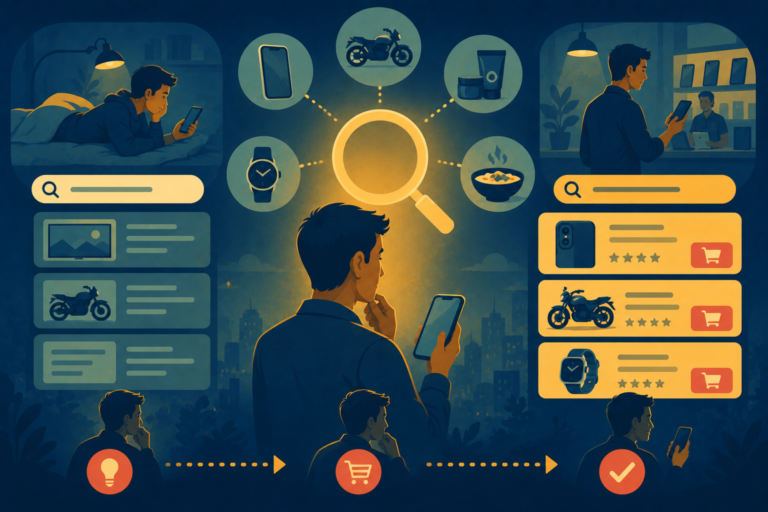
Consider how a college student in India buys a mid-range smartphone. Algorithms analyse the student’s browsing history and deliver highly targeted advertisements for a particular model. The technology company assumes this data-driven approach will influence the purchase.
It rarely does.
Before spending twenty thousand rupees, the student ignores the polished advertisements and opens YouTube instead. They deliberately search for videos with relatively low view counts in the hope of finding honest, unsponsored reviews from ordinary users.
Also read: Why AI Search Rewards Stronger Brands
The same pattern appears in customer service. When a Zomato or Swiggy order goes wrong, a hungry customer doesn’t want to interact with a chatbot delivering pre-programmed empathy. That often makes the frustration even worse.
The brands succeeding in this environment use technology to connect customers with a real person as quickly as possible rather than using automation as a barrier between the business and the buyer.
The contrast across the market is striking. Large corporations often use automation to appear flawless, while smart local businesses use authenticity to appear trustworthy.
A D2C food brand selling organic spices doesn’t necessarily win because it launches a perfectly optimised advertising campaign. It wins when the founder records a simple behind-the-scenes video using a smartphone, showing the actual manufacturing unit. Footage of the real factory floor, complete with background noise and imperfect packaging, creates immediate credibility.
The fundamental paradox of the AI era is simple: the more artificial and automated the internet becomes, the more consumers crave reality.
If marketing teams want to adapt to this new era of consumer behaviour, they need to stop hiding behind automated chat windows and stop using technology to imitate human connection.
Instead, use technology where it truly matters: fixing broken logistics, speeding up deliveries, resolving customer complaints faster, and improving the overall experience.
Because no matter how sophisticated an algorithm becomes, a buyer’s wallet only opens for the truth.
– Written by Rajnish Singh, a copywriter and strategist with a background in fast-paced journalism, who explores the gap between what brands promise and how consumers actually behave.