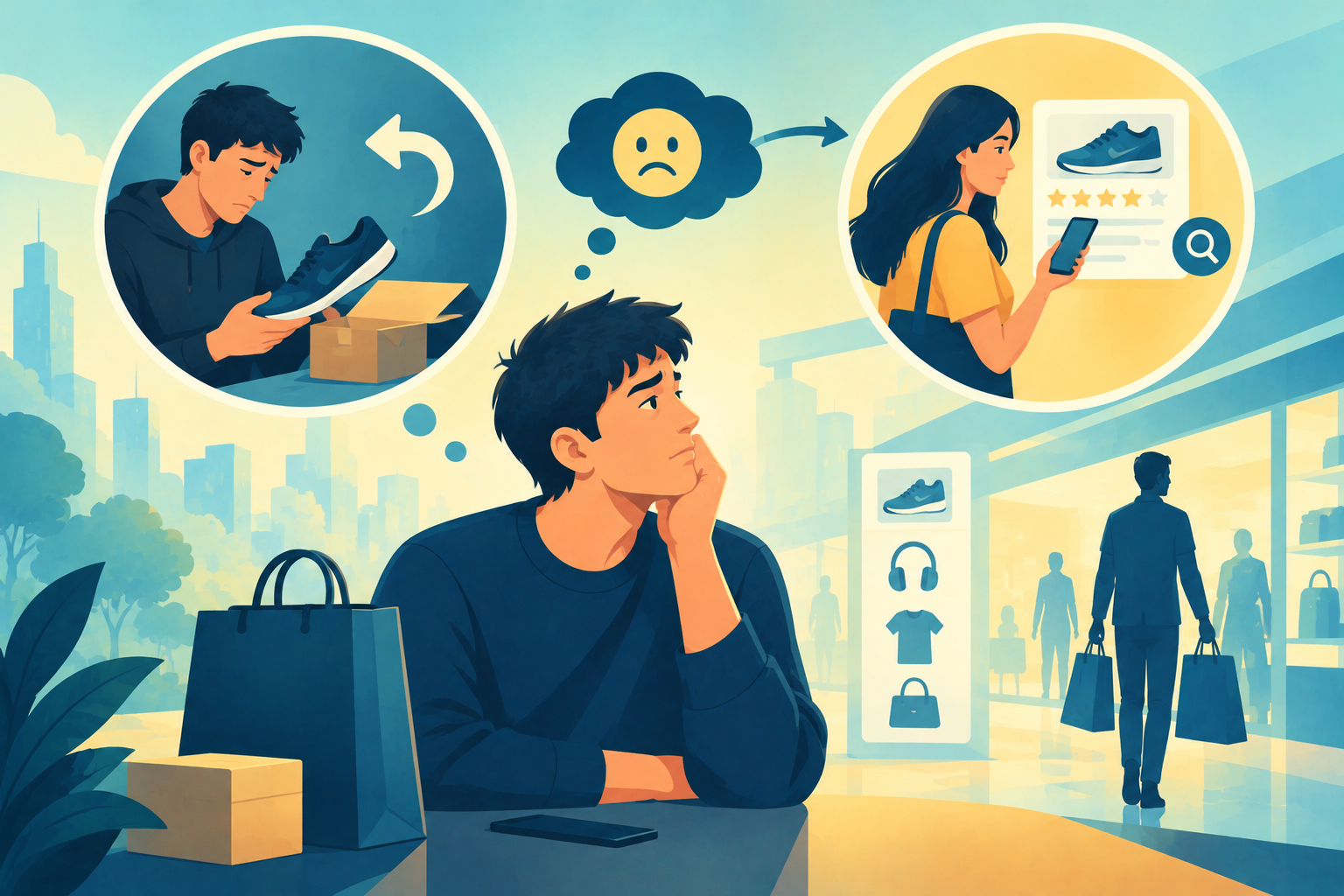
Ignoring buyer remorse is dangerous. See how mastering consumer regret turns ordinary sales into an unstoppable success
Looking for a Shorter Overview?
AI Summary
Key Moments
Consumer Regret Drives Future Buying Decisions
Negative shopping experiences cause up to 32% of customers to abandon a trusted brand after a single bad purchase.Costly Returns Fuel Regret
Retailers lose over $700 billion annually due to returns, pushing businesses to prioritize product quality and clear policies.Easy Returns Build Loyalty
96% of shoppers say they would purchase again if the return process were simple and transparent.Quick Service Repairs Damage
Resolving complaints promptly can reverse negative feelings and boost future spending, while delays spread regret through word-of-mouth.A shopper may buy an expensive television, bring it home, and quickly realize they are unhappy with the purchase. This feeling is known as Consumer Regret.
Research published in the Journal of Consumer Research suggests that negative shopping experiences can influence people’s future decisions. Consumer Regret may affect what customers choose to buy next and which businesses they trust. By understanding how this emotion shapes shopping behavior, managers can take steps to reduce it and protect future sales.
How Brands Stop Consumer Regret on Physical Returns
Customers often return products that fail to meet their expectations. For example, someone who buys a poorly stitched shirt may feel disappointed and ask for a refund. This Consumer Regret can create immediate costs for retailers.
The National Retail Federation reports that retailers process more than $700 billion in merchandise returns each year. Refunds can erase the original profit, while return shipping adds further expense. To reduce these losses, businesses should focus on making high-quality products that meet customers’ expectations from the start.
Customers are unlikely to keep buying from a company after receiving a faulty product. A driver whose car keeps breaking down may experience strong Consumer Regret and lose trust in the brand.
Research from PwC suggests that 32% of customers stop buying from a company they previously trusted after just one bad experience. The driver may choose another dealership next time, costing the original company future sales while a competitor gains the business. To prevent this, managers should respond quickly and resolve product problems effectively.
A disappointing purchase can change how people shop in the future. After spending $500 on a camera that performs poorly, a customer may feel strong Consumer Regret and take more time to research their next purchase.
Research from Northwestern University suggests that 95% of shoppers read online reviews before buying expensive products. Many customers place more trust in other buyers’ experiences than in advertising alone. Retailers should make honest customer reviews easy to find, helping shoppers make informed decisions and build confidence in their purchases.
Customers who have had a disappointing purchase may feel hesitant about buying again, especially when shopping for clothes online. Retailers can help ease this Consumer Regret by offering simple, clear return policies.
Research from logistics company Narvar suggests that 96% of shoppers would buy again if the return process were easy. As we discussed in our previous article about the Halo Effect, building trust is essential. By clearly explaining return instructions on their websites, store owners can help customers feel more confident about purchasing new products.
A disappointing purchase can make customers hesitate before buying again. For example, someone who buys an uncomfortable wooden chair may feel strong Consumer Regret and avoid purchasing furniture from that store in the future.
Broader customer experience industry data, such as studies tracking the cost of poor customer service, shows that 47% to 51% of consumers reduce or stop spending with a brand after a negative interaction. To help shoppers feel more confident, furniture stores can offer trial periods that let customers test items at home. This gives buyers a safer way to decide and can help businesses retain customers.
Customer service teams can help repair a poor customer experience. Research published by the Harvard Business Review suggests that resolving problems quickly can ease customers’ negative feelings and encourage them to spend more in the future.
By hiring and training responsive support staff, retailers can address complaints promptly, retain customers, and protect future sales. An unhappy customer may also tell several friends about a poor-quality product, spreading Consumer Regret and discouraging others from buying.
Also read: Why Does Portfolio Strategy Matter When One Company Owns Many Brands?
Retailers can reduce this risk by thoroughly testing products and addressing quality issues before they reach customers. When products meet expectations, customers are more likely to feel satisfied, return to the business, and support long-term growth. “
Loved this article? Read more insightful articles on Brand Custodian.
–Written by Rajnish Kumar, a copywriter and strategist with a background in fast-paced journalism, who explores the gap between what brands promise and how consumers actually behave.