An ordinary bike gathers dust, but a community product builds loyalty. See how Peloton mastered digital fitness communities.
Looking for a Shorter Overview?
AI Summary
Key Moments
Live Interaction Creates Community
Adding a large display with live classes turned solitary bikes into a social hub where riders train together.Leaderboard Drives Motivation
Real‑time leaderboards and digital high‑fives create competitive pressure, making workouts feel like a shared event.Subscription Revenue Surge During Lockdowns
2020 pandemic demand pushed Peloton to over $1 billion in one year as people bought bikes for connection.Physical Studio Visits Confirm Loyalty
Millions travel to Peloton studios to meet instructors, proving deep emotional attachment beyond the screen.The power of a community product became clear in 2012. A normal exercise bike usually sits idle in the garage, where people simply forget about it. John Foley hated this boring form of exercise. In 2012, he built a company called Peloton by attaching a large display to a stationary bicycle. He wanted to give lonely riders live studio energy, with the screen streaming live classes filmed at Peloton’s studios.
Instructors look straight into the camera, speak to home riders, and give live shoutouts to users celebrating milestones (like their 100th ride), making the rider feel like they are standing in the exact same room.
This simple physical change turned a basic machine into a true community product. A buyer does not just pay for the cycle; he also pays a monthly fee to exercise alongside thousands of other real people on the screen. Today, millions of riders wake up early just to work out with their digital friends.
Why a Community Product Beats a Traditional Home Gym
Before this brand existed, a person had to drive to a local gym just to take a group cycling class. Peloton fixed this physical problem completely. A mother wakes up at six in the morning and walks into her living room. She sits on the bike and taps the glass screen.
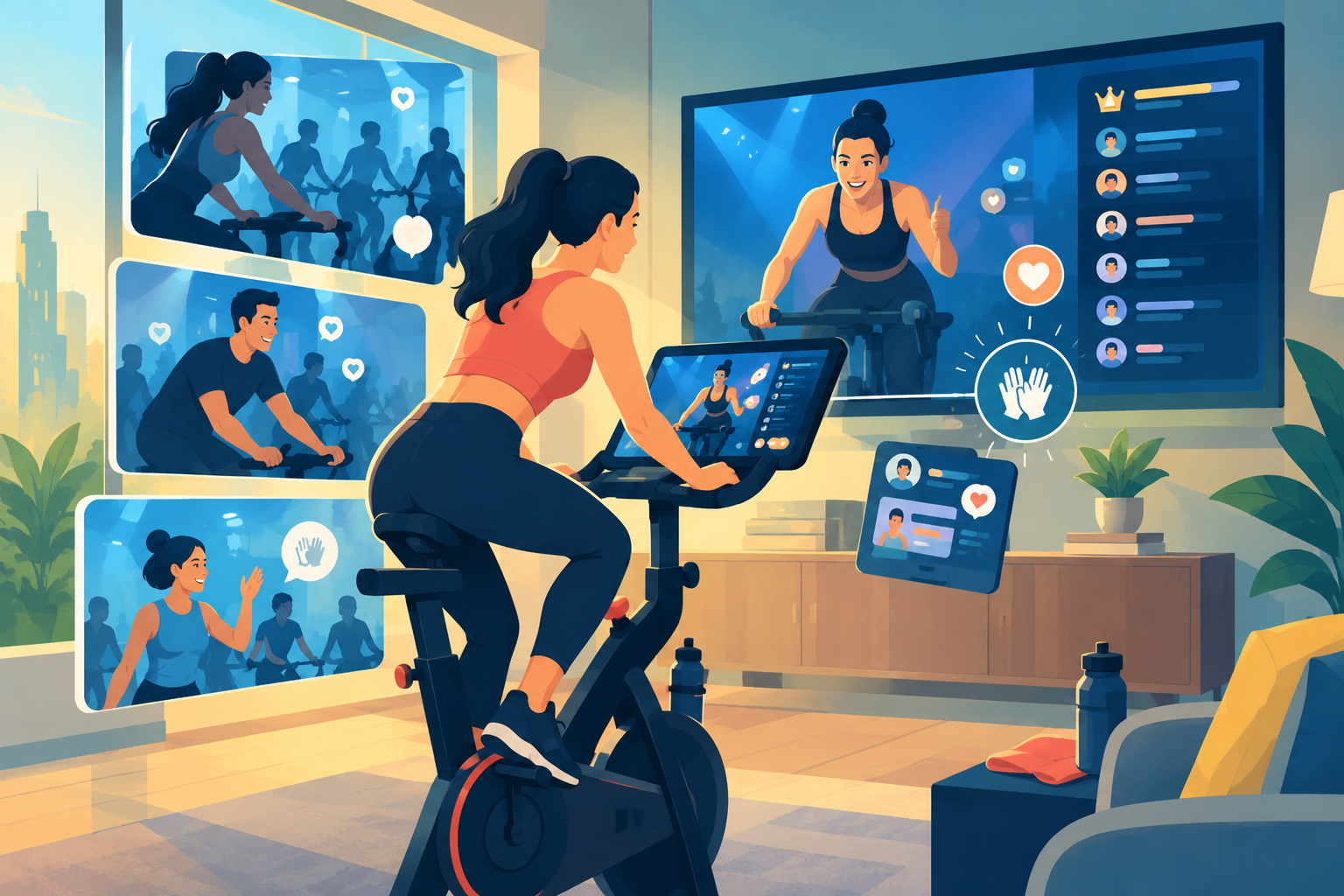
Instantly, she sees a live video of a fitness instructor shouting from a Peloton studio. The screen also shows a long list of names and numbers on the right side. This live leaderboard is the core of a Community Product. The mother sees that thousands of other regular people are pedalling hard at that exact same second.
A regular piece of gym equipment gets boring very quickly. Peloton addressed this by adding simple physical buttons to the screen. While pedalling, a rider can tap a button to send a digital high-five to a stranger on the list. The stranger instantly receives the notification and taps back.
This brief physical interaction shows exactly what makes a community product so powerful. The rider pedals faster because he knows a real person in another city is watching his score rise. He refuses to quit the workout because he feels like he’s in a live competition.
The company hires fitness instructors who speak directly to the riders. A teacher looks straight into the camera lens and reads the actual names of people riding at home. A rider hears the teacher say his name because he reached his one-hundredth ride that day.
A good community product works because the buyer receives this direct human attention. The rider feels proud, so he pays his monthly subscription bill without complaining. He buys the subscription to join the group, not just to use the bike.
During the 2020 lockdowns, physical gyms were closed everywhere. People bought these expensive bikes just to feel close to other people. That year alone, the company made over one billion dollars in revenue. That massive cash jump happened specifically because the company positioned itself as a community product.
Buyers were willing to spend more than two thousand dollars on a single machine just to join the digital group. During 2020 and early 2021, demand was so high that Peloton had months-long waitlists. Believing this growth would be permanent, the company built too many bikes, and sales dropped quickly once regular gyms reopened.
Even after those major financial drops, millions of loyal riders still pay the monthly fee today. Some riders even fly to New York just to take a live class in the physical studio and meet their favourite teachers.
This real, physical travel shows exactly how a Community Product works. A normal person does not buy aeroplane tickets to visit a factory that makes rubber treadmill belts. People travel to meet the actual humans they trained with every morning.
Other fitness companies try to copy this exact setup by attaching cheap screens to their own machines. But buyers ignore those copycats because the digital rooms feel completely empty. A successful community product needs thousands of active daily users to make the live screen look busy and full.
Also read: Discord: How Community-First Growth Created a New Social Platform
A small startup built a massive global business simply by adding a live video screen to a stationary bicycle. A strong community product works because it gives a lonely person a room full of digital friends to train with every day.
Loved this article? Read more insightful articles on Brand Custodian.
–Written by Rajnish Singh, a copywriter and strategist with a background in fast-paced journalism, who explores the gap between what brands promise and how consumers actually behave.