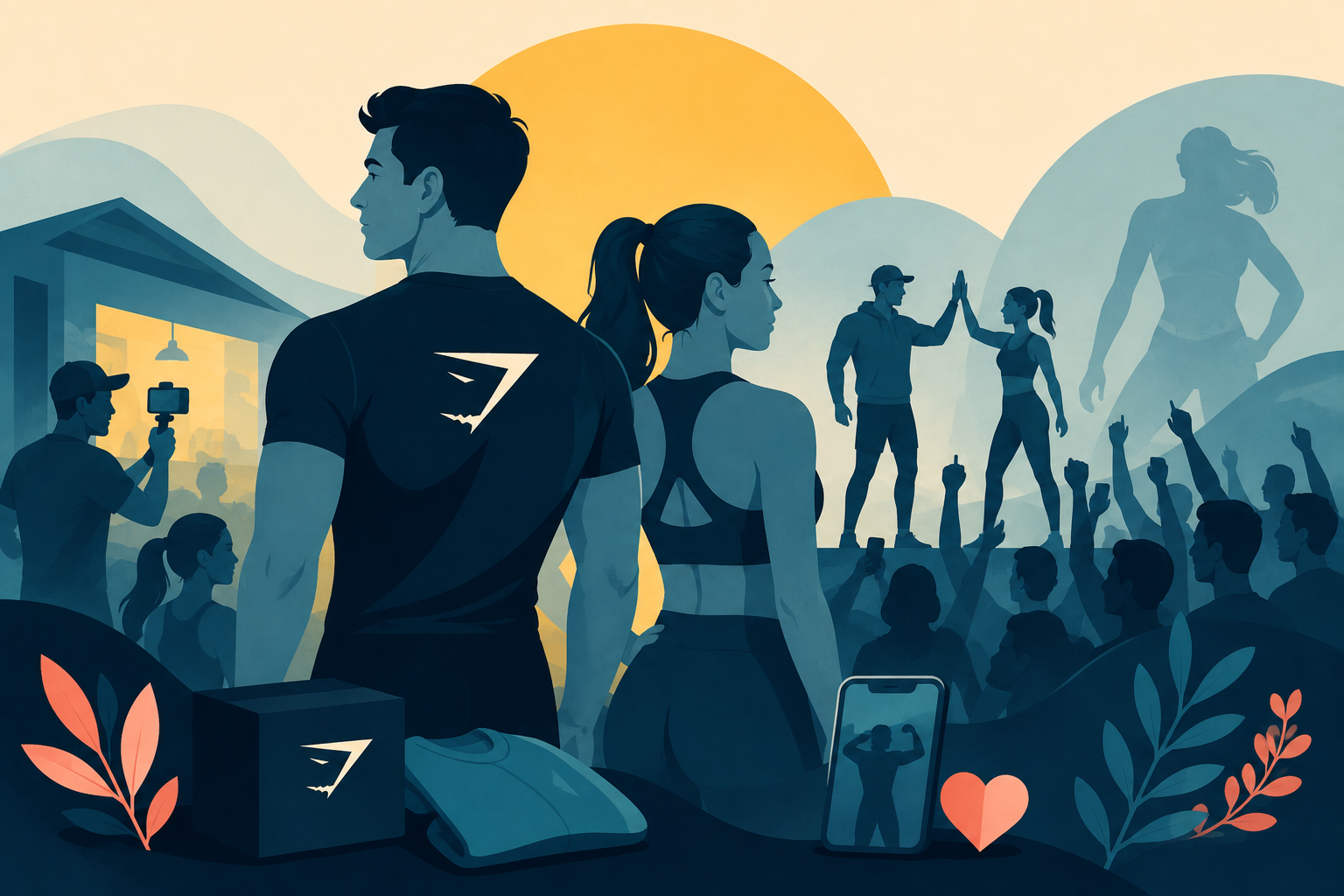
Discover how Gymshark branding turned a tiny garage project into a billion-dollar fitness empire through community building.
Looking for a Shorter Overview?
AI Summary
Key Moments
Authentic Creator Partnerships
Gymshark sent free gear to fitness creators without scripts, building genuine credibility in the fitness community.Direct-to-Consumer Revolution
Eliminating middlemen gave Gymshark control over pricing, customer feedback, and rapid collection releases.Community-Focused Pop-Up Events
High-energy fitness festivals connected online athletes with fans, creating exclusive club membership experiences.Financial Success Through Loyalty
Community loyalty translated to billion-pound valuation when General Atlantic acquired a 21% stake in 2020.In 2012, the fitness apparel market was completely split in two. You either bought baggy, old-school bodybuilding rags that looked terrible, or you paid a fortune for generic athletic sportswear from massive retail giants. A nineteen-year-old pizza delivery driver named Ben Francis saw that massive gap.
By rejecting traditional advertising agencies, Gymshark branding turned a tiny garage project into a billion-dollar global powerhouse. Francis started screen-printing his own fitted gym shirts in a small garage in the United Kingdom.
What followed was a masterclass in modern retail.
Gymshark Branding Ignored Traditional Marketing
Back then, legacy sportswear brands spent millions of dollars on television commercials featuring Olympic gold medallists and superstar footballers. Those campaigns looked impressive, but they felt completely out of reach for a regular person trying to get in shape at a local gym.
Gymshark took a completely different path. Instead of chasing unreachable celebrities, the founders looked at YouTube. They noticed a small group of passionate fitness creators uploading daily workout logs and nutrition tips. Management sent free boxes of fitted clothing to those creators without giving them any scripts or promotional lines to speak for their brand.
When those fitness creators wore the gear on camera, viewers did not feel like they were watching a paid advertisement. They saw trusted gym partners wearing clothes that actually looked great during a heavy workout. The brand did not just buy attention. It earned genuine credibility inside the weight room.
Unlike legacy brands that let go of athletes the moment their contracts expired, Gymshark treated its creators like real partners. When the company grew, those early creators grew with it. This long-term loyalty meant fans watched their favourite lifters go from small shows to world stages, with the brand supporting them every single day.
Many e-commerce startups make the mistake of hiding entirely behind digital screens. Once a brand starts making money online, founders often treat customers like simple data on a spreadsheet. Gymshark realised early on that real consumer loyalty requires physical human connection.
Also read: https://brandcustodian.in/rare-beauty-authentic-branding/
Instead of opening permanent, expensive retail stores that sit empty on weekdays, the company launched massive pop-up events in major cities around the world. These events were not typical sales floors. They felt like high-energy fitness festivals.
Thousands of young lifters waited in line for hours just to shake hands with their favourite online athletes and train together under one roof. When a buyer met a sponsored athlete in real life, that customer was no longer just buying a pair of shorts. That shopper was buying a membership into an exclusive global club.
That community-first mindset also dictated how the company sold its inventory. For years, retail giants relied on third-party department stores to push their products. That meant brands lost control over pricing, customer service, and the physical unboxing experience.
Gymshark sold directly to consumers through its own website. By eliminating retail middlemen, the company kept prices fair for young gym-goers while keeping profit margins healthy. More importantly, it allowed the company to get feedback from shoppers directly and release new collections in weeks rather than months.
The physical product itself reinforced that loyalty. When lifters put on contouring leggings or tapered shirts, the clothes highlighted their hard work. The fit made customers look good in gym mirrors, which naturally motivated them to post their own photos online. Every single buyer became an unpaid brand ambassador.
That intense community loyalty translated directly into massive financial leverage. By 2020, the business had grown so fast that private equity firm General Atlantic bought a 21% stake. That single deal valued the company at over one billion pounds. It was the first major outside cash injection after years of strict bootstrapping.
But instead of handing over corporate control, Francis remained the majority owner. He kept dictating the exact direction of the brand. Revenue kept rising into the hundreds of millions as the business expanded globally, all while staying true to its initial online roots.
Modern business leaders cannot buy a loyal community with a massive advertising budget. True brand equity happens when you stop convincing consumers from billboards and start standing next to them on the floor. Build a business that genuinely understands the lifestyle of your buyer, and your customers will happily do your marketing for you.
—Written by Rajnish Singh, a copywriter and strategist with a background in fast-paced journalism, who explores the gap between what brands promise and how consumers actually behave.