Hidden freezers hurt trust. See how Chipotle mastered ingredient transparency to win loyal customers and drive massive sales.
Looking for a Shorter Overview?
AI Summary
Key Moments
Open Kitchen Experience
Customers see fresh ingredients prepared live, building trust through visible cooking.Lean Ingredient List
Chipotle uses only 53 simple ingredients, avoiding hidden chemicals and long additives lists.Transparent Crisis Handling
The 2015 contamination was openly addressed, with stores closed and staff retrained to restore credibility.Revenue Growth
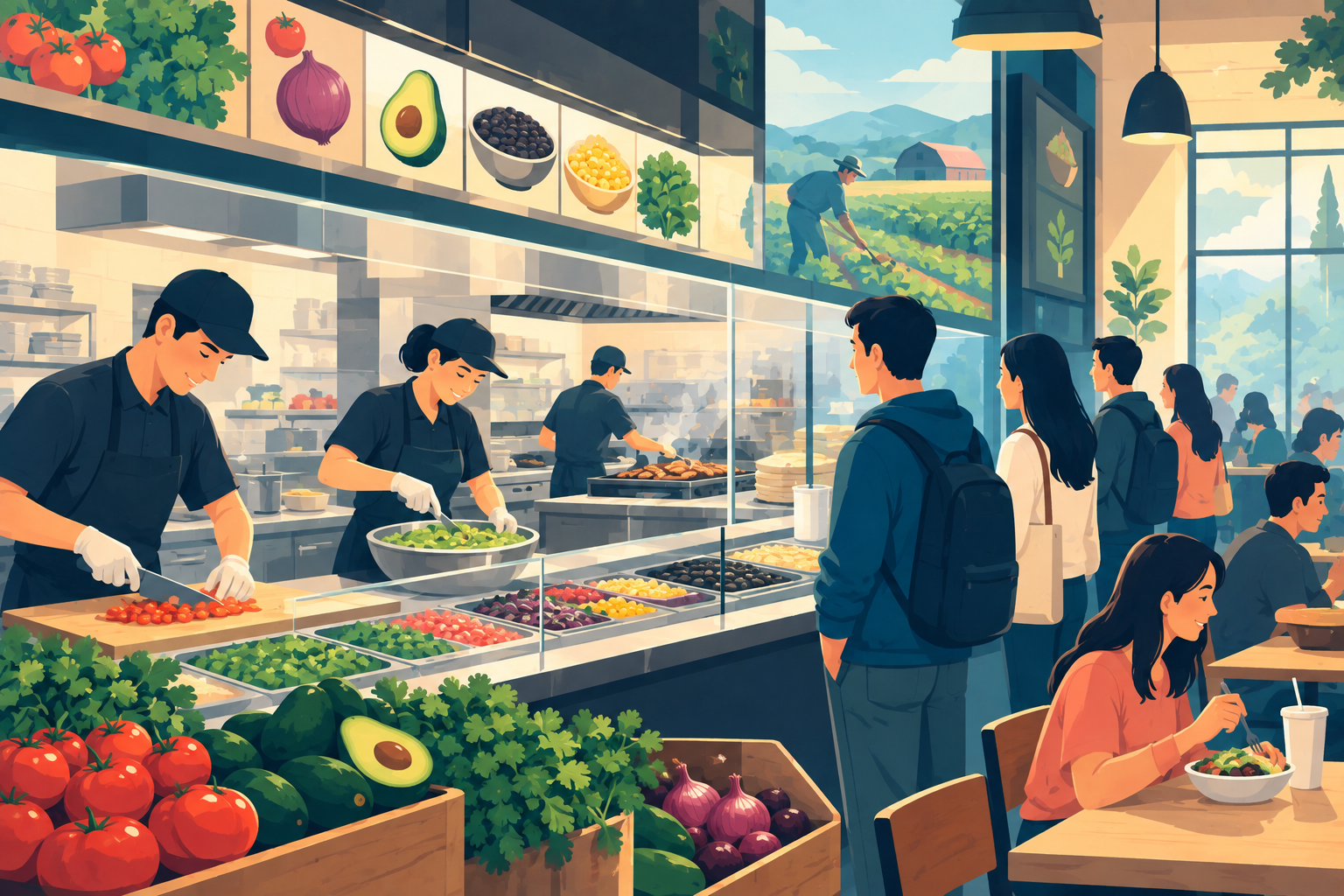
The transparency strategy drove $11.9 B cash revenue and strong profit margins despite higher costs.Most fast-food restaurants hide their kitchens in the back, where customers usually never go. But Chipotle built a huge business by cooking in the open. In 1993, a chef named Steve Ells opened a simple burrito shop and had his cooks chop fresh vegetables right in front of customers.
This physical setup is called ‘ingredient transparency’, and it has completely changed the food business. Customers trust a meal much more when they can actually watch a worker slice raw tomatoes on a wooden board. Today, millions of hungry buyers stand in long lines just to see exactly what goes into their food.
How Ingredient Transparency Replaced Hidden Freezers
Before this restaurant became famous, fast food places relied on huge freezers and microwave ovens to heat up frozen blocks of meat. Chipotle completely removed the freezers and the microwaves. When a hungry office worker walks into the shop, he sees a man grilling real chicken on a hot iron stove.
Another worker mashes fresh green avocados in a giant bowl. This open room shows exactly how ingredient transparency works. The company refuses to hide the cooking process, and this clear view makes the buyer feel safe about eating the meal.
Big burger companies often use heavy chemical preservatives to keep their buns soft for months, and most people can’t even read the long scientific words on the backs of those wrappers. Chipotle avoids those chemicals and uses only fifty-three raw ingredients to make its entire menu.
Buyers can read the full list, which includes only simple ingredients like black beans, garlic, and lime juice. This short list offers complete ingredient transparency. A mother feels much better buying a burrito for her child because she knows exactly what is inside the warm tortilla.
The company also buys a lot of meat and vegetables from local farms instead of large factory operations. The founder called this strict rule “Food with Integrity”, which requires the company to buy meat from farmers who let their animals roam outside.
Finding fresh local vegetables and clean meat takes a lot of extra hard work, but that physical effort makes ingredient transparency much stronger. The shop hangs printed signs in the shop to tell buyers exactly which local farm grew the veggies that day.
A major problem occurred in 2015 when contaminated vegetables, including tomatoes, made customers very sick, and people stopped buying the burritos for a short time. Instead of hiding the problem, the company closed its stores and retrained every worker to wash raw food much more thoroughly.
They showed the public exactly how they fixed the cleaning rules. This open physical action protected their ingredient transparency. Hungry buyers slowly returned to the shops because the business admitted the physical mistake and cleaned the kitchens openly.
Cooking fresh food by hand costs a lot of money, but the business still makes huge profits. Buyers are happy to pay a premium for the transparency of the “open kitchen” experience.
Last year, in 2025, the company generated $11.9 billion in cash revenue. It reached that massive scale with the help of ingredient transparency. Other fast-food owners now try to copy that success by putting glass windows in their shops, but buyers walk away when they see frozen bags of processed meat on the back tables.
Also read: Why Food Brands Are Built in Kitchens, Not Campaigns
True ingredient transparency gives an ordinary buyer a strong reason to trust a simple plate of food. A small burrito shop built a huge global business by removing the kitchen wall and getting rid of the freezers. Honest ingredient transparency works because it proves to people that a brand actually cooks real food.
Loved this article? Read more insightful articles on Brand Custodian.
–Written by Rajnish Singh, a copywriter and strategist with a background in fast-paced journalism, who explores the gap between what brands promise and how consumers actually behave.