Explore the power of Lululemon branding. See how authentic human connection and local ambassadors beat celebrity endorsements.
Looking for a Shorter Overview?
AI Summary
Key Moments
From Celebrities to Community
The brand abandoned celebrity endorsements to build a loyal, locally‑driven following that fuels its growth.Retail Becomes a Neighborhood Hub
Stores double as yoga studios and free event spaces, turning shopping trips into community gatherings.Grassroots Ambassador Program
Local yoga instructors receive gear and influence designs, becoming authentic brand ambassadors who drive word‑of‑mouth.Community‑Powered Premium Pricing
Strong community loyalty allows Lululemon to charge higher prices without discounts, as customers feel ownership.The success of Lululemon branding proves that most clothing companies follow a very predictable and boring pattern to sell activewear. A brand hires a famous athlete as a brand ambassador and hopes shoppers will buy the gear. The whole process feels completely boring.
But one athletic company ignored this traditional playbook. Instead of buying attention with big celebrity paychecks, this company built a very loyal following from the ground up. That shift explains why Lululemon branding changed the retail industry forever.
In the late 1990s, yoga pants and technical tops did not exist as everyday fashion. Most people wore old T-shirts to the gym and changed clothes immediately after. Founder Chip Wilson saw a growing interest in yoga in Vancouver and decided to make clothes that worked both on the mat and out on the street.
When the first store opened in 2000 in the Kitsilano neighbourhood, the premium fabric cost much more than ordinary sportswear. To justify the higher price, the secret behind successful Lululemon branding relied entirely on treating early users as a local community rather than just a group of random shoppers.
How Lululemon Branding Turns Retail Stores into Local Hubs
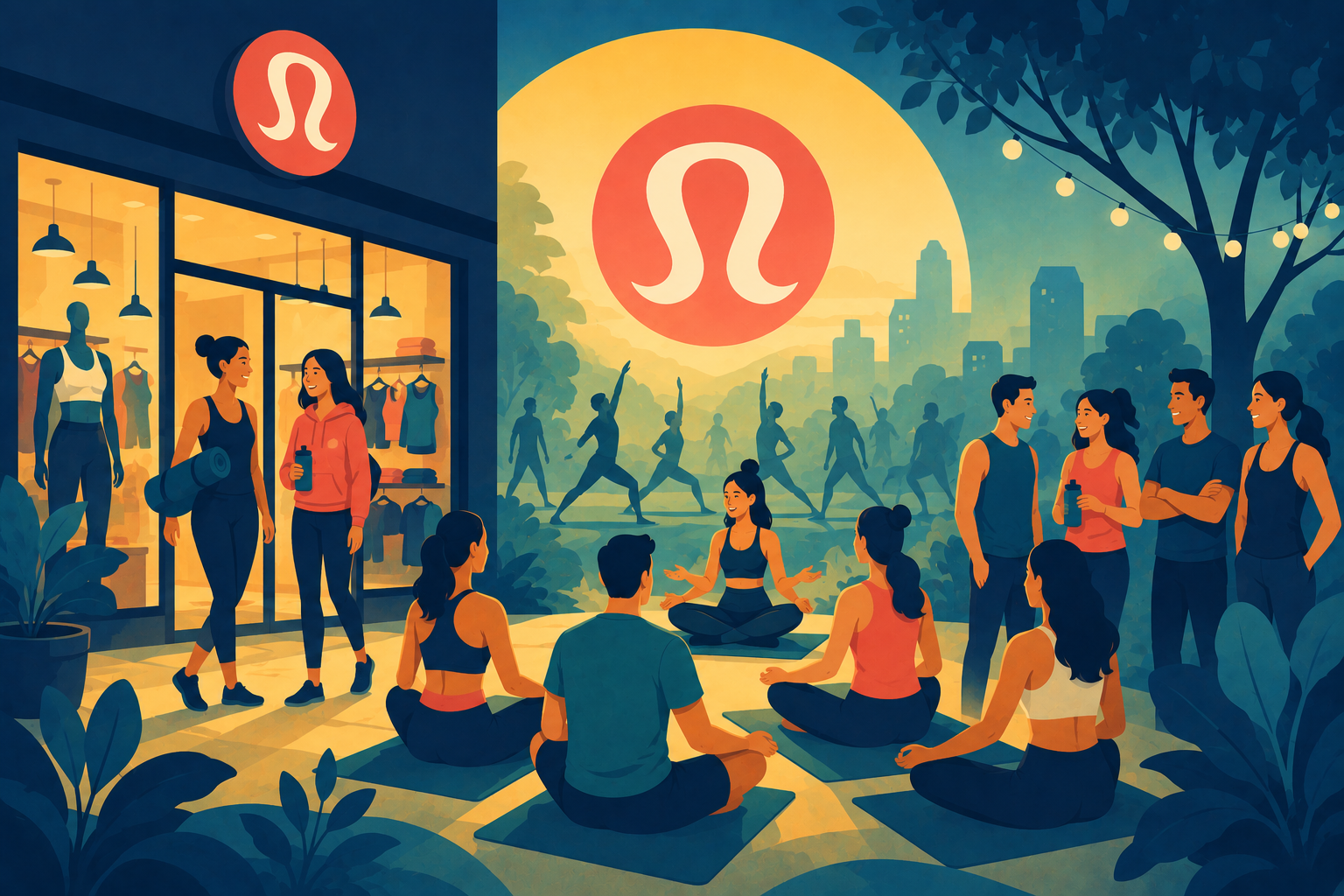
To see how this works in real life, look at the physical shops. A normal retail store’s main goal is to only maximise sales per square foot. However, the core of Lululemon branding focuses on creating a gathering place.
Back in the 2000s, the original store held inventory by day, but by night, employees pushed the heavy clothing racks aside to host a yoga studio. Today, many locations still have big chalkboards, hand-drawn by local artists, to display yoga classes hosted by the store.
By offering free weekend events, the company invites people to hang out without forcing them to buy anything. This friendly approach builds incredible trust over time. The shoppers naturally connect with each other, share fitness tips, and make actual friends.
Because of this smart Lululemon branding, a customer starts viewing the retail space as a personal clubhouse rather than just a clothing store. Anyone from the neighbourhood can walk in and participate in the session.
The company takes a totally different approach to sponsorships too. Instead of paying a Hollywood star, the corporate team finds popular yoga teachers and gym owners in a specific city.
The business gives these local instructors free gear and simply asks for their honest feedback. These everyday trainers become official ambassadors. When dozens of students see an instructor wearing the gear, they naturally want to try those exact same pants.
This localised, grassroots approach is the true strength behind Lululemon branding. When local trainers see their personal advice used in final clothing designs, they defend the brand like their own.
They feel a sense of ownership over the products. That deep connection spreads directly to their students and clients, creating the kind of genuine word-of-mouth that a typical billboard could never buy.
Many business analysts wonder how this business manages to sell workout gear at high prices without offering major discounts. The answer always comes back to the strong community.
Effective Lululemon branding makes a buyer feel like they belong to a healthy, highly motivated group of people. A buyer gladly pays full price because the tiny logo signals a shared mindset.
Also read: How Zero-Click Search Changes Brand Visibility
When someone walks down the street wearing the gear, they instantly recognise other people who share those same fitness values. Shoppers today can spot fake enthusiasm instantly. The success of Lululemon branding proves that if a business takes the time to build a real local community, the products will eventually sell themselves.
A brand cannot fake this kind of loyalty. Lululemon branding succeeds because the company invested heavily in human connection long before it ever focused on profiting. By bringing people together, the business turned a simple pair of stretchy pants into a daily uniform.
Loved this article? Read more insightful articles on Brand Custodian.
–Written by Rajnish Singh, a copywriter and strategist with a background in fast-paced journalism, who explores the gap between what brands promise and how consumers actually behave.