Discover how Discord Branding grew through community, trust and product experience instead of mass advertising and paid media.
Looking for a Shorter Overview?
AI Summary
Key Moments
Product-First Mindset
Discord built a product gamers loved, avoiding ads to turn users into organic promoters.Community-Centric Architecture
Discord focuses on private servers and shared interests, creating belonging over broadcast.Monetization Aligned with Value
Nitro subscriptions and Server Boosts let users pay for desired features, reinforcing trust.Authentic Brand Partnership
Brands must contribute real value on Discord; superficial ads are rejected quickly.When people think about fast-growing digital brands, they often assume there must be a huge advertising budget behind the success. Discord proves otherwise. Since its launch in 2015, the communication platform has grown from a niche tool for gamers into one of the world’s largest online community platforms, attracting hundreds of millions of users without relying on traditional mass advertising.
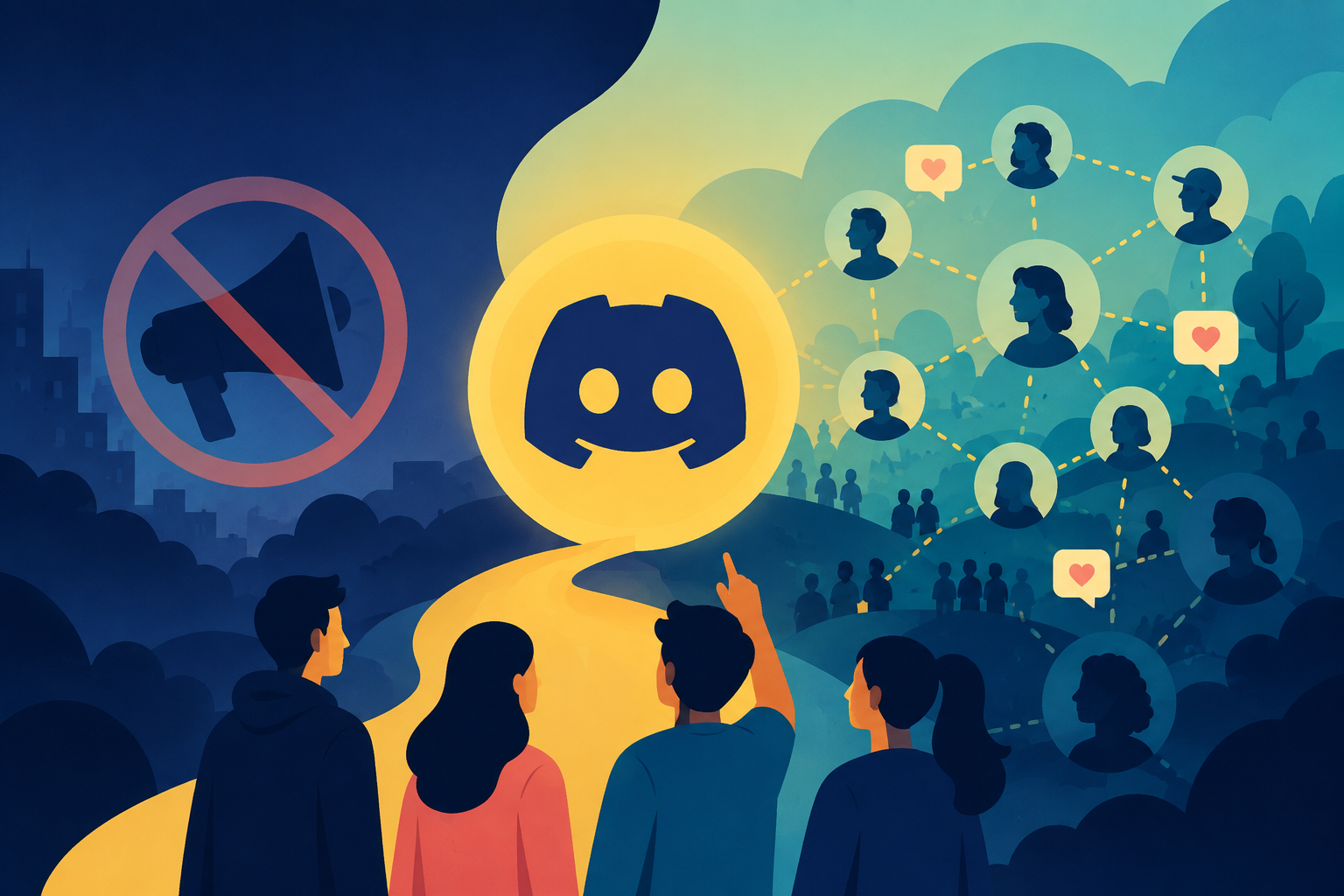
Instead of filling social feeds with paid campaigns, Discord focused on building a product that people genuinely wanted to invite others to use. That approach has made Discord Branding one of the most interesting modern marketing case studies, showing how community, product quality, and trust can create stronger brand equity than constant promotional spending.
Why Discord Branding Became a Community-Led Success
Discord never tried to become everything for everyone overnight. In its early years, it solved a very specific problem: giving gamers a reliable place to communicate before, during, and after playing together. By addressing a clear need and delivering a better experience than existing alternatives, the platform built an intensely loyal user base. That loyalty became its most effective marketing channel, with users naturally recommending Discord to friends, teammates, and communities.
Rather than chasing short-term visibility, Discord invested heavily in improving the user experience. The platform remained free to use, avoided intrusive advertising, and continually introduced features based on community feedback. This strengthened trust between the company and its users while encouraging people to spend more time on the platform. Instead of acquiring attention through advertisements, Discord earned attention through positive experiences that people wanted to share.
Another defining aspect of Discord’s brand strategy was its focus on communities instead of audiences. Most social platforms are designed around broadcasting content to followers, but Discord revolves around private and public servers where people gather around shared interests. Whether the topic is gaming, music, education, technology, or hobbies, the platform allows members to participate in conversations rather than simply consume content. This difference helped position Discord as a place to belong rather than another social network competing for screen time.
As the platform expanded, Discord deliberately moved beyond its gaming roots without abandoning the audience that helped build it. According to the company, a large majority of surveyed users now use Discord either primarily for non-gaming purposes or for a mix of gaming and other interests. That gradual expansion felt natural because the core brand promise never changed. Discord continued to focus on helping people communicate with communities they genuinely cared about, regardless of the subject.
The company’s approach to monetisation also reinforced its positioning. Instead of depending on traditional advertising revenue for much of its history, Discord introduced products such as Nitro subscriptions and Server Boosts that enhanced the user experience without interrupting conversations. Users paid for additional features because they valued the platform, not because they were forced into an ad-supported experience. This created a business model that aligned closely with the interests of the community.
Also read: How Customer Effort Shapes Brand Perception
When brands eventually began exploring Discord, they discovered that conventional marketing tactics did not work particularly well. Success on the platform required authentic participation rather than one-way promotion. Companies such as Chipotle, StockX, and others used Discord to build ongoing communities, host events, and engage directly with fans instead of simply pushing advertisements. The platform’s culture rewarded brands that contributed value while quickly rejecting those that treated the space as another advertising channel.
Discord also understood that branding extends beyond visual identity. Its playful personality, distinctive design language and emphasis on inclusivity helped make the platform feel approachable as it reached new audiences. Marketing campaigns, partnerships and even its rebranding efforts consistently reinforced the idea that Discord existed to help people find their communities, regardless of their interests. That consistency made the brand recognisable without overwhelming consumers with paid media.
The story of Discord Branding demonstrates that sustainable growth does not always begin with larger advertising budgets. In many cases, it begins with creating a product that people genuinely enjoy using, listening closely to users and building spaces where communities can thrive. Word-of-mouth, authentic engagement and a clear brand purpose helped Discord achieve what many heavily advertised brands struggle to accomplish. Its journey is a reminder that while advertising can create awareness, lasting brands are often built by giving people something meaningful to return to and worth recommending to others.