Discover how choice overload overwhelms consumers, delays purchases, and why simpler buying experiences build confidence.
Looking for a Shorter Overview?
AI Summary
Key Moments
Decision paralysis from endless options
Too many choices exhaust consumers and make them avoid purchasingTrust recommendations simplify decisions
Friend's suggestion helped end the overwhelming choice dilemmaBrands that guide win trust
Companies simplifying choices build stronger customer relationshipsCognitive fatigue from comparison
Constant option evaluation drains mental energy and leads to decision avoidanceLast month, I decided to buy a new water bottle for college. It sounded like the simplest thing on my weekend to-do list. I wasn’t looking for anything fancy, just something sturdy enough to survive being tossed into my backpack every day.
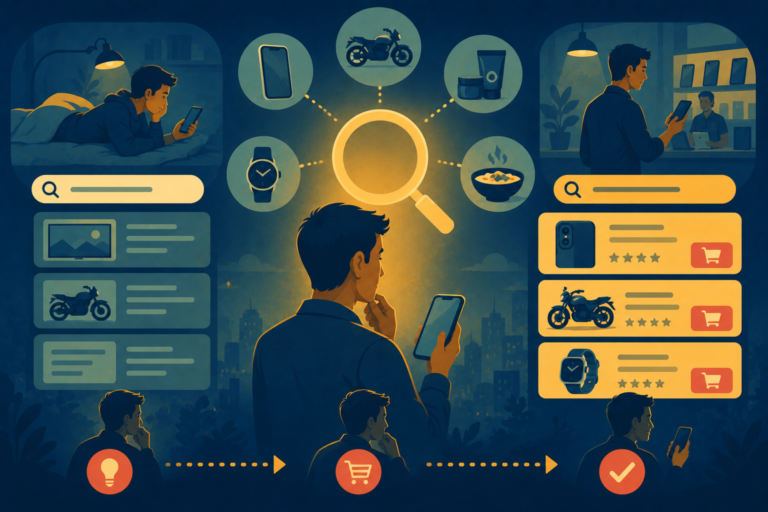
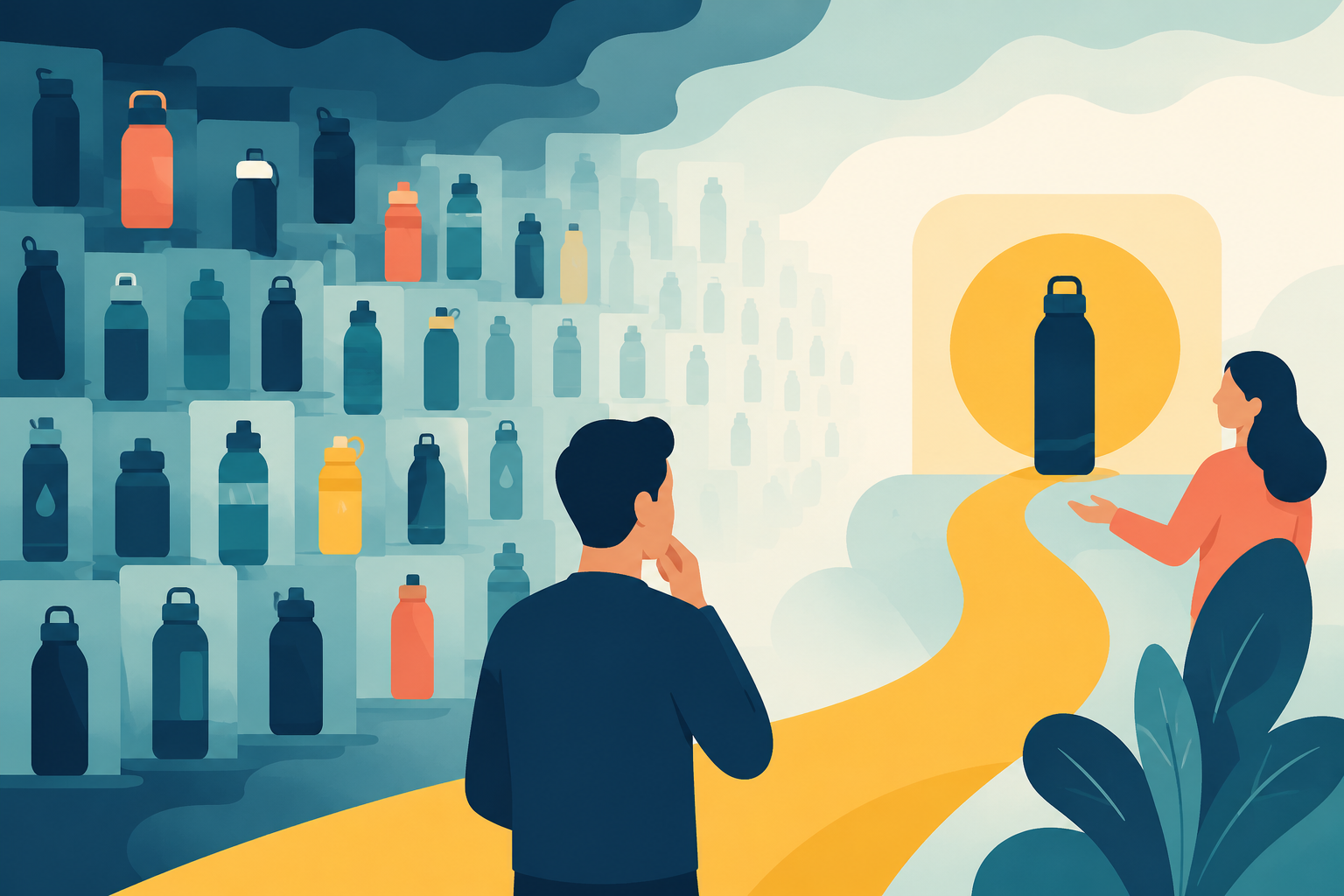
I opened a shopping app, typed “water bottle,” and expected to be done in ten minutes. Instead, I was greeted by what felt like an endless wall of choices. Steel bottles, insulated bottles, vacuum bottles, smart bottles that reminded you to drink water, bottles with temperature displays, bottles for the gym, bottles for travel, bottles with thousands of reviews, and bottles from brands I had never even heard of.
At first, I enjoyed looking through them. But after a while, every bottle started looking the same, and every new option made the previous one feel like the wrong choice.
I kept telling myself, “Just one more scroll. Maybe there’s a better one.” That one scroll turned into twenty. I watched a couple of review videos, read customer comments, compared prices, checked capacities, and even found myself wondering whether I really needed a new bottle at all. Somewhere between comparing lids and reading reviews about leak-proof designs, I forgot why I had opened the app in the first place. I wasn’t excited about buying anymore. I just wanted the decision to be over.
A couple of days later, I was sitting with a friend in college when I noticed the bottle he was carrying. I asked him where he had bought it, and he simply smiled and said, “I’ve been using this one for over a year. Never had a problem with it.” That was enough.
I searched for the same bottle that evening, looked at it for a few minutes, and ordered it without thinking twice. It wasn’t because I had suddenly discovered the perfect product. It was because someone I trusted had removed all the noise that had been making the decision so difficult.
That small incident stayed with me because it made me realise something about the way we make decisions today. We often assume that if people have more options, they’ll automatically make better choices. It sounds sensible. After all, more options should mean a better chance of finding exactly what we want.
But in reality, I’ve found that the opposite often happens. Once the number of choices becomes too large, we stop feeling empowered by them and start feeling exhausted. Instead of confidently picking something, we begin worrying about the options we’re leaving behind.
That’s what made me think about choice overload.
Why Choice Overload Often Stops People From Buying
The more I pay attention to my own habits, the more I notice that this doesn’t just happen while shopping online. It happens almost everywhere. Whether I’m choosing a movie on a streaming platform, deciding where to eat with friends, or even picking a notebook from a stationery shop, there comes a point where too many options stop being exciting. They become mentally tiring.
I start comparing things that don’t really matter, wondering if I’m missing something better, and convincing myself that I should spend “just a few more minutes” deciding. Those few minutes quietly turn into half an hour.
I think that’s what choice overload really feels like. It’s not that the choices are bad. In fact, many of them are probably excellent. The problem is that our brains aren’t naturally comfortable weighing dozens of equally attractive options at the same time. Every comparison demands a little more attention, a little more energy, and a little more confidence.
Also read: How FirstCry Branding Built Parent Trust
By the end of it, making a simple purchase can feel strangely stressful. Sometimes we even postpone buying altogether, not because we don’t want the product, but because we don’t want to keep making the decision.
I’ve started appreciating brands that understand this. They don’t simply throw hundreds of products in front of people and hope something sticks. Instead, they help narrow the path. They explain which product suits which kind of customer, recommend a few sensible options, and make the entire experience feel less overwhelming.
As a customer, that feels surprisingly comforting. It gives me confidence that I don’t have to analyse every tiny detail before clicking “Buy Now.”
Perhaps that’s why recommendations from friends, family, or even someone whose opinion we trust still matter so much. They don’t eliminate every option in the market, but they reduce the mental burden of choosing. Instead of wondering which product is theoretically the best, we simply think, “If this worked well for them, it’ll probably work for me too.” That little bit of reassurance often succeeds where hundreds of product listings fail.
Maybe that’s the biggest lesson about choice overload. We often believe that giving people unlimited choices creates a better experience, but people rarely wake up hoping to compare fifty nearly identical products. Most of us simply want to make a good decision, feel confident about it, and move on with our day.
In the end, the brands that leave the strongest impression aren’t always the ones offering the longest catalogue. They’re often the ones that quietly make choosing feel simple, and sometimes that’s far more valuable than having endless options.
– Written by Bhavya Singhal, an Emerging Journalist and a Digital Media and Communication student exploring branding, marketing strategy, and consumer psychology through practical observations and real-world examples.