Discover how price perception shapes buying decisions and why consumers often associate higher prices with better quality.
Looking for a Shorter Overview?
AI Summary
Key Moments
Price-Quality Bias
Higher prices automatically signal superior quality regardless of actual product featuresCheap Price Skepticism
Unusually low prices trigger suspicion about product quality or hidden flawsTrust Overrides Price
Social proof and personal recommendations can break price-based assumptionsPrice as Narrative
The price point tells a story that shapes our expectations before product experienceA few months ago, I was looking for a new backpack before the semester began. My old one had survived years of being stuffed with books, notebooks, chargers, and everything else I somehow managed to fit inside it. It had done its job, but the zip had finally given up.
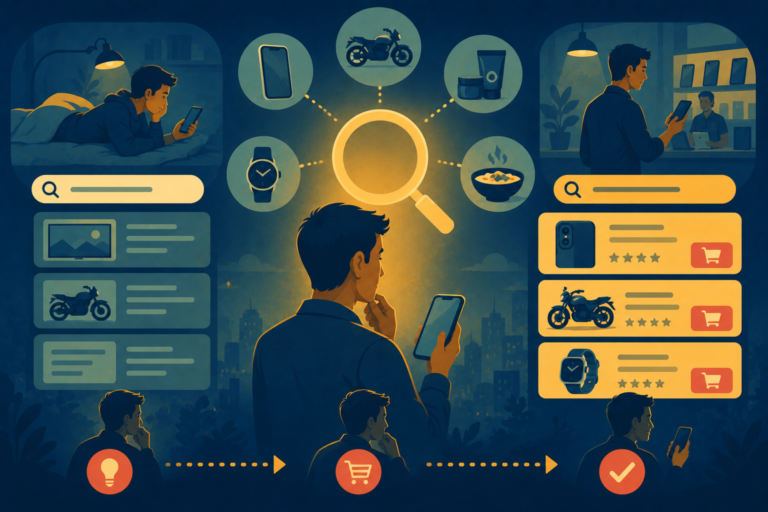
So, one evening, I opened a shopping app, thinking it would be a simple purchase. After scrolling for a while, I shortlisted two backpacks. At first glance, they looked almost identical. They were the same size, had similar compartments, similar colours, and even similar customer ratings.
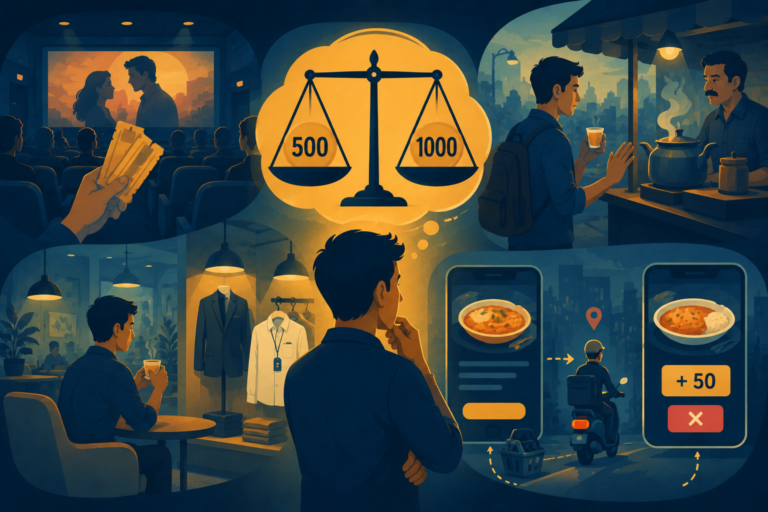
The only thing that really stood out was the price. One was around ₹1,200, while the other was close to ₹3,000. Almost instantly, I caught myself assuming that the more expensive one must be stronger, more durable, and probably more comfortable to carry. The strange part was that I had absolutely nothing to support that assumption. I hadn’t used either of them. I hadn’t watched detailed reviews or compared the materials. Yet my mind had already decided that the higher price meant higher quality.
As I kept browsing, I found another backpack from a popular brand that was available at a huge discount. Instead of feeling lucky, I became suspicious. I remember thinking, “Why is it so cheap?” “Is this an older model?” “Has something gone wrong with it?” Looking back, it’s funny because only a few minutes earlier, I had been hoping to find a good deal. The moment I actually found one, my first reaction wasn’t excitement. It was doubt. Somewhere along the way, I had started believing that if something costs less than expected, there must be a reason for it.
I eventually closed the app without buying anything. The next day, while talking to one of my classmates, I mentioned that I was looking for a backpack. He showed me the one he had been using for almost two years. It wasn’t the most expensive option, nor was it the cheapest. He simply said, “I’ve carried this every day, even during trips, and it’s still in great condition.” That short conversation gave me more confidence than hours of comparing prices the previous night. I ended up buying the same model, not because it had the perfect price, but because someone I trusted had replaced uncertainty with experience.
That incident stayed with me because it made me realise that I hadn’t really been comparing backpacks. I had been comparing what their prices were making me imagine. A higher price made me perceive better quality, while a lower price made me wonder what was missing. The products themselves hadn’t changed. Only my perception had.
That’s what made me think about Price Perception.
Why Price Perception Quietly Shapes the Way We Buy
The more I pay attention to my own shopping habits, the more I realise that I rarely look at a price as just a number. Somehow, every price comes with a story attached to it. If something is expensive, I instinctively expect it to last longer, perform better, or simply feel more premium. If something is unusually cheap, I start searching for flaws before I’ve even experienced the product. It’s almost as though my brain is using the price to fill in information that I don’t actually have.
What’s interesting is that experience doesn’t always support these assumptions. I’ve owned affordable products that have lasted for years and expensive ones that disappointed me within months. Despite knowing this, I still catch myself making the same judgments whenever I’m buying something unfamiliar. It reminds me that we don’t always make decisions based purely on facts. Quite often, we rely on little mental shortcuts that help us make sense of the choices in front of us.
I think that’s why Price Perception plays such an important role in the way brands are viewed. Price doesn’t just tell us what we’ll have to pay. It quietly influences what we expect to receive. Before we use a product, before we test its quality, and sometimes even before we read about it, we’ve already started forming opinions simply because of the number printed beside it. That expectation stays with us throughout the buying journey. It affects how confident we feel while making the purchase and, surprisingly, even how satisfied we feel after using it.
Also read: How Employer Branding Influences Consumer Trust
Perhaps that’s also why pricing is much more than a financial decision for businesses. It’s part of the story they tell about themselves. A price that’s too low may unintentionally make people question the product’s quality, while a price that’s too high creates expectations that the product must work incredibly well. Finding the right balance isn’t only about covering costs or earning profits. It’s also about understanding how people interpret value.
Maybe that’s the biggest lesson about Price Perception. Most of us like to believe that we carefully evaluate every product before making a purchase, but the truth is often much simpler. Long before we experience a product, we’ve already started judging it through its price. Sometimes those assumptions turn out to be correct, and sometimes they don’t. But they almost always influence the way we feel.
In the end, people don’t just respond to the amount written on a price tag. They respond to the story that number quietly tells in their minds, and perhaps that’s why two products can offer almost the same thing yet feel completely different the moment we look at their prices.
– Written by Bhavya Singhal, an Emerging Journalist and a Digital Media and Communication student exploring branding, marketing strategy, and consumer psychology through practical observations and real-world examples.