Why mental availability matters more than market share and how brands like Bisleri, Surf Excel and Fevicol stay top of mind.
Looking for a Shorter Overview?
AI Summary
Key Moments
Mental Availability Defined
The concept that brands win by occupying subconscious space in consumers' minds rather than relying on rational decisionsBisleri's Vocabulary Power
How owning the word for water beats market share by becoming the automatic mental choiceIndian Household Habits
How brands like Surf Excel and Parachute dominate through deeply embedded psychological responsesThe Cost of Competition
Brands focusing only on market share get stuck in expensive discount cycles vs. building enduring mental presenceWhen a tired and thirsty traveller stops at a highway dhaba anywhere in Bihar or Uttar Pradesh, watch what he asks for when he walks up to the counter.
There is a very high chance he will not ask for a one-litre bottle of packaged drinking water. He will simply hand over a twenty-rupee note and ask for a “Bisleri.”
What happens next is even more interesting.
The shopkeeper reaches into the refrigerator and hands him an Aquafina, a Kinley, or even a local counterfeit brand named “Bilsery.” The customer takes it, cracks the plastic seal, and drinks it without a single complaint.
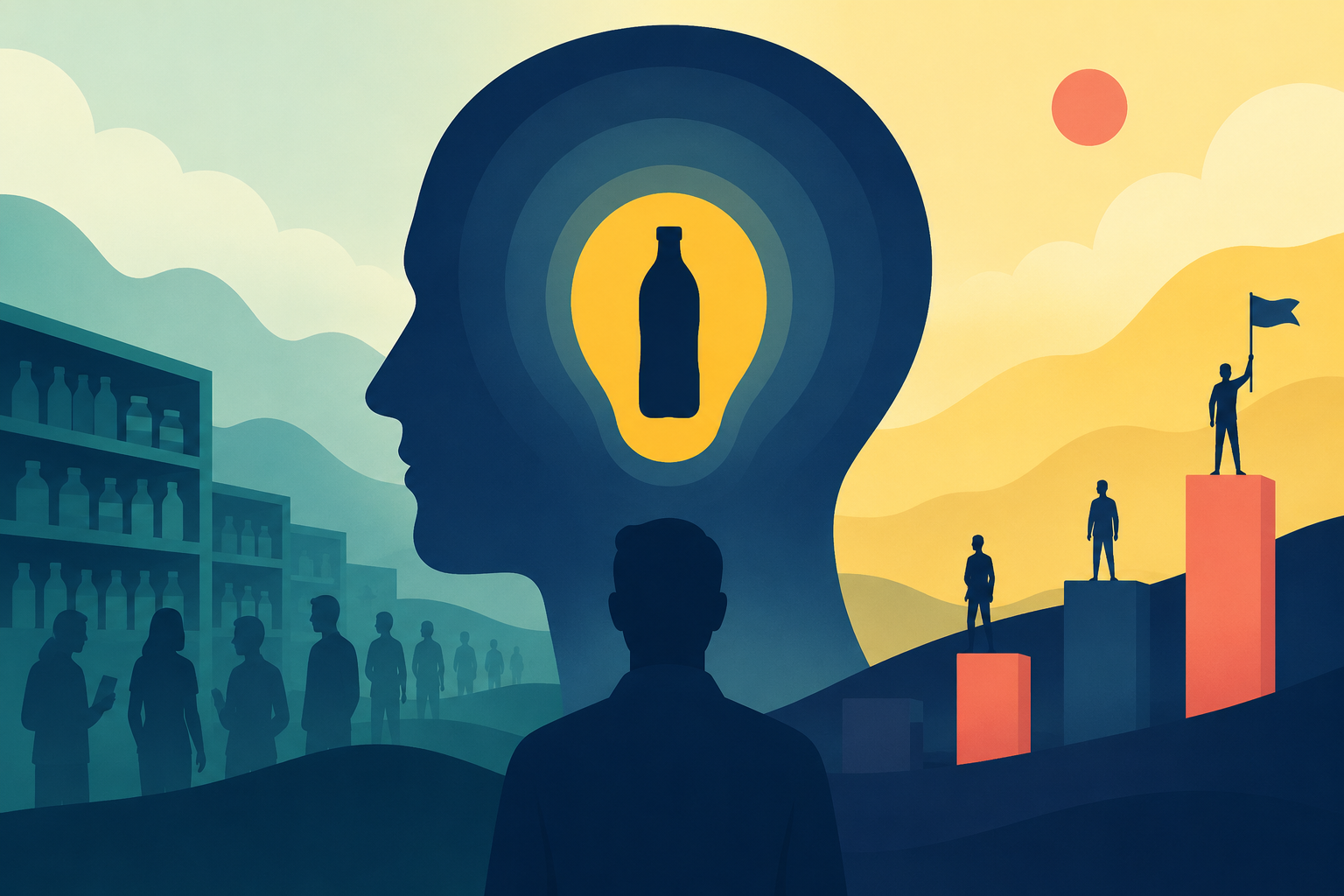
Yes, Bisleri lost market share in that specific transaction. But it won something infinitely more powerful. It owned the consumer’s vocabulary.
That is the invisible power of mental availability.
The Reality of Mental Availability
Modern founders and venture capitalists are completely obsessed with market share. They spend millions of rupees on performance marketing algorithms and offer massive cash-burn discounts simply to persuade consumers to use their products.
The biggest mistake many brands make is treating buyers as rational and logical decision-makers. They assume that if a product is ten rupees cheaper or offers two extra features, consumers will logically switch.
But human beings do not shop with logic. They shop on autopilot.
Mental availability is rarely about having the objectively superior product. It is about the subconscious space your brand occupies in a buyer’s mind when they think about purchasing a category.
Take the Indian hair oil market. What happens when a mother sends her son to the local grocery store to buy coconut oil? He does not stand in front of the shelf comparing ingredient lists across five different bottles.
Instead, he scans the shelf for one unmistakable shade of blue plastic. He picks up the blue Parachute bottle and walks straight to the billing counter.
Also read: What CRED Branding Gets Right About Premium Brand Positioning
That is mental availability in action. Consumers do not have to think about what to buy. They simply know, almost unconsciously.
Another highly relatable Indian example is Surf Excel. For generations, the brand has owned the idea of “Daag Acche Hain,” transforming messy play and stained clothes into positive family moments.
Mothers across the country do not simply reach for any detergent when their child comes home with a ruined white shirt. They reach for the brand that successfully rewired their psychological response to stains.
Neither Hindustan Unilever nor Marico needs to run a targeted Google ad to convince these buyers. Their marketing was completed years ago. These brands are so deeply embedded in the neural pathways of Indian households that the brain defaults to them simply to conserve mental effort.
Also read: What CRED Branding Gets Right About Premium Brand Positioning
The Cognitive Monopoly
Brands that compete only for market share are trapped in a desperate and expensive cycle of discounts. Brands that compete for mental availability build something far more enduring.
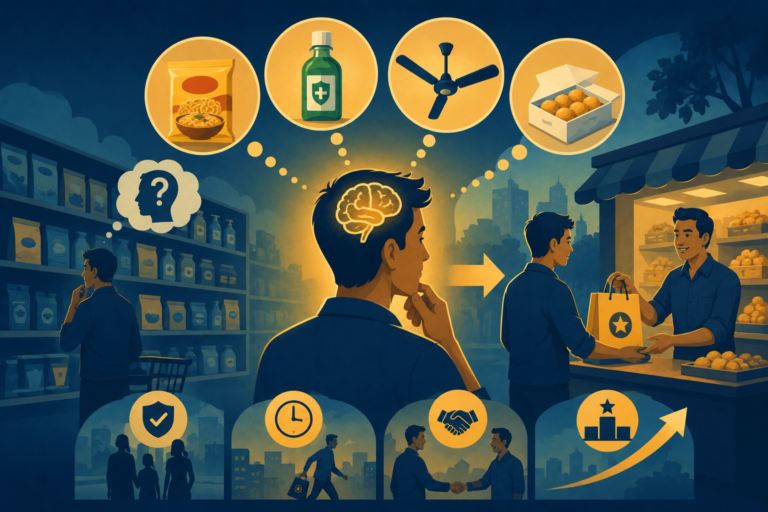
When an office worker develops a headache in the afternoon, they do not pull out their smartphone to research the chemical differences between paracetamol and ibuprofen. They simply turn to a colleague and ask for a Saridon.
When a carpenter is joining two pieces of plywood in a local workshop, he does not ask the hardware supplier for synthetic resin adhesive. He simply asks for “Fevicol.”
These brands do not just dominate the retail shelf. They dominate the exact moment of need.
If your brand only exists when customers actively search for it, you are already losing to someone else. True brand dominance happens when consumers do not even realise they are making a choice.
They simply reach for the blue bottle or the orange detergent pack because their brain tells them it is the only option that exists.
– Written by Rajnish Singh, a copywriter and strategist with a background in fast-paced journalism, who explores the gap between what brands promise and how consumers actually behave.