Stop losing customers to cheaper rivals. Learn how strong brand recall turns everyday familiarity into an unfair advantage.
Looking for a Shorter Overview?
AI Summary
Key Moments
Instant brand-driven choice
When a daily need arises, strong brand recall triggers customers to select a specific name without evaluating alternatives.Local loyalty beats price discounts
Even the cheapest options are ignored when shoppers trust a familiar brand, rendering low prices ineffective.Building recall requires consistency
Years of delivering reliable products daily create the mental shortcuts that drive automatic purchase decisions.Advertising cannot replace recall
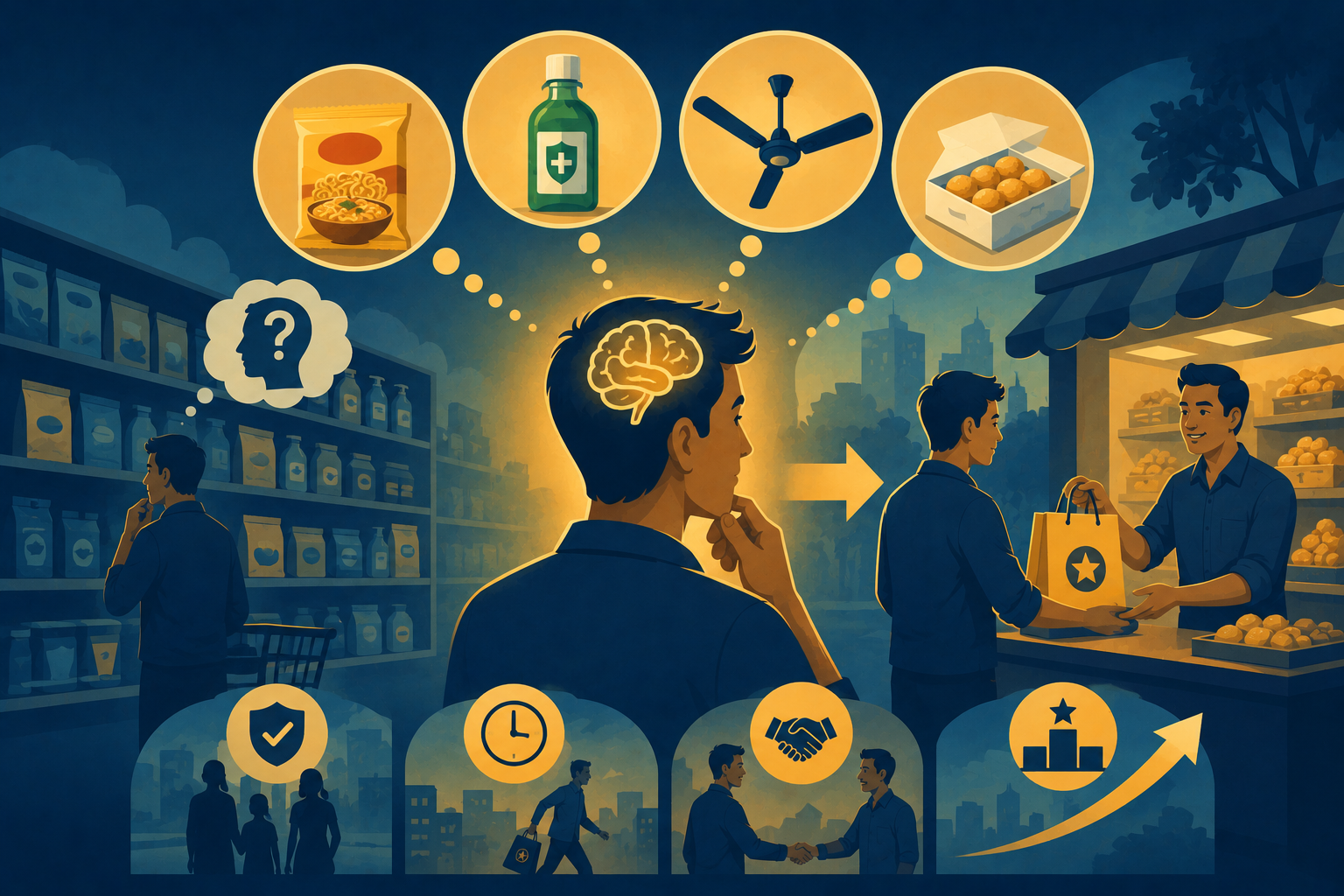
Heavy ad campaigns and discounts fail to attract customers who already have a trusted brand firmly embedded in memory.Brand recall is the exact reason people making monthly grocery lists rarely write the word “noodles” on their blank paper. A woman checks her empty kitchen containers and writes “Maggi” directly on her list. She does not write generic words and does not spend time thinking about different companies.
This quick buying habit happens because ‘brand recall’ simply means a buyer remembers a specific company name the exact moment a daily need comes up. A local grocery shop usually has ten different noodle packets. Many of those packets cost less, too.
But strong brand recall keeps the buyer from even looking at the cheaper options. She had already decided exactly what to buy before entering the shop.
Why Brand Recall Stops Extra Searching
Small accidents often happen when schoolchildren play cricket in local parks. When a young boy falls and scrapes his knee, his father hurries to a nearby medical store to buy medicine. He does not ask the shopkeeper for the best disinfectant to clean the fresh dirt; instead, he asks directly for a bottle of Dettol.
High Brand Recall makes the customer use the company name instead of the actual chemical name. The boy is crying, and the father just wants the safest item right away. The father never stops to compare different paper boxes on the glass counter. He does not read the back labels to check the ingredients. The shopkeeper does not try to show a different liquid because the customer is very clear about what he wants. The entire purchase is finished in a few minutes.
Every April, summer heat drives people to buy new ceiling fans for their homes. A man walks into a large electronics shop and looks at fifty different fan brands. The shop owner tries to explain the high motor speed of a new local company. He points to the fan and even offers a discount to make a fast sale.
But the customer ignores the long explanation entirely. He asks the shopkeeper to pack a Bajaj fan instead. He does not care about the new technology or the extra discount. His grandfather used that same company in his old village house for generations.
Years of seeing the name stamped on the metal created strong brand recall for him. The new company might even make a faster fan for much less money. But brand recall stops the buyer from taking any risk on an unknown name. He happily pays full price for the familiar box.
This simple human habit helps small street shops compete with large supermarkets. A man wants to buy fresh sweets for a Diwali family dinner. He completely ignores the fancy packaged boxes inside the new air-conditioned grocery mall.
Instead, he drives straight to his local old sweet shop in his neighbourhood. He waits in a long line just to buy from that shop. He has been eating their fresh items since childhood.
This local brand recall makes the big mall’s heavy advertising budget completely useless. The mall spent lakhs of rupees printing shiny newspaper flyers to attract festival crowds. They even put large colourful banners on the main road. But the man did not even look at the front page of the newspaper. Good brand recall makes sure a buyer walks past ten different shops just to buy from one trusted store.
Advertising teams often assume that large cash discounts will easily win regular customers away from older businesses. But a low price cannot change a daily human habit. A buyer feels completely secure when a familiar name comes into his head instantly. When a sudden need comes up, the brain simply chooses the easiest answer.
Also read: Why Brand Salience Matters When Consumers Aren’t Thinking About Your Category
People do not want to spend their free time researching everyday household items online. Building strong brand recall takes years of delivering a reliable physical product every single day. A business cannot create that kind of daily memory with just one funny internet video or a large road banner.
Consistent quality builds a lasting name in the local market. A business gets more daily sales when buyers remember its name first automatically.
Loved this article? Read more insightful articles on Brand Custodian.
–Written by Rajnish Singh, a copywriter and strategist with a background in fast-paced journalism, who explores the gap between what brands promise and how consumers actually behave.