Why did a $2 billion app die in 6 months? Discover how Quibi became the worst market failure in streaming history.
Looking for a Shorter Overview?
AI Summary
Key Moments
Ignoring Mobile Sharing
Users couldn't screenshot or share videos, causing friction and driving them away.Mobile‑Only Restriction During Pandemic
Lockdowns highlighted the need for TV viewing, but Quibi kept the app tethered to mobile only.Misaligned Pricing Model
Charging for short videos while free alternatives existed turned smart buyers away.Massive Funding vs. Low Adoption
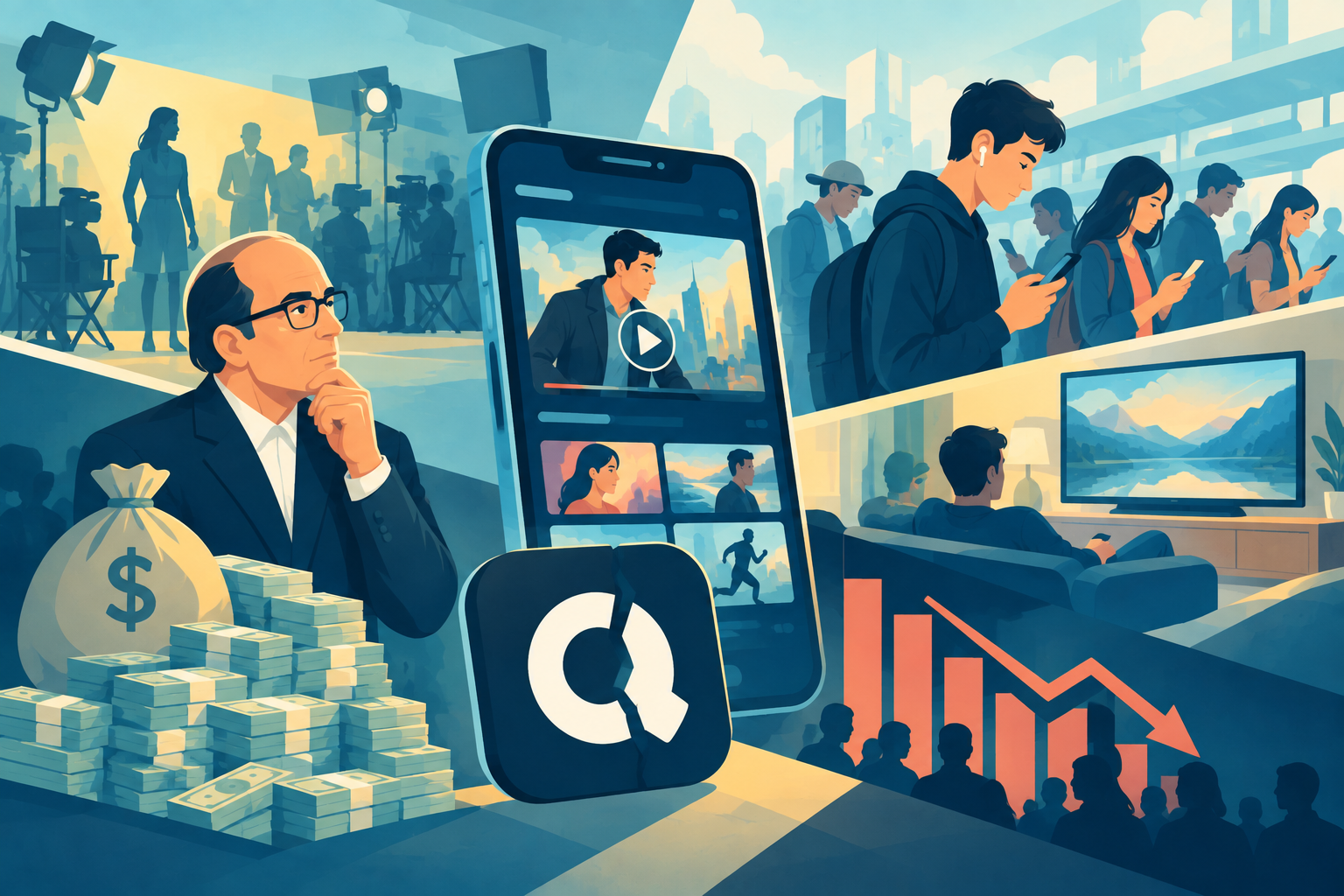
Over $1 billion was spent, yet only hundreds of thousands of users paid, far below the 7 million expected.Jeffrey Katzenberg raised nearly two billion dollars to build Quibi, a short-form video app, and hired famous Hollywood actors to star in its shows. However, even that much money could not prevent a major market failure.
The app launched in April 2020, but the owners shut down the entire business just six months later. People were already watching free short videos on their mobile phones, so they completely ignored the expensive new app. This quick closure shows exactly how market failure happens when a company builds a tool that nobody actually needs.
How Ignoring Mobile Habits Led to a Massive Market Failure
Before this app launched, regular people watched ten-minute videos on YouTube or TikTok for free. Quibi’s bosses ignored this physical reality and charged buyers five dollars every month just to watch short comedy shows on a mobile screen.
A teenager opens his phone on a train and expects to share a funny video link with a friend, but the app makers have physically blocked users from taking screenshots or sharing any video clips. This strict rule caused a fast market failure. The teenager felt annoyed, deleted the app, and went straight back to watching free videos on other websites.
The founders spent a huge amount of cash making the videos change shape when a user turned a mobile phone sideways. They thought busy office workers would watch the short shows while standing in coffee lines.
However, the lockdowns in 2020 forced everyone to stay inside their homes. Someone at home wanted to watch a full-length show on television to pass the time, rather than a 10-minute short video. The company refused to let buyers connect the mobile app to a television screen for several months.
This stubborn technical rule led to a clear market failure. A buyer will not pay cash to watch a show on a mobile phone when a large television is right in front of him.
The business spent over one billion dollars in cash before closing the company. They paid famous directors thousands of dollars for every single minute of video, but very few normal people actually downloaded the tool. The company expected seven million paying users in the first year.
Instead, they barely convinced a few hundred thousand people to pay the monthly fee. This huge gap between the expected numbers and the actual cash shows a major market failure. Spending billions of dollars on a project cannot force ordinary people to spend their money on a bad idea.
Other video companies understood how normal people actually use their phones. YouTube lets users watch endless videos at no cost, and they simply see a quick advertisement.
Quibi tried to charge money for short videos while still forcing viewers to watch ads on the screen. A smart buyer refuses to pay for something they already get for free on another app. This simple pricing mistake leads directly to market failure. The company ignored the everyday habits of normal phone users and lost all its cash.
Today, other tech founders study this exact ending to avoid repeating the same mistakes. They understand that hiring famous actors does not automatically create a successful business. A new app must actually solve a real problem for the person holding the phone. Good businesses listen to what buyers want, but a market failure happens when a founder builds a product just to satisfy his ego.
Also read: MUJI: How Minimalism Became a Commercial Strategy
The company lost two billion dollars and proved a simple physical rule. A massive market failure happens when a brand forgets to ask whether anyone actually wants to buy the physical product.
Loved this article? Read more insightful articles on Brand Custodian.
–Written by Rajnish Singh, a copywriter and strategist with a background in fast-paced journalism, who explores the gap between what brands promise and how consumers actually behave.