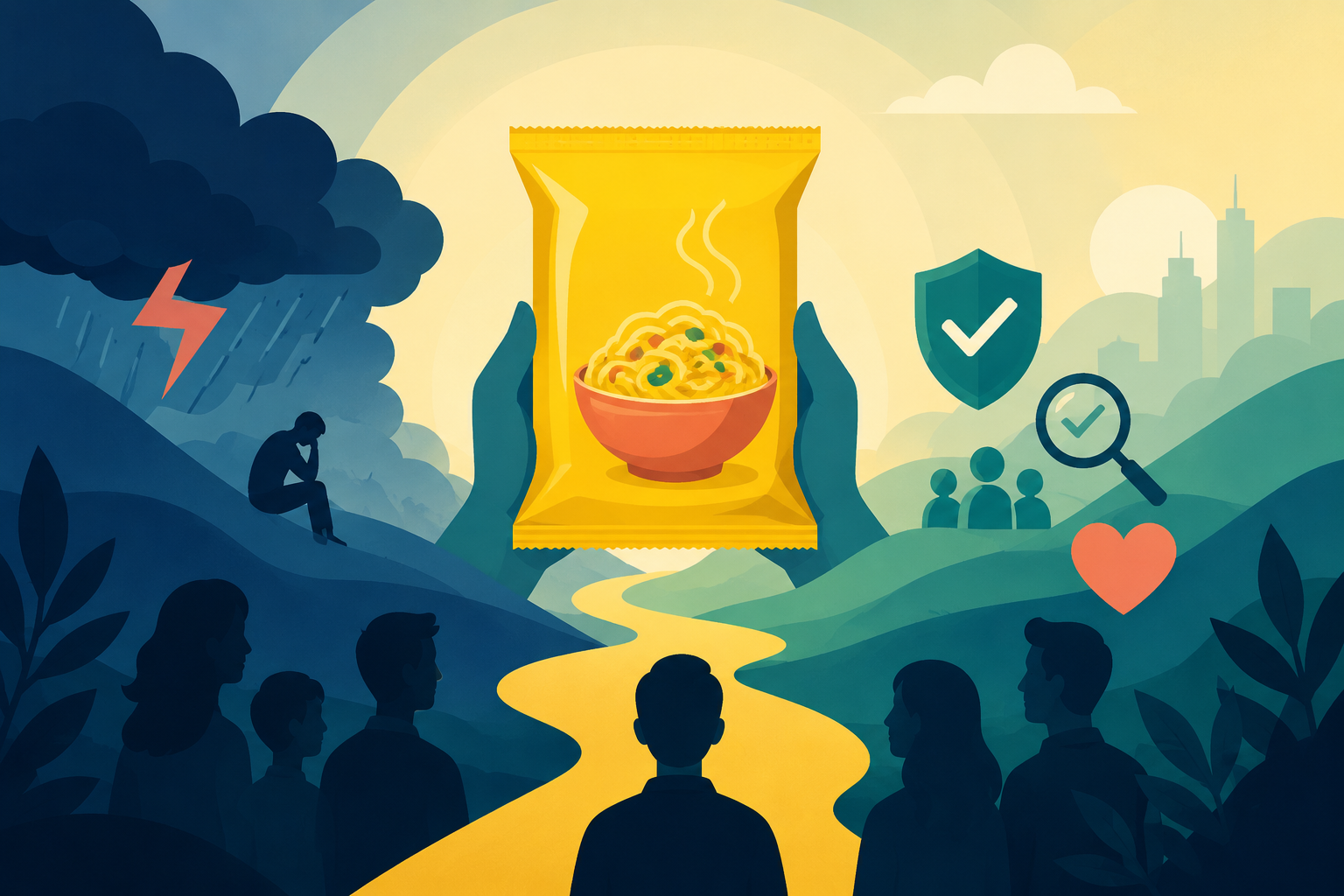
What the Maggi Brand Comeback teaches about rebuilding consumer trust through honesty, consistency, and meaningful action.
Looking for a Shorter Overview?
AI Summary
Key Moments
Transparent Quality Verification
Maggi rebuilt trust by conducting fresh quality tests, following regulations, and openly communicating those steps.Preserve Nostalgic Identity
The brand kept the iconic yellow packet and 2‑Minute Noodles to stay emotionally connected with loyal customers.Actions Over Advertising
Customers forgive mistakes when a brand demonstrates responsibility through consistent actions, not slogans or campaigns.Universal Trust Lessons
The Maggi case shows that transparency and responsibility are key to regaining consumer confidence across any industry.If you grew up in India, chances are Maggi was a part of your childhood. It was the quick meal your parents made when they didn’t feel like cooking, the late-night snack during exam season, or the first thing many students learned to make after moving into a hostel. For many people, Maggi wasn’t just another packet of instant noodles. It came with memories.
That’s why, when Maggi disappeared from store shelves in 2015, people didn’t just lose access to a product. They lost something they had trusted for years.
The Maggi brand comeback wasn’t simply about putting noodles back on supermarket shelves. It was about rebuilding a relationship that had suddenly been shaken.
Why the Maggi Brand Comeback Is Still a Marketing Lesson Today
When concerns about the safety of Maggi surfaced, the conversation spread quickly. News channels covered it every day, social media was full of opinions, and many families stopped buying the product altogether.
At that moment, no advertisement could have solved the problem.
Imagine if Maggi had immediately launched a campaign saying, “Trust us, everything is fine.” It probably wouldn’t have worked because trust doesn’t return just because a brand asks for it. Instead, the company had to do something much harder. It had to earn that trust back.
The Maggi brand comeback happened step by step. The company went through fresh quality tests, followed the required regulations, and only then brought the product back to the market. More importantly, it communicated those efforts openly. Before asking people to buy the product again, it first gave them reasons to believe it was safe. That’s a lesson many brands can learn from. When something goes wrong, customers don’t expect perfection. They expect honesty.
Another reason the Maggi brand comeback worked was because the brand understood what people actually loved about it.
Imagine if Maggi had returned with completely different packaging, a new taste, and a new identity. Many loyal customers would’ve felt disconnected from the brand they grew up with.
Instead, the familiar yellow packet was still there. The taste people remembered was still there. Even the iconic “2-Minute Noodles” identity remained the same. The brand fixed what needed fixing without changing the parts that people were emotionally attached to. That’s a difficult balance to achieve.
One of the most interesting things about the comeback was that people kept talking about Maggi even when they couldn’t buy it. Friends shared stories about making Maggi during school trips, hostel life, or rainy evenings at home. It reminded everyone that people don’t always connect with brands because of the product itself. Sometimes they connect because the brand becomes part of their everyday life.
Very few brands are lucky enough to have that kind of emotional connection. But even emotional connections have limits. If a brand breaks trust and refuses to take responsibility, nostalgia alone can’t save it.
That’s why the Maggi brand comeback is often discussed as more than just a successful relaunch. It showed that emotional branding works best when it’s supported by responsible action.
The story also applies far beyond the food industry.
Whether it’s an airline cancelling flights without clear communication, a shopping app mishandling customer data, or a smartphone company dealing with product defects, the principle remains the same. Customers are surprisingly willing to forgive mistakes. What they struggle to forgive is silence, excuses, or the feeling that a brand isn’t being transparent. That’s why rebuilding trust is never about the first advertisement after a crisis. It’s about everything that happens before that advertisement.
In culmination, the Maggi brand comeback wasn’t successful because people suddenly forgot what had happened. It was successful because the brand gave people enough confidence to believe again. Trust wasn’t rebuilt through catchy slogans or emotional commercials. It was rebuilt through actions, consistency, and patience.
And perhaps that’s the biggest lesson of all.
A brand isn’t judged only by how it performs when everything is going well. It’s judged even more by how it responds when things go wrong. That’s what customers remember, and that’s what turns a comeback into a lasting one.
– Written by Bhavya Singhal, an Emerging Journalist and a Digital Media and Communication student exploring branding, marketing strategy, and consumer psychology through practical observations and real-world examples.