Stop changing your brand identity to look trendy. Master the memory structure to make your product a permanent daily habit.
Looking for a Shorter Overview?
AI Summary
Key Moments
Vicks dominates due to memory structures
Familiar brands lock in consumer choice through long‑term memory, outlasting heavy advertising.Habitual purchases rely on mental shortcuts
Everyday decisions are automated by stored brand images, bypassing active comparison.Brand consistency preserves memory
Altering a brand's core look resets consumer memory, breaking established habits.Building memory eliminates price wars
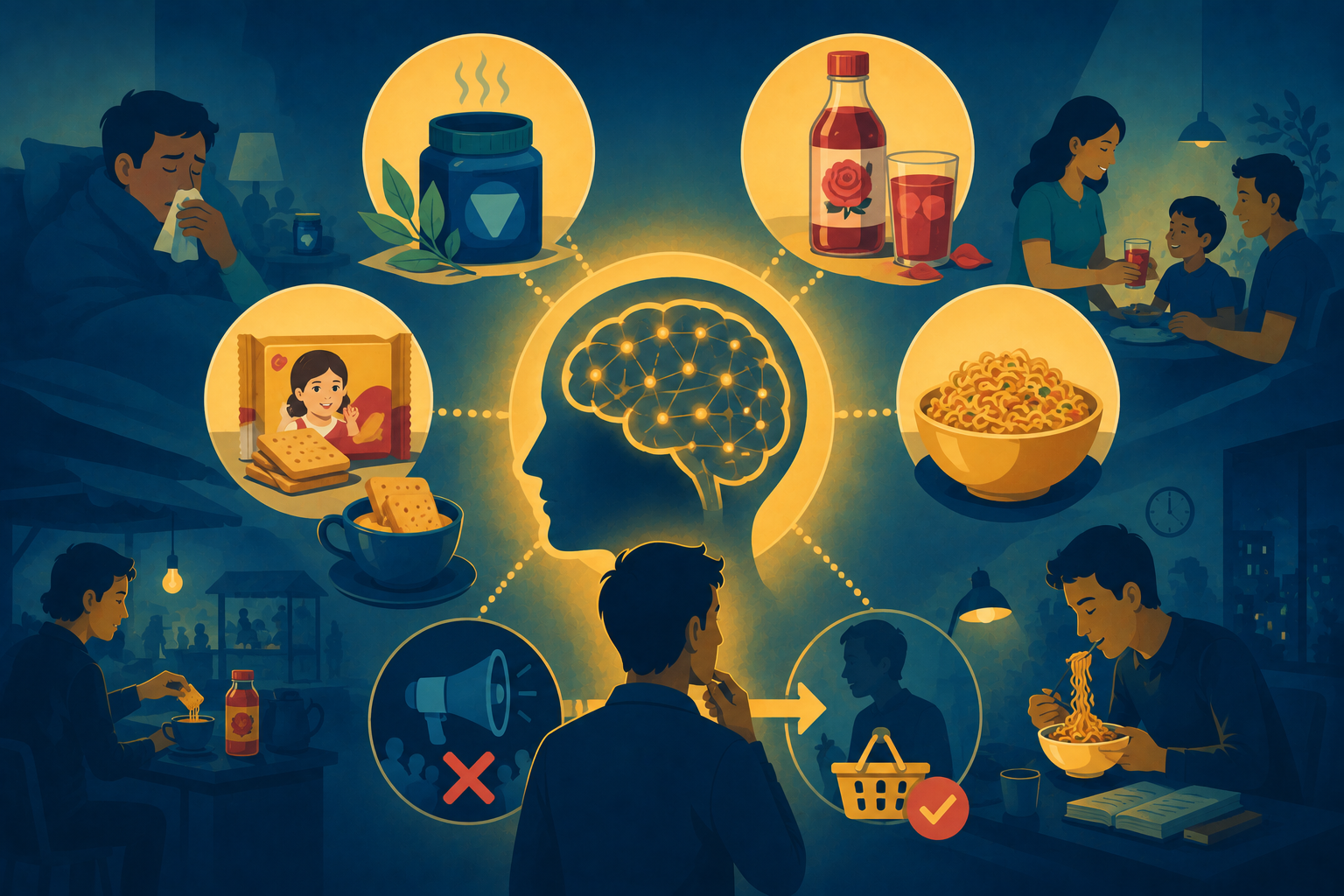
Strong memory structures make customers automatically reach for a brand, removing reliance on discounts.Winter nights in northern India make almost everyone catch a cold now and then. When someone gets a blocked nose, nobody researches the latest best medicine. People just use Vicks VapoRub without even thinking about other brands. That sharp eucalyptus smell and cooling sensation are firmly locked in people’s minds.
Even if a rival company spends millions on television ads to promote a newer, faster-acting balm, families will still buy the familiar blue bottle. This happens because the brand has successfully built memory structures in people’s heads. Focusing on memory structures is much more important than just making people know a new product name.
How Memory Structures Control Daily Choices
A company can put up big billboards in every busy market of the city. People might read the name and know the brand exists. But just knowing a name does not make anyone buy the product. When it’s time to actually buy, the brain relies entirely on memory structures to make a fast choice.
On a hot summer afternoon, serving guests a cold Rooh Afza or Sprite is an easy choice. The brain naturally links summer heat with a very specific cold drink. The host does not go online to compare summer drinks or check the sugar content. The habit of offering that exact sweet drink is already fixed in memory.
We see this same behaviour every morning at roadside tea stalls across the country. Someone ordering a cup of tea does not look through the shopkeeper’s entire biscuit collection to compare brands. Their hand automatically points to the familiar red-and-yellow Parle-G packet.
The picture of the little girl on the wrapper and the exact way the biscuit melts in hot tea are fixed in the brain. People know exactly how many seconds to hold it in the hot tea before it breaks.
Because of memory structures, dipping that particular biscuit feels like a comforting daily routine. If a local bakery tries to sell a tastier biscuit for the exact same price, the buyer will still refuse it. The new biscuit simply does not fit into people’s habits yet.
To build these mental connections, a brand needs to repeat the same message and feeling for many years. Look at how Maggi works. College students in hostels do not eat it just because it is cheap. Making those noodles at two in the morning is a shared habit.
The yellow packet, the taste of the masala, and the two-minute cooking promise all work together to build memory structures. When a student feels hungry late at night, the brain instantly remembers that yellow packet. No one thinks about buying local plain noodles because they do not carry the same late-night memories.
Many new business owners get bored with their own marketing very quickly. They want to change their logo, update packaging, or write a new slogan every year to look fresh. This is a huge mistake. Every time a brand changes its basic look, it resets the memory structures in the buyer’s head.
The human brain needs simple repetition to remember things properly. Protecting memory structures means keeping the basic identity exactly the same, even when the rest of the market keeps changing to look trendy.
Buyers do not have the time or energy to compare ten different brands before making an everyday purchase. They just want a quick, safe solution to a daily problem. When a company invests time in building memory structures, it stops worrying about price discounts and cheap offers altogether.
Also read: Why Brand Penetration Matters More Than Loyalty
The buyer then reaches for the product automatically, without even thinking. This kind of quick recall shows that becoming a fixed daily habit is always better than simply being famous.
Loved this article? Read more insightful articles on Brand Custodian.
–Written by Rajnish Singh, a copywriter and strategist with a background in fast-paced journalism, who explores the gap between what brands promise and how consumers actually behave.