Discover how Paper Boat used nostalgia marketing to build emotional connections and stand apart from beverage giants in India.
Looking for a Shorter Overview?
AI Summary
Key Moments
Cultural Shift Opportunity
Young professionals leaving hometowns created demand for nostalgic childhood drinks.Authentic Packaging Innovation
Soft paper bag-style pouches and spinning top caps recreated childhood memory triggers.Emotional Connection Strategy
Storytelling about childhood memories proved more powerful than celebrity marketing.Industry Lessons Learned
Genuine nostalgia cannot be replicated through superficial ethnic branding.The hardest thing to manufacture inside a factory is a genuine human memory.
Many global companies spend billions of dollars hiring top Bollywood actors just to convince you to drink their carbonated sugar water. They compete fiercely for premium shelf space, minor price cuts, and loud television commercials. But no advertising budget, however large, can force a customer to genuinely feel a deep emotion.
This is exactly where Paper Boat transformed the game.
Instead of fighting cola giants on pricing or distribution, the brand sold something no multinational corporation could manufacture: pure, unfiltered childhood nostalgia.
How Paper Boat Weaponised Nostalgia
Back in 2013, the founders of Paper Boat noticed a major cultural shift taking place across India. Millions of young people were leaving their hometowns to work in bustling cities such as Bangalore, Pune, and Mumbai.
These young professionals had money in their bank accounts, but they missed home. More than that, they missed the carefree days of their childhood.
When they wanted a cold drink after work, the market offered only two familiar choices: heavy carbonated colas or overly sweet mango drinks.
Nobody was selling the beverages many Indians had grown up drinking during long summer vacations. You couldn’t simply walk into a modern supermarket and buy authentic Jaljeera, Aam Panna, or Kala Khatta.
Paper Boat decided to package those traditional recipes.
But a good recipe alone is never enough to survive in retail. You have only a few seconds to capture a shopper’s attention before they walk past your product.
Instead of using standard plastic bottles or ordinary cartons, Paper Boat packaged its drinks in distinctive, soft pouches that resembled small paper bags.
The packaging felt completely different in a customer’s hand, creating an immediate emotional connection. It didn’t look like a mass-produced corporate product. It felt personal, almost like holding a memory.
Even the pouch’s cap was intentionally designed to resemble a spinning top, subtly reminding consumers of another cherished part of a traditional Indian childhood.
The company also ignored the conventional FMCG marketing playbook. It didn’t talk about calories, vitamins, or health benefits. Nor did it hire Bollywood celebrities or cricket stars to pose with the product in advertisements.
That decision was deliberate.
The founders understood that using a multi-millionaire celebrity ambassador would break the illusion of the humble, authentic childhood memories they wanted to evoke.
Instead, every pack carried short, emotional stories about paper boats floating in the monsoon, stealing raw mangoes from a neighbour’s tree, and the unmistakable smell of wet earth after rain.
They weaponised nostalgia.
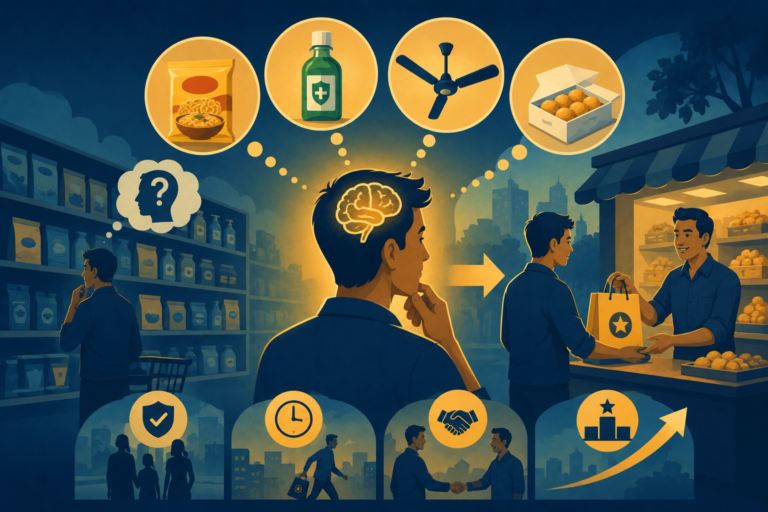
When a tired software engineer picks up that ₹10 drink after a long day at work, they aren’t simply buying a beverage. Their brain immediately connects the taste with a time when life felt simpler and free of responsibilities.
Also read: Why MDH Branding Survived Across Generations
The drink doesn’t actually bring those days back. But for a few moments, it allows the customer to feel like a child enjoying summer holidays again.
When the major beverage companies saw Paper Boat’s success, they rushed to launch their own traditional Indian flavours.
They failed.
You cannot simply put an ethnic label on a generic plastic bottle and expect consumers to form an emotional connection.
This is the reality of consumer psychology.
Logic rarely opens wallets. Emotion does.
Paper Boat demonstrates an important branding lesson: you cannot defeat established market leaders by copying their game. Launch another inexpensive cola, and you’ll likely disappear within months.
But a competitor cannot copy a genuine childhood memory.
If you’re building a business today, look for the emotional gap in your market. Discover what your customers secretly miss the most, and build your product around that feeling.
Because when you successfully sell a feeling of home, the size of your competitor matters far less.
– Written by Rajnish Singh, a copywriter and strategist with a background in fast-paced journalism, who explores the gap between what brands promise and how consumers actually behave.