Ignoring old favorites is dangerous. See how mastering nostalgia marketing turns ordinary memories into an unstoppable success.
Looking for a Shorter Overview?
AI Summary
Key Moments
Emotional Boost from Nostalgia
Nostalgic memories make consumers feel more attached to products and less price‑sensitive, sometimes willing to pay 20% more.Retro Product Redesign
Nintendo’s NES Classic Edition recaptured the 1980s look and sold 2.3 million units, demonstrating how revived designs drive strong sales.Pop‑Culture Collaboration
Coca‑Cola’s limited‑edition ‘New Coke’ cans tied to Netflix’s Stranger Things sold out within hours, highlighting nostalgia‑driven partnership power.Quality Must Back Nostalgia
If a nostalgic product fails quickly‑like a toy that breaks after an hour‑ customers lose interest, so reliability is essential.Many adults have fond memories of their childhood and often feel comfort when they think about the toys and experiences they enjoyed years ago. Businesses use these emotions to create strong commercial opportunities through Nostalgia Marketing.
Research published in the Journal of Consumer Research suggests that nostalgic memories can make people feel more emotionally connected to a product and less focused on its price. By bringing familiar images, products, and experiences from the past into modern campaigns, businesses can encourage customers to buy more readily. There are five effective ways companies can use old memories to promote products.
How Smart Brands Use Nostalgia Marketing to Release Old Designs
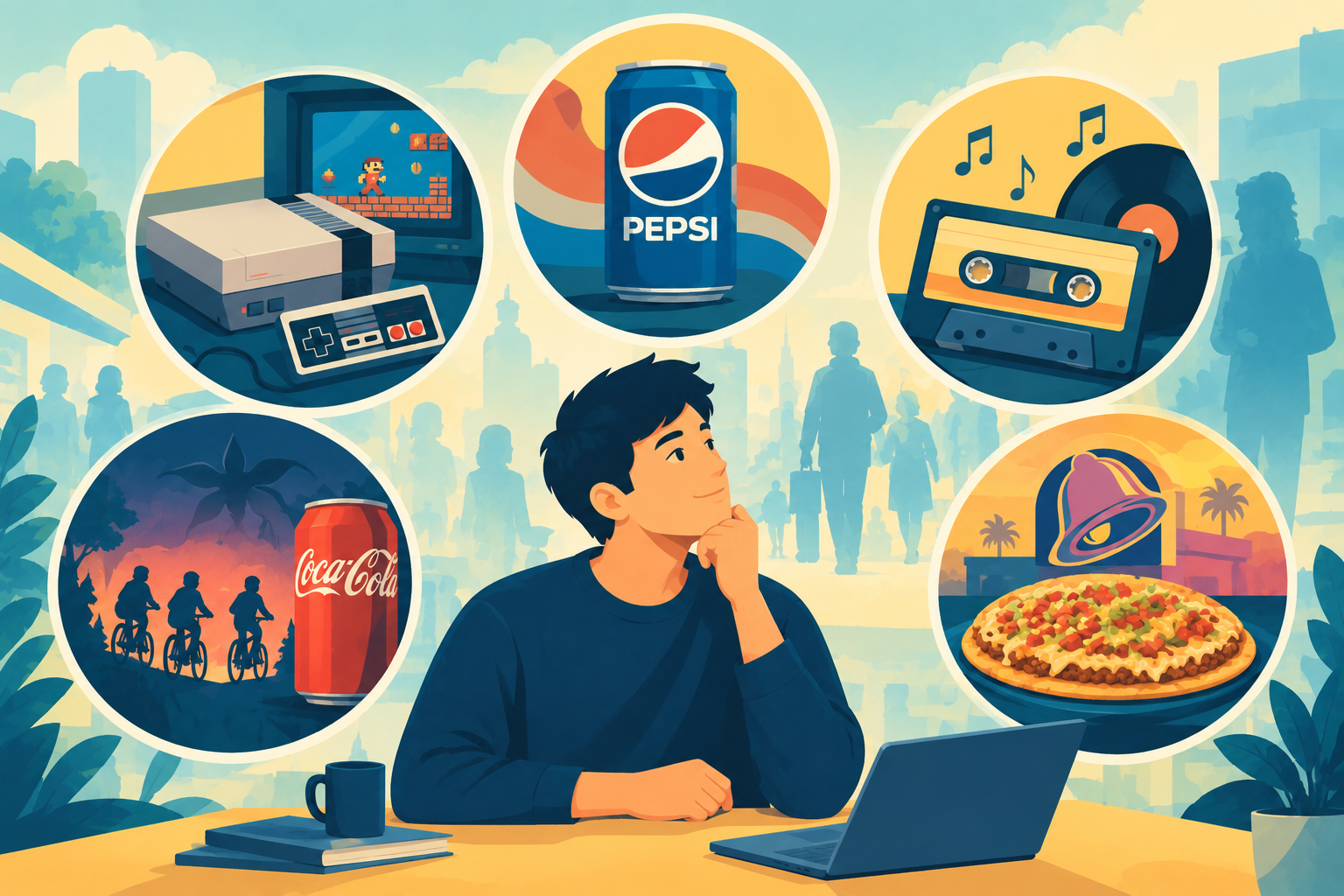
Technology companies often recreate products from the past to appeal to customers’ memories. Nintendo used this approach in 2016 when it released the NES Classic Edition, designed to resemble the original gray console from the 1980s.
The company updated the internal hardware to work with modern televisions while keeping the familiar exterior design. The console sold about 2.3 million units, showing the power of Nostalgia Marketing. Many adults were willing to pay for the chance to own and play with a product that reminded them of their childhood.
Retail brands often refresh modern packaging with familiar designs to attract shoppers. Pepsi, for example, has brought back older logos and the classic blue and red colors used on its cans in the 1990s.
When shoppers see these familiar colors in a supermarket, they may remember drinking Pepsi during their school years. The beverage itself has not changed, but the packaging creates an emotional connection through Nostalgia Marketing. By updating only the exterior design, the brand can attract attention and encourage additional sales.
Businesses often use familiar music to promote products and trigger memories. Burger King, for example, has used older songs in modern digital advertisements to connect with adult customers.
When people hear music associated with their past, they may pause to watch the advertisement and remember earlier experiences. This audio-based Nostalgia Marketing can encourage them to visit a restaurant and buy a meal. Instead of creating a completely new song, the company uses a familiar sound to attract attention and generate new sales.
Global companies often collaborate with popular historical shows to promote products through familiar memories. In 2019, Coca-Cola brought back “New Coke” as part of a partnership with Netflix’s Stranger Things, a series set in the 1980s.
The company produced thousands of aluminum cans featuring the old formula and sold them through an online store. The nostalgic campaign became so popular that the products sold out within hours and the website experienced heavy traffic. Coca-Cola generated significant attention and sales by connecting an old product with a beloved television series.
Food companies often revive discontinued products to reconnect with customers’ memories. Taco Bell, for example, removed its Mexican Pizza from the menu, but brought it back in 2022 after customers strongly requested its return.
Customers quickly returned to restaurants, and Taco Bell sold around 20 million Mexican Pizzas in a single month. This Nostalgia Marketing strategy required little new product development because the company could follow the original recipe and use familiar ingredients.
Also read: 6 Ways Brands Can Learn From Customers Who Switch to Competitors
However, businesses must remember that nostalgia cannot compensate for poor quality. If a retro toy stops working after an hour, customers will quickly lose interest. Research published in the Journal of Consumer Research suggests that nostalgic customers may be willing to pay about 20% more for everyday products than people who feel neutral toward them. Businesses should first create reliable products, then use familiar colors, designs, or flavors to strengthen the emotional connection.
Loved this article? Read more insightful articles on Brand Custodian.
–Written by Rajnish Kumar, a copywriter and strategist with a background in fast-paced journalism, who explores the gap between what brands promise and how consumers actually behave.