Discover how Titan's brand architecture creates distinct identities while building lasting trust across multiple product categories.
Looking for a Shorter Overview?
AI Summary
Key Moments
Divergent Brand Personalities
Titan’s sub‑brands like Fastrack, Titan, and Tanishq each develop unique identities to target distinct customer groups.Avoiding Brand Dilution
When a parent company expands into too many categories, it risks confusing customers and losing its core identity.Clear Brand Purpose
Each Titan brand is given a reason to exist, focusing on specific needs such as youth, elegance, or celebration.Underlying Trust Unifies
Years of built‑in trust with Titan serve as a silent backbone that connects all individual brands together.A few weeks ago, I walked into a Titan store with a friend who wanted to buy a watch for his first job. We thought it would be a quick visit: pick a watch, pay the bill, and leave. But as he was busy trying on different watches, I found myself wandering around the store.
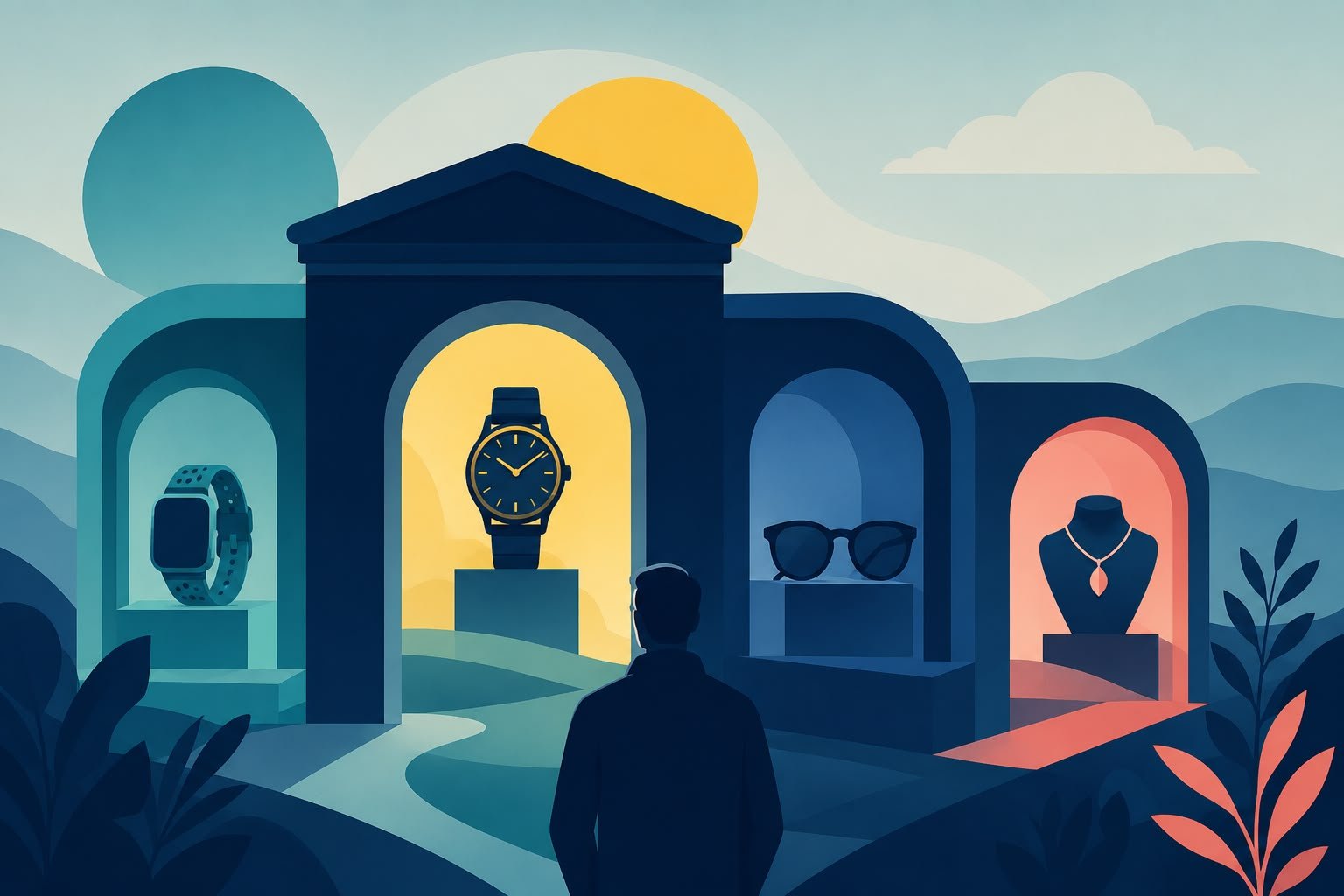
The longer I looked, the more I noticed that it wasn’t just about watches. There were elegant collections for formal occasions, premium timepieces displayed separately, smartwatches for younger buyers, sunglasses on another side, and, as we walked out, there was a Tanishq showroom just a few steps away.
It made me stop and think. How could all these brands belong to the same company and still feel so different?
On the drive home, I kept replaying that thought in my mind. Usually, when a company expands into too many categories, things start to feel confusing. The brand slowly loses its identity because it tries to be everything for everyone.
But that wasn’t the feeling I got from Titan. Every brand had its own personality, yet they all carried a quiet sense of familiarity and trust. Somehow, they felt connected without looking identical.
That’s what made me think about Titan branding.
What Titan Branding Quietly Teaches About Brand Architecture
The more I observed Titan, the more I realised that it never expected one brand to appeal to every customer. And if you think about it, that makes perfect sense. A college student buying their first affordable watch isn’t looking for the same experience as someone shopping for a luxury timepiece. A young professional interested in a smartwatch has very different expectations from a couple walking into Tanishq to choose wedding jewellery.
They may all belong to the same company, but they aren’t looking for the same story.
Instead of stretching one brand to fit every customer, Titan allowed each brand to develop its own identity. Fastrack speaks to a younger audience with a more playful personality. Titan carries a sense of timeless elegance. Tanishq represents celebration, craftsmanship, and trust.
None of them feel like copies of one another, and that’s exactly what makes them memorable. People don’t feel confused because each brand knows exactly who it is speaking to.
I’ve always thought of it as being a little like a family. Brothers and sisters grow up in the same house, but no one expects them to have the same personality. One might be outgoing, another quiet, and another deeply thoughtful. They’re different in their own ways, yet there’s still something that connects them.
That’s the feeling I get whenever I look at Titan branding. Every brand has its own voice, but somewhere in the background, the trust people have built with Titan quietly ties everything together.
Of course, creating multiple brands isn’t the difficult part. The real challenge is giving each one a reason to exist. If every Titan brand looked the same, targeted the same audience, and promised the same thing, customers would constantly wonder why there were so many of them in the first place.
Also read: What Paper Boat Reveals About Nostalgia Marketing
Instead, each brand occupies a clear place in people’s minds, making it easier for customers to understand what it stands for and when it fits into their lives.
The more I observe successful businesses, the more I feel that growth isn’t simply about adding more products or entering more categories. It’s about knowing when a new product deserves its own identity instead of asking one brand to carry every expectation.
That balance isn’t easy to achieve, but when it’s done well, customers never feel overwhelmed. They simply find the brand that feels right for them.
Maybe that’s the biggest lesson from Titan branding. The company didn’t build one giant brand that tried to speak to everyone. It built a family of brands where each one had its own personality, purpose, and audience, while quietly holding them together with years of trust.
Perhaps that’s why, no matter which Titan brand people choose, it still feels like they’re buying from someone they’ve known for a very long time.
– Written by Bhavya Singhal, an Emerging Journalist and Digital Media and Communication student exploring branding, marketing strategy, and consumer psychology through practical observations and real-world examples.