Discover how MDH Branding built trust across generations by becoming a familiar part of family kitchens and everyday memories.
Looking for a Shorter Overview?
AI Summary
Key Moments
Early Kitchen Exposure
Repeated sight of MDH spices in family kitchens creates an unconscious bond that lasts into adulthood.Instinctive Purchase Choice
Shoppers naturally reach for MDH in supermarkets, guided by years of familiarity rather than advertising.Steady Brand Identity
MDH keeps its packaging and look unchanged, reinforcing reliability and recognition across generations.Quality Fuels Loyalty
Consistent spice quality turns initial familiarity into lasting loyalty, making MDH a trusted household staple.There are some memories you don’t realise you’re collecting while you’re growing up.
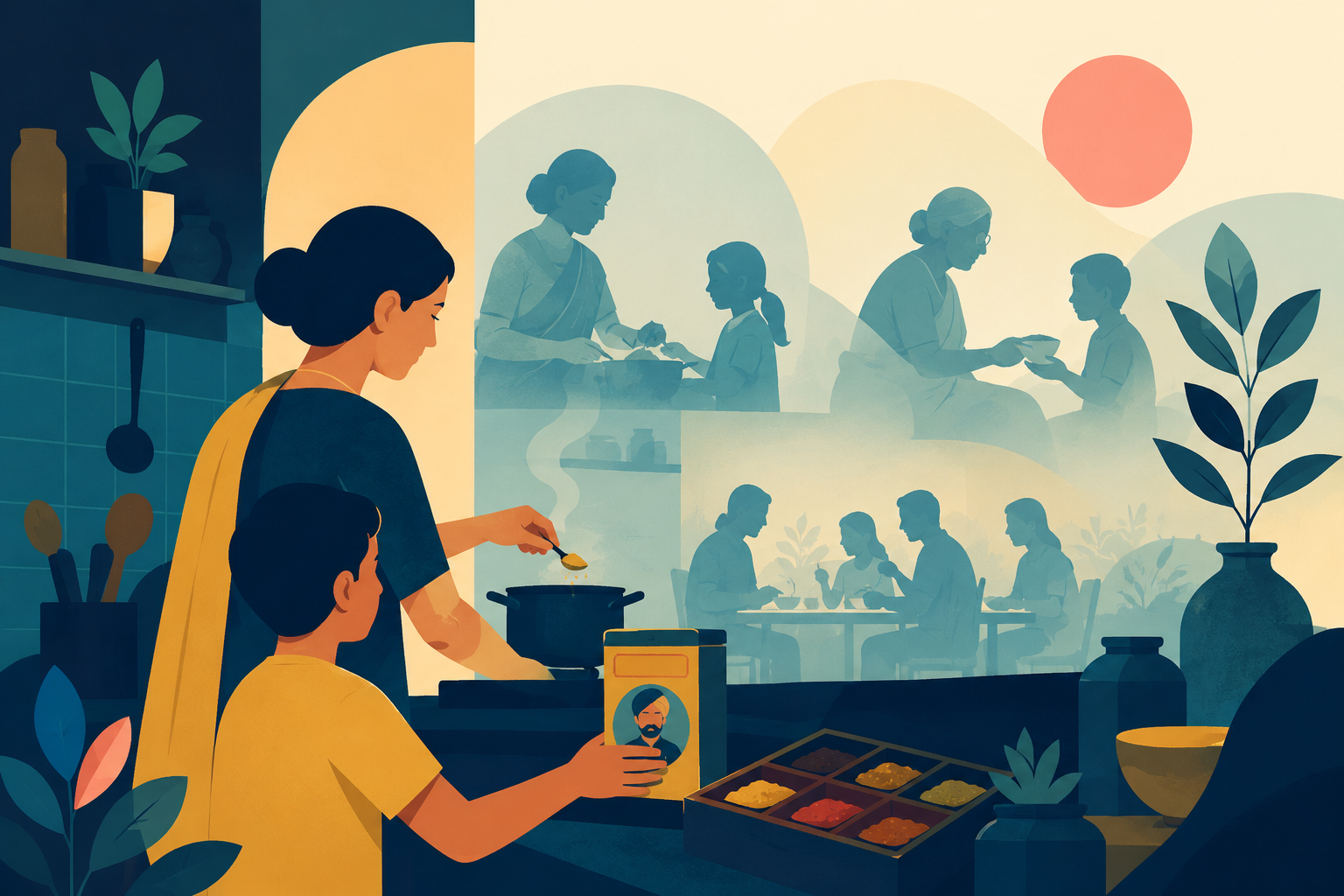
For me, one of them is sitting in the kitchen while my mother cooked dinner. I wasn’t helping much. I’d usually be waiting for the food, stealing a bite before it reached the dining table, or simply talking about how my day had gone. The kitchen was full of little routines that never seemed important back then.
Every now and then, she’d ask me to pass a spice box.
I never looked at the label. I never wondered who made it. I just knew exactly which box she was talking about. Somehow, even as a child, I could recognise it without thinking.
Years later, I was shopping for groceries on my own for the first time. I stood in front of a shelf filled with dozens of spice brands. Different colours, different designs, different offers. I picked up a few packets, read the labels, compared prices, and then, almost instinctively, my hand reached for MDH. It happened so naturally that I didn’t even question it.
On the way home, I kept asking myself a simple question: Why did I choose that?
It wasn’t because I had compared every ingredient. It wasn’t because I had watched a recent advertisement. In fact, I couldn’t even remember the last MDH commercial I’d seen. The answer was much simpler: it already felt familiar.
I’d seen that same box in my home for years. During ordinary dinners, Sunday lunches, Diwali preparations, birthday celebrations, and the countless meals in between, it had quietly been there. Without ever trying to get my attention, the brand had become part of my memory.
That’s what made me think about MDH branding.
Why MDH Branding Has Stayed Relevant for So Long
The more I observe brands around me, the more I realise that the strongest ones don’t always become successful because they shout the loudest. Sometimes they simply stay. They stay in our homes, they stay in our routines, and before we know it, they stay in our memories.
I think that’s exactly what happened with MDH. For many families, the brand wasn’t introduced through a clever marketing campaign. It was introduced by parents and grandparents who trusted it long before we were old enough to understand what a brand even was. That’s a different kind of trust. It isn’t built overnight; it quietly grows over years, one meal at a time.
I’ve noticed this whenever I visit relatives. Walk into almost any kitchen, and there’s a good chance you’ll spot an MDH packet tucked away on a shelf. Nobody points at it proudly. Nobody says, “Look, we buy this brand.” It’s simply there, almost as if it has always belonged.
And I think that’s what fascinates me the most.
MDH never seemed obsessed with looking different every few years. While many brands kept changing their packaging, redesigning their logos, or trying to appear younger, MDH remained comfortably familiar. Even seeing Mahashay Dharampal Gulati in its advertisements felt less like watching a celebrity endorsement and more like meeting someone you’d known for years.
Also read: What Raymond Branding Teaches About Premium Positioning
Of course, familiarity alone isn’t enough. If the spices inside the packet had disappointed people, those childhood memories wouldn’t have lasted very long. Every meal had to reinforce the trust people already had. That’s what slowly turned familiarity into loyalty, and loyalty into a habit that was passed from one generation to the next.
Maybe that’s the real lesson behind MDH branding.
The brand didn’t become a part of people’s lives because it constantly demanded attention. It became a part of their lives because it quietly showed up, year after year, meal after meal, without giving people a reason to stop trusting it. And perhaps that’s the rarest kind of branding.
The kind where people don’t choose the brand because they remember an advertisement.
They choose it because, somewhere along the way, the brand started feeling like a small, ordinary part of home. And sometimes, those ordinary feelings are the ones that last the longest.
– Written by Bhavya Singhal, an emerging journalist and a Digital Media and Communication student exploring branding, marketing strategy, and consumer psychology through practical observations and real-world examples.