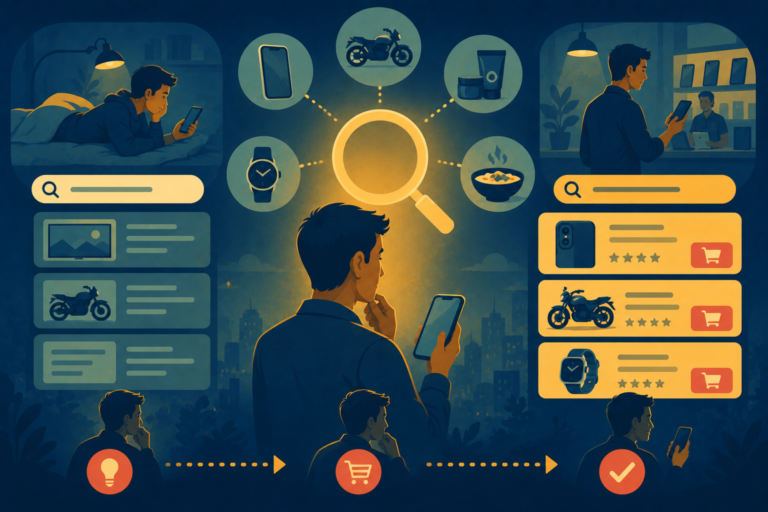
Discover how consumer psychology drives premium purchases through status, identity, emotion and brand perception.
Looking for a Shorter Overview?
AI Summary
Key Moments
Status Symbol Purchasing
Products like the Toyota Fortuner sell respect and authority rather than just transportation utility.Cultural Identity Marketing
Patanjali leverages Swadeshi sentiment to turn product purchases into national pride.Emotional vs Rational Decision Making
Consumer psychology shows emotion and social signaling drive purchasing more than product functionality.Premium Pricing Psychology
Brands command higher prices by selling status, security, and identity rather than just physical goods.Do you know the salary of an entry-level software tester in Bangalore?
No?
Let me tell you. They earn about ₹35,000 a month.
But why am I asking this seemingly random question?
Because tomorrow you might see someone earning ₹25,000–35,000 a month walk into a retail store and buy an iPhone that costs three times their monthly salary on a high-interest EMI. They do not need the A16 Bionic chip. They do not care about the aerospace-grade titanium finish.
So why did they buy it?
Because they simply want to place that phone face-up on a sticky table at a crowded pub in Indiranagar or take a mirror selfie and post it on Instagram.
You can find examples like this everywhere. Think of someone spending ₹400 on a coffee at Starbucks instead of enjoying a better-tasting ₹50 coffee at a local café.
These are not merely financial transactions. They are often desperate bids for social status, driven entirely by consumer psychology.
The Dark Art of Consumer Psychology
In the Indian market, logical pricing is a fairy tale. Once a brand successfully scales, it stops selling physical goods. It starts selling psychological leverage.
Take the Indian SUV market. One vehicle stands out: the Toyota Fortuner.
If you evaluate it purely as a machine, it is not the smartest financial decision. It costs nearly ₹50 lakh today. Its suspension is notoriously stiff, often throwing passengers around on rough roads. Even the dashboard plastics feel as though they belong in a commercial pickup truck from 2012.
Before it was discontinued in India, the Hyundai Tucson offered significantly better luxury, technology, and ride comfort for much less money.
But businessmen and local politicians do not care about dashboard plastics. They understand a specific, powerful aspect of consumer psychology.
They know that a white Fortuner is not just a vehicle. It is a rolling symbol of authority. It operates on a primal level, signalling power and influence. When you drive one, smaller cars often move aside instinctively.
You are not paying nearly ₹50 lakh for an SUV. You are paying a premium for the immediate respect—and sometimes fear—it commands on the road.
Now consider the premium attached to cultural identity.
A few years ago, Patanjali disrupted India’s FMCG market. It did not achieve this by publishing peer-reviewed clinical trials proving that its toothpaste was scientifically superior to products from Hindustan Unilever.
Instead, it bypassed logic altogether. It tapped into the powerful sentiment of Swadeshi. It convinced millions of middle-class Indian households that buying an Ayurvedic product was, in some way, an act of national pride.
Dant Kanti did not compete on fluoride content or cavity protection. It competed on cultural identity.
That is consumer psychology operating at scale. It subtly makes consumers feel guilty about choosing the multinational alternative.
For brands, the lesson is simple: logic may get your product onto the retail shelf, but emotion persuades consumers to open their wallets.
Also read: Why Consumers Rely on Emotional Memory More Than Advertising
The Premium Pricing Illusion
This is precisely where many modern founders go wrong.
They try to justify premium pricing with an extra software feature, thicker cardboard packaging, or a slightly longer warranty. They build detailed spreadsheets to calculate margins and convince themselves the higher price is rational.
But customers do not care about your operational costs.
They care about how your product makes them look in front of their judgmental relatives. They care about avoiding the unspoken embarrassment of bringing a cheap gift to a North Indian wedding.
They care about feeling successful, secure, respected, and accepted.
Once you understand consumer psychology, you stop selling commodities.
You start selling status.
You start selling safety.
You start selling identity.
And people will happily empty their bank accounts to buy all three.
– Written by Rajnish Singh, a copywriter and strategist with a background in fast-paced journalism, who explores the gap between what brands promise and how consumers actually behave.