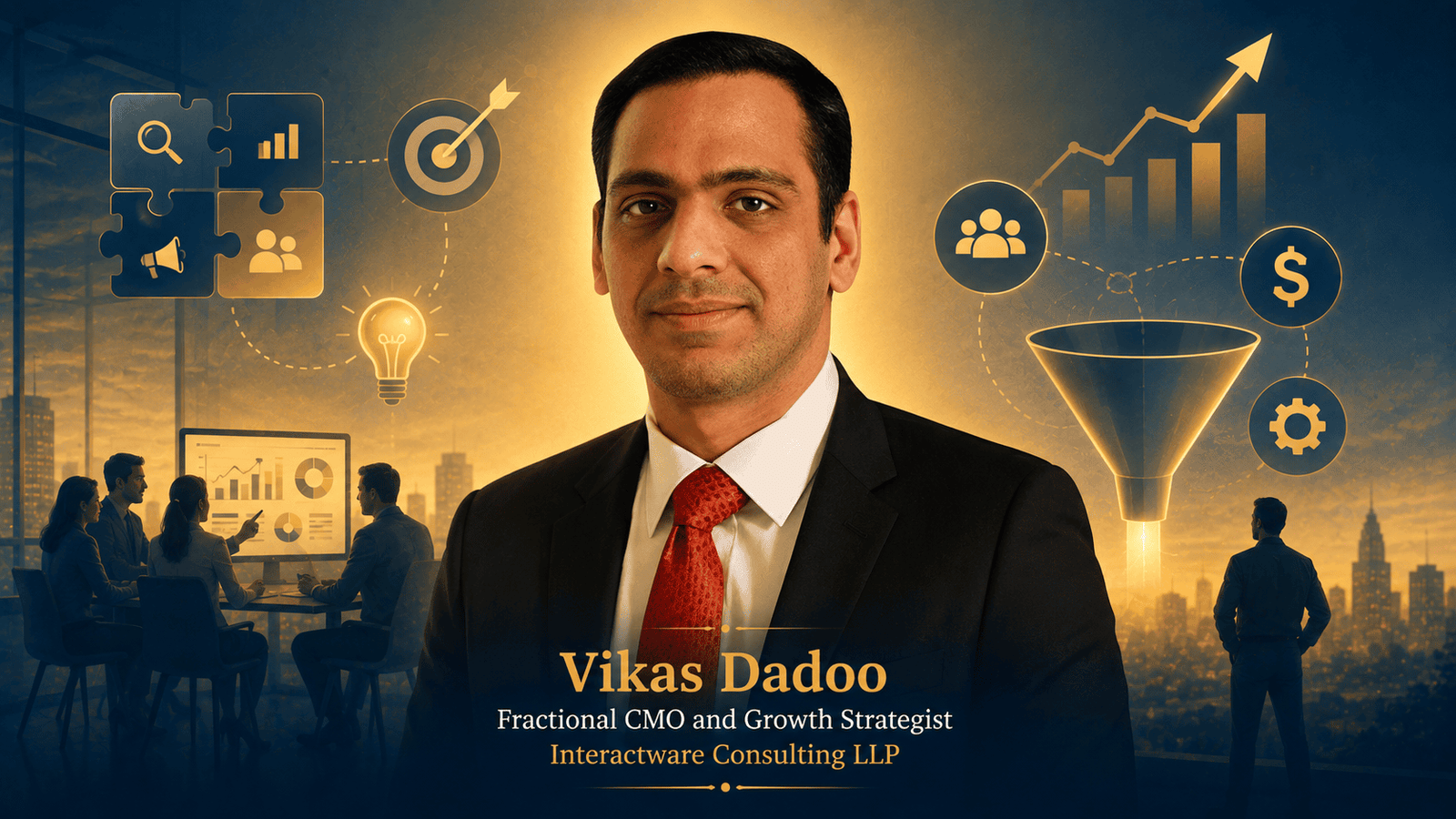
A pragmatic guide to AI marketing in 2026, showing how leaders can reduce CAC, improve ROI, and eliminate media waste.
Looking for a Shorter Overview?
AI Summary
Key Moments
Shift from AI Hype to CAC Reduction
Mid‑market Indian enterprises must focus on aggressive CAC reduction and real ROI through data‑first strategies, not just AI adoption.Siloed, Channel‑First Marketing Undermines AI
Separate teams managing SEO, paid media, social, and email create fragmented data that causes AI to make poor decisions and hide growth impact.Three High‑Yield Use Cases Drive Results
Predictive lead scoring, WhatsApp‑driven conversational journeys, and real‑time conversion optimization together slash media waste and accelerate pipeline velocity.Data Funnel Fix Enables AI Impact
Unifying fragmented CRM, ad accounts, and reporting into a single data layer is the prerequisite for AI to solve media waste effectively.Generating ad copy in five seconds, automating weekly reports, or churning out social creatives at zero cost—these were the quick wins everyone bragged about when Gen AI went mainstream. For a minute, it felt like we were saving a lot of money.
But as we navigate 2026, Indian CEOs and CMOs are facing a cold reality check: saving a few lakhs on content production means absolutely nothing if your core media spend on Meta and Google keeps climbing. Efficiency in execution is no longer a competitive advantage; anyone with a laptop can do it. The real battleground right now is efficiency and effectiveness in media.
For mid-market Indian enterprises trying to scale sustainably today, the mandate has shifted. The goal isn’t “AI adoption” for the sake of it. It’s the aggressive reduction of Customer Acquisition Cost (CAC) and the maximization of actual ROI through a data-first, high-yield roadmap.
Why Your Current AI Setup is Underperforming
Most companies I talk to are still running on a decade-old, channel-first marketing structure. You have separate teams or agencies managing SEO, paid media, social, and email. They deploy basic AI tools within their own little bubbles, celebrating isolated metrics like “higher click-through rates” or “faster asset turnaround,” while the broader business struggles to trace any of it back to top-line growth.
The problem? These frontline AI applications are completely decoupled from your core revenue systems.
AI cannot manufacture a brilliant strategy out of thin air. It simply amplifies the patterns already present in your data. If your customer data is fragmented across legacy CRMs, mismatched spreadsheet reports, and disjointed ad accounts, AI will only help you make wrong decisions faster.
True marketing transformation begins by fixing the leaking data funnel. Only then can AI solve your most expensive bottleneck: media waste.
Where to Actually Focus for Maximum Yield
If you want to protect your margins this year, stop funding ‘generic’ AI experiments. Focus your resources on three battle-tested use cases that move the metrics boards actually care about.
- Stopping the Ad-Spend Bleed: Instead of throwing massive budgets at broad demographics and hoping the algorithm figures it out, you should be using predictive models to score your existing CRM data. For an Indian D2C brand or a B2B services firm, this single pivot radically optimizes ad spend on Meta and Google by narrowing targets exclusively to high-intent segments.
For example, if you’re a mid-market luggage brand, stop blasting your entire database. A predictive model can isolate the exact micro-segment of users who bought a travel backpack six months ago and have recently visited a premium suitcase page twice. You only spend money targeting them.
- Compressing the Sales Cycle: In a market where WhatsApp is the undisputed lifeblood of both consumer communication and B2B commerce, basic email drip campaigns are practically dead. By leveraging tools built on the WhatsApp Business API combined with intelligent middleware, you can deploy hyper-targeted, behaviour-driven conversational journeys.
Imagine a B2B SaaS platform where a visiting CFO is instantly routed into a WhatsApp sequence highlighting “Real-Time R&D Tax Credit Optimization,” while a CTO receives technical documentation on “Multi-Cloud Compliance Setup”—both triggered automatically based on the visitor’s underlying firmographic data the second they land on the site.
- Real-Time Conversion Optimization: Waiting for monthly or quarterly agency reviews to optimize landing pages is a luxury modern enterprise cannot afford. AI-assisted conversion tools can adjust headlines, offers, and CTAs on the fly based on live user behaviour.
If a high-growth e-commerce marketplace detects a user hesitating on a cart page on a Friday afternoon, the system can instantly trigger a time-sensitive, personalized discount widget tailored precisely to the product category they lingered on the longest, capturing the transaction before they close the tab.
Also read: The Use of Data Analytics in Marketing
The Bottom Line
As a leader, your success isn’t measured by the volume of AI platforms your teams deploy.
It is measured by lower CAC, accelerated pipeline velocity, improved Customer Lifetime Value (LTV), and a resilient return on marketing investment.
The companies that will dominate the Indian market over the next five years will not be those with the largest AI budgets. They will be the ones that apply it with absolute strategic clarity, operational discipline, and an unrelenting focus on measurable business outcomes.
The Blueprint in Action
Implementing this isn’t about buying more software; it’s about architecting a system where data actually talks to execution.
To show you what this looks like in the real world, I’ve documented a recent breakdown of how a mid-market Indian brand restructured its fragmented data layer, integrated intelligent WhatsApp workflows, and managed to slash its blended CAC by 34% in less than 90 days.
If you want to see the exact tech stack, the data-mapping framework, and the step-by-step roadmap we used to turn their marketing into a predictable profit center, you can read the full teardown here.
– Written by Vikas Dadoo, a Fractional CMO and Growth Strategist with over 20 years of experience helping businesses drive revenue growth through data-driven marketing strategy, integrated systems, and execution. Having worked with global brands, agencies, and founder-led businesses, he now helps leadership teams build scalable revenue growth engines and is an award-winning marketer and international speaker on AI in marketing.