Discover how storytelling, local culture and word-of-mouth help brands build trust and lasting connections in India’s small towns.
Looking for a Shorter Overview?
AI Summary
Key Moments
Story‑Driven Trust
Small‑town consumers prioritize trust built through local stories over product features.Character Over Feature
Brand personas (like 'Pahalwan Lassi') resonate more than technical specifications.Satire Beats Sincerity
Humor and self‑deprecating storytelling engage hyper‑aware small‑town audiences.Bicycle‑Ready Storytelling
Brand narratives must be simple enough to be retold quickly in word‑of‑mouth cycles.India’s branding conversation is largely dominated by metros. We study D2C brands from Bangalore, campaigns from Mumbai, and consumer insights from Delhi. But the real India, the Bharat that actually buys, lives in small towns, in places like Banaras, Gorakhpur, Lucknow, and Goa. And here, brands are not built by big budgets. They are built by stories.
As a freelance writer working on my political satire series ‘BandarTekar Gatha’, I have spent months observing how a small-town tea shop becomes more famous than a branded cafe. It is not because of its logo or its Instagram. It is because of its story. Everyone knows, ‘Arre wohi chai wala, jahan neta ji ne ek baar apni jeep roki thi.’
In small towns, people don’t buy products. They buy familiarity. They buy trust. And trust is never built by an ad; it is built by a story that travels from one shop to the next.
Why Metros Need Data, Small Towns Need Drama
In a metro city, a brand needs to prove its efficiency. In a small town, a brand needs to prove its belongingness.
I have divided this into 3 principles that I use in my own writing:
1. The Character is Bigger Than the Product: In Banaras, a lassi is never just a lassi. It is ‘Pahalwan Lassi — where the wrestler who fought a British officer used to drink’. The product is the same, but the character makes it a landmark. Brands entering small towns need to stop selling features and start creating characters.
2. Satire Sells More Than Sincerity: This is what my series BandarTekar Gatha taught me. Small-town audiences are politically and socially hyper-aware. They love satire. If you can laugh at yourself, they will trust you. A brand that says ‘We are the No.1’ will be ignored. A brand that says ‘We know Banaras me sab guru hain, isiliye hum extra meetha daalte hain’ will be loved.
3. The Story Must Be Repeatable on a Bicycle: In small towns, your best marketing channel is not Meta Ads; it is word-of-mouth on a bicycle. If your story is too complex to be retold in 30 seconds while cycling, it will die. Can a 15-year-old boy explain your brand story to his grandmother? If yes, you will grow.
What I Learned While Writing BandarTekar Gatha
While writing my own series, I realized that the most powerful brands in small towns never try to look big. They try to look local. A small mobile shop in Lucknow does not put ‘Best Mobile Shop’ on its board. It writes ‘Bablu Bhaiya Mobile Centre — Pappu ki shaadi ka card yahin se chapa tha’. That one line brings more trust than any celebrity endorsement. That is the real branding lesson for big brands entering Bharat.
Today, when a big brand from Delhi comes to Lucknow or Gorakhpur, they come with English taglines and metro-style advertising. But the local shopkeeper defeats them with just one sentence in Bhojpuri or Awadhi. This is because small-town India does not want to be impressed; it wants to be included.
Also read: PR for PR – PRotecting the Profession
When we were writing BandarTekar Gatha, we learned that people remember a funny, honest line more than a glossy poster. The same is true for brands. If your brand can become part of their daily gossip, their chai tapri discussion, and their local festival, you have won.
We often think of small towns as a market to capture. In reality, they are a story to join. If you go there to sell, you will fail. If you go there to listen to a story, and then add your own one line to it, you will become a local brand forever.
Because in the end, 125 crore Indians don’t lack talent; they just lack a story that includes them.
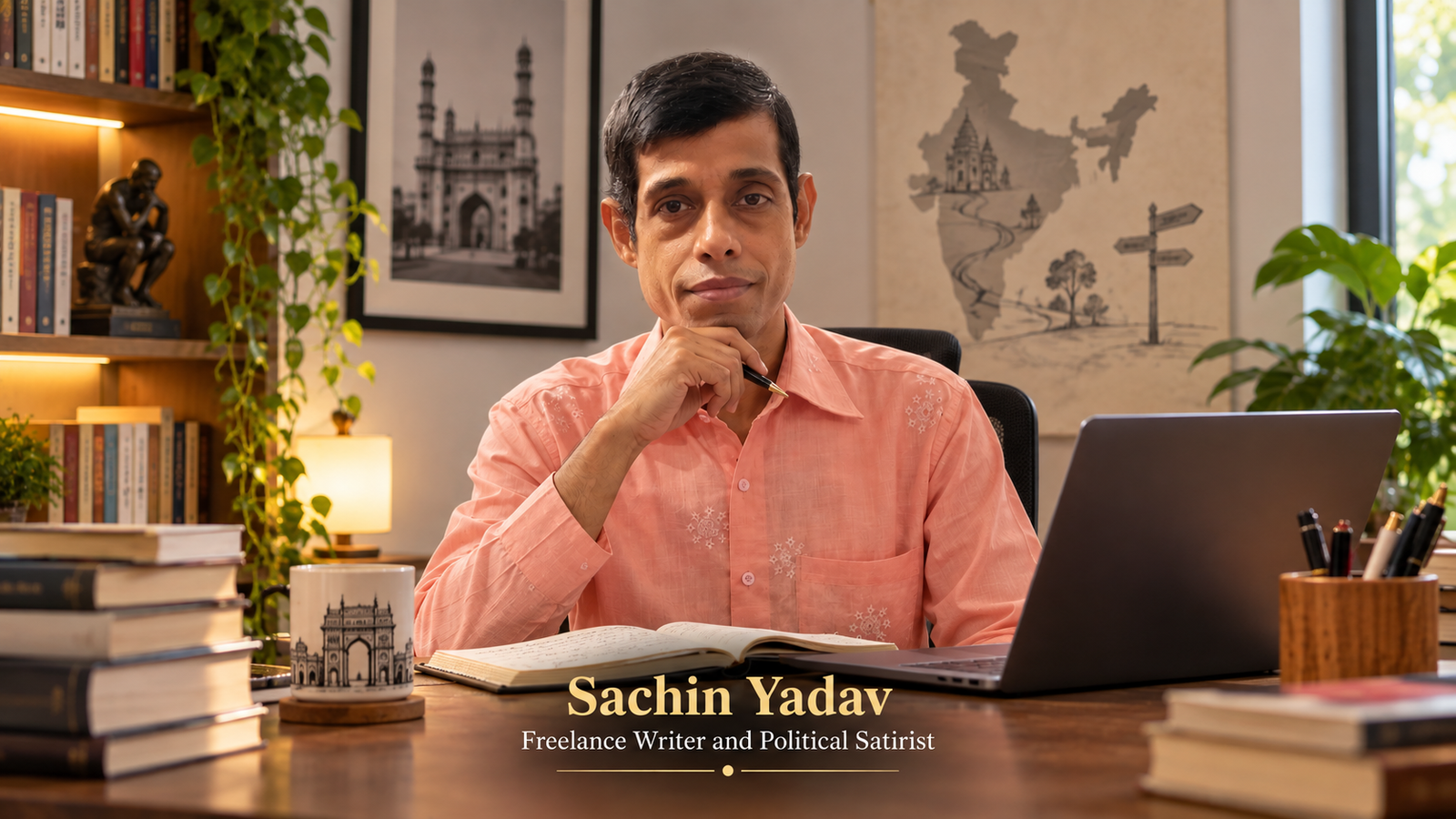
– Written by Sachin Yadav, a Lucknow-based freelance writer and political satirist, author of ‘BandarTekar Gatha – THE KENNEL (Banaras to Goa)’. He writes on storytelling, small-town culture, and the writing community.