Explore how the Indian watch market is evolving as informed consumers drive demand through education, trust and storytelling.
Looking for a Shorter Overview?
AI Summary
Key Moments
Consumer Transformation
Indian buyers shifted from practical purchases to passionate collecting driven by craftsmanship and storiesInformation Access Revolution
Social media and online platforms democratized watch knowledge, creating well-informed enthusiastsEmotional Value Over Function
Watches now represent identity and artistry rather than just timekeeping utilityCommunity-Driven Growth
Young collectors are building authentic watch communities focused on shared passion and educationWhen people ask me what has changed the most in the Indian watch market, my answer is simple: the consumer.
A decade ago, many people bought a watch because they needed one. It was a practical purchase or perhaps a gift to mark an important occasion. Today, I see a very different buyer. More people are investing in watches because they appreciate what they represent. They’re looking for craftsmanship, heritage, engineering and, above all, a story they can connect with.
That shift is exciting, but it has also made marketing watches far more nuanced than it used to be.
One of the biggest reasons for this transformation is access to information. Social media, YouTube creators, online forums and trusted e-commerce platforms have democratised watch knowledge in a way we have never seen before. Someone living in a small town today can watch detailed reviews of Swiss movements, understand complications, compare finishing techniques and discover brands from around the world, all from their phone.
As a result, Indian buyers are becoming remarkably well-informed.
Many customers I interact with already know the difference between automatic and quartz movements. They ask about calibres, finishing, servicing, heritage and long-term collectability. These aren’t questions that were common a few years ago. Curiosity has turned many first-time buyers into genuine enthusiasts, and that’s perhaps the biggest change I’ve witnessed in the industry.
Ironically, this growing enthusiasm has arrived at a time when traditional watches face their biggest functional challenge.
After all, everyone carries a smartphone. Millions also wear smartwatches. If every device around us tells the time more accurately than a mechanical watch, why should anyone buy one?
I’ve heard this question countless times.
My response is that it starts with understanding what a watch is really meant to do.
People don’t buy mechanical watches simply to know the time. If that were the only purpose, the category would have disappeared years ago. A traditional watch offers something entirely different. It represents emotion and personal identity. It’s no different from buying a piece of art. You don’t hang a painting because you need to cover an empty wall. You buy it because it makes you feel something.
That’s where I believe the biggest marketing challenge lies today.
We aren’t trying to convince consumers that they need a watch. We’re helping them discover why they might want one.
Those are two completely different conversations.
Marketing in this category therefore cannot rely only on promotions, celebrity endorsements, or discounts. It requires education. It requires storytelling. More importantly, it requires patience.
Many misconceptions still shape how consumers view watches. Some believe luxury watches exist purely as status symbols. Others assume that the most expensive watch is automatically the best one. Then there are those who feel mechanical watches have become obsolete because smartwatches offer more features.
These assumptions are understandable because most people compare watches with technology products. But watches aren’t part of the technology race. They belong to a category where craftsmanship, design, history, and emotional connection matter far more than processing power or software updates.
That’s why I believe our industry has a responsibility to educate before it sells.
Every conversation with a customer is an opportunity to explain the engineering behind a movement, the heritage of a brand involved in creating something designed to last for generations. When people understand these stories, they stop looking at watches as accessories and begin appreciating them as objects of enduring value.
I’ve learnt that today’s Indian consumer is incredibly curious. If you give them authentic information instead of marketing jargon, they’re willing to invest the time to learn. And once they do, they often become passionate advocates for the category.
Looking ahead, what excites me most is seeing younger people develop a genuine passion for watches. More young collectors are beginning their journey, not because they’re chasing status, but because they’re fascinated by the craftsmanship, history and stories behind every timepiece. Alongside this, we’re seeing enthusiastic communities organise watch meet-ups where collectors connect, exchange knowledge and celebrate the culture together. That sense of community is incredibly encouraging because it shows the category is growing organically.
I also believe the next few years present significant opportunities for brands and retailers. As interest in independent watch brands continues to grow in India, consumers will have more choice than ever before. In such an environment, success won’t simply come from having the biggest catalogue or the loudest marketing campaign. Brands and retailers that invest in transparency, community building and meaningful customer experiences will be the ones that earn lasting trust.
Also read: Moving Beyond the Hype: A Pragmatic Leader’s Guide to Marketing in 2026
I believe we’re only at the beginning of India’s watch journey.
For brands and retailers, the opportunity is much bigger than selling watches. It’s about creating informed enthusiasts who understand what makes this category special. The winners won’t necessarily be those with the biggest advertising budgets. They’ll be the ones who consistently educate, build trust, and contribute to a stronger watch culture in India.
Because in the end, we’re not really marketing products.
We’re introducing people to a lifelong passion, one story, one conversation, and one watch at a time.
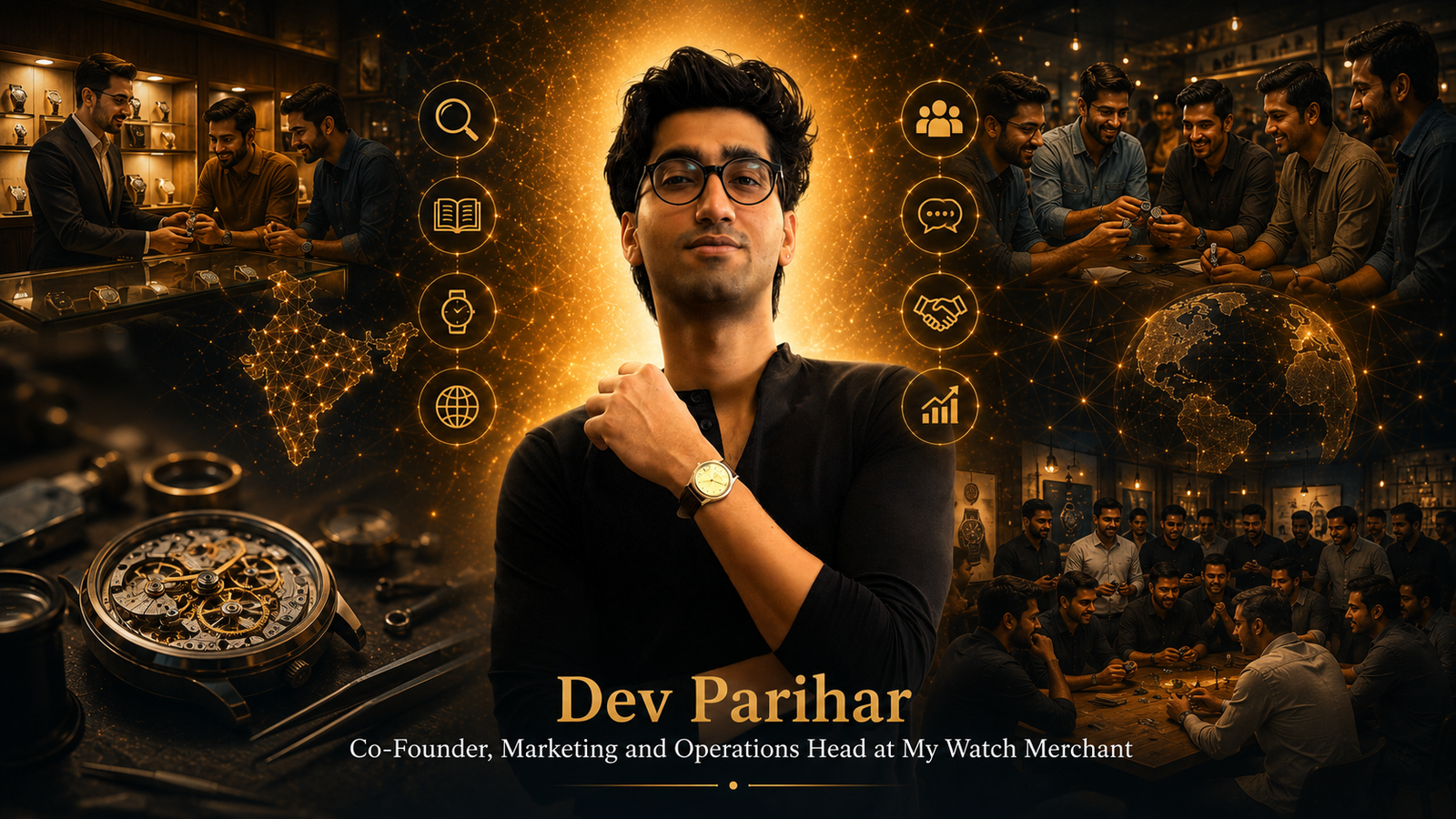
– Written by Dev Parihar, Co-Founder, Marketing and Operations Head at My Watch Merchant, a Mumbai-based luxury watch business with over 70 years of heritage in watch servicing, restoration, and authentication. Passionate about horology, he works closely with collectors and enthusiasts while helping grow India’s watch culture through education and authentic customer experiences.