Looking for a Shorter Overview?
AI Summary
Key Moments
AI Generates Words, Humans Provide Purpose
AI can quickly produce text, but only skilled professionals understand why those words matter to the audience.Human Elevation Over AI
True impact comes from elevating AI output with cultural context, emotional truth, and distinctive flavor.Avoiding Flavor Fatigue
When everyone uses the same AI tools, bland content emerges; differentiation requires personal judgment and emotional resonance.Shift from Production to Purpose
AI makes content creation effortless, so success now hinges on having meaningful ideas and deep audience insight.Artificial Intelligence may be one of the best things to happen to content marketers who know their craft, and one of the most uncomfortable things to happen to those who don’t. It may kill a few jobs along the way, but more importantly, it will raise the bar for everyone. To stay relevant, you’ll have to be exceptionally good at what you do.
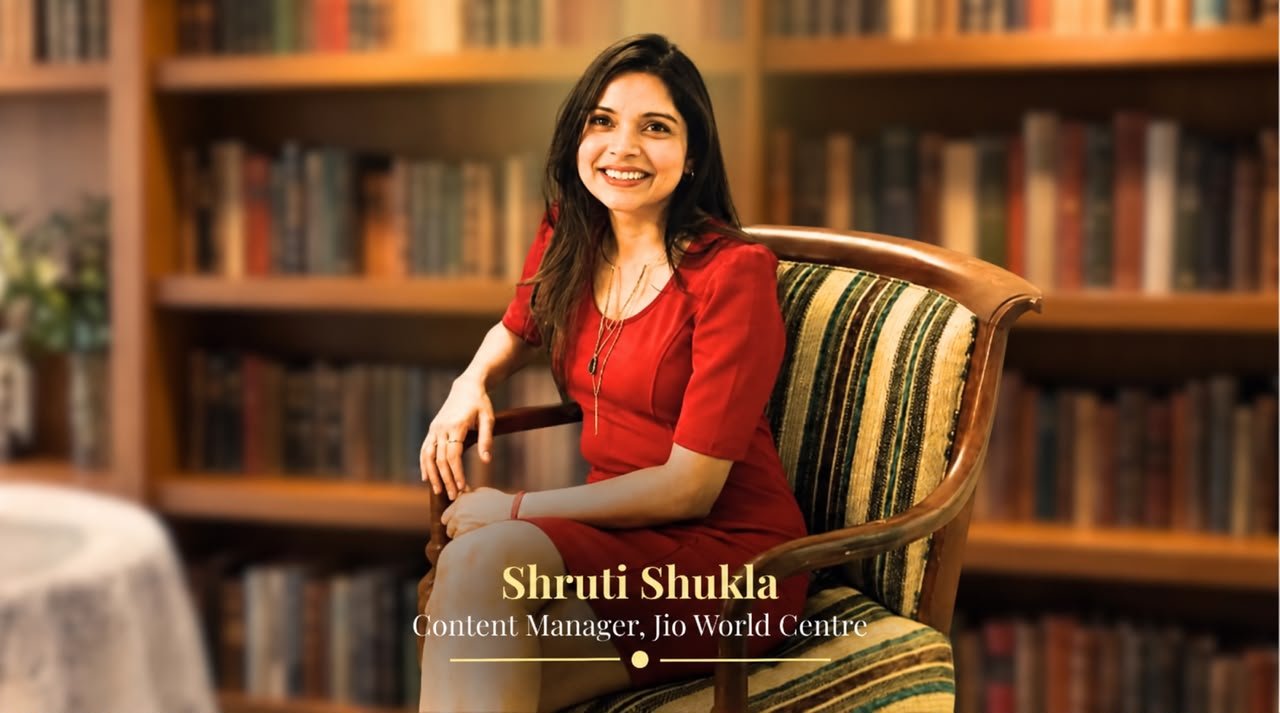
By Shruti Shukla
As a writer, using AI felt almost like cheating. I had spent years honing something that had always come instinctively to me: knowing when a sentence worked, when it didn’t, which word belonged where, when something needed saying and, more importantly, when it didn’t. I had learnt to obsess over the details, sometimes over the ones nobody would notice anyway. And then came a machine that could do some of it in seconds.
After nearly a decade in content marketing, across editorial, advertising, digital marketing and content strategy, I was reluctant to use AI for work for the longest time. When I finally did, there was an unexpected feeling of embarrassment that came with it. Would using AI mean I didn’t know my work well enough? Was I taking a shortcut? If I could get a machine to help me write, was I still a writer?
I now think I was asking the wrong questions. The better question was: How can I use this incredibly powerful tool to become better, and rather quicker, at what I do?
AI can write, but can it communicate?
Give AI a brief, enough context and a reasonably good prompt, and you can get a competent output in a fraction of the time. For technical writing, informational content, and work that primarily requires organising existing information, this can be incredibly useful.
But content marketing has never really been about getting from A to B. It is about what happens in between, what makes someone understand, care, get curious, trust a brand, laugh, pause, feel something or see a problem differently. And eventually, what nudges them towards a decision. This is where writing and communication part ways.
AI can generate words. A skilled content professional understands why those particular words need to exist in the first place. Anyone can tell a customer that a product is good. A marketer has to understand the customer well enough to tell them why it should matter to them. The difference is subtle, but fundamental.
You can ask AI to make something sound luxurious, witty, youthful, or empathetic. You can give it a brand’s tone of voice and ask it to replicate it. But can you tell when it has got the tone right and the thought wrong? Can you recognise when a beautifully constructed sentence is saying absolutely nothing? Can you tell the difference between something that sounds like a brand and something that actually belongs to it? That is where the writer, editor and marketer matter more than ever.
AI still needs someone at the wheel
There is a misconception that AI is a magic button: feed in a brief, receive brilliance. In reality, the better the person at the other end understands the subject, the audience, and the desired outcome, the more useful the machine becomes.
Prompt engineering is part of this. Knowing how to feed information into an AI system, provide context, challenge the output and keep refining it is a skill worth learning. But prompt engineering alone is not expertise.
You can teach someone to ask AI for a campaign, but that doesn’t teach them how to think like a brand. You can ask it for ten ideas, but you still need to recognise which one has the potential to become something. You can ask it to make something emotional, but you still need to understand what the audience should feel, and why. You can ask it to tell a story, but you still need to know what to do with that story to make it meaningful.
AI is an assistant. It can be an exceptionally good one. But an assistant is only as good as the person giving the brief.
What happens when everyone has the same assistant?
Earlier this year, as shows and events were being cancelled across the country in the wake of a difficult global moment, brands and cultural institutions found themselves having to communicate the same basic message: we’re cancelling, we’re postponing, we understand this is disappointing.
The posts were appropriate, sympathetic and carefully worded. And yet, after a while, they began to blur into one another. I couldn’t always tell whether I had seen the same brand’s communication twice, or two different brands saying essentially the same thing.
Of course, AI isn’t necessarily responsible for every one of those posts. But it was a good illustration of what happens when the same technology is used to arrive at the same expression of an idea without enough human thinking behind it. The message gets across, but the flavour gets lost.
The message may be factually correct, grammatically flawless, even empathetic, but when everyone has access to the same tool, and no one brings enough of their own judgement, flavour fatigue sets in. Content marketing cannot afford that, because brands don’t just compete on what they say, they compete on how they make people feel.
Content marketing has always been about connection
Good marketing has never been about simply producing an output. It has always required an understanding of the audience, the brand, the cultural context, the platform, and the business objective. AI hasn’t changed that. It has simply made it harder to confuse producing something with knowing what to do with it.
AI can now do much of the producing. Give it a brief, and it can give you an angle. Feed it enough information, and it can structure the argument, find the hook, suggest the headline, and polish the prose. The skill, then, is in knowing what to do with what you’re given.
If AI can produce a competent first draft in seconds, your value cannot simply be that you can produce a competent first draft. It is in recognising the potential, challenging the obvious, bringing in the cultural reference, shifting the perspective, finding the emotional truth, and turning something generated into something that feels considered and distinctive.
While AI can generate, the human has to elevate. That human layer is not a weakness in AI, it is precisely what makes AI useful. And this applies whether you’re writing the copy, developing the campaign, shaping the strategy, or deciding what goes out into the world.
The marketer of the future needs to be a jack of all trades, and an absolute master of one. They need to understand audiences, culture, brands, storytelling, strategy, platforms, formats, and increasingly, technology. They need to be comfortable with data without losing their creative instinct.
You should not be afraid of AI, you should be afraid of not learning it
I spent a long time feeling uncomfortable about using AI. I now see it almost completely differently. My reluctance was a little like someone refusing to learn how to use a computer because they were proud of doing everything by hand, or refusing to use a smartphone because they preferred the old way of doing things.
The technology doesn’t diminish the skill, refusing to learn it eventually might become the limitation. I don’t want to spend six hours doing something a machine can help me do in two. I want to spend those four hours thinking, reading something that has nothing to do with work, going down an interesting rabbit hole, making the idea better, or better still, finishing work on time. In a working culture where being busy can sometimes be mistaken for being good at your job, that feels like a rather meaningful benefit.
AI doesn’t only give us efficiency; it gives us time. What we do with that time is where the human advantage begins.
Also read: Getting Published Is Only Half the Journey: What Authors Learn About Marketing the Hard Way
I don’t want to beat AI at being AI
AI is getting better at my job every day. Good, I’m getting better at AI every day too.
My relationship with it has gone from reluctance, to embarrassment, to experimentation, and now, frankly, appreciation. It is no longer a shameful shortcut. It is a tool I want to understand as deeply as I understand my own craft.
But I don’t want to compete with AI at being a machine. I don’t want to write faster than it can write. I don’t want to produce more words than it can produce. Instead, I want to get better at knowing what is worth saying.
Because there are things that don’t come neatly from existing information: a strange cultural observation; an unexpected connection between two seemingly unrelated things; a joke that works because of the particular moment in which it is told; the instinct to challenge the brief; the courage to say, this doesn’t sound like us; the line that makes someone stop scrolling; the idea that arrives while you’re doing something completely unrelated to work; and the understanding that when a technically perfect piece of communication has somehow missed the point. These things are messy, inefficient, and difficult to quantify. Very human. And that is precisely why they will matter more.
If AI makes it easier for everyone to produce content, then producing content will no longer be enough. You will have to have something to say. You will have to know why it matters. You will have to know who it matters to. And you will have to be very, very good at knowing the difference between good enough and good.
I don’t think aspiring writers and content marketers should be afraid of AI. For those of us willing to keep learning, experimenting and getting better at our craft, it isn’t a threat; it is a challenge. Read more. Observe more. Think harder. Develop taste. Build judgement. Become an expert and let AI make the work faster.
Everyone can use AI, but the age of AI belongs to those who know what to do with it.
– Written by Shruti Shukla, a content and marketing professional with nearly a decade of experience across editorial, advertising, digital marketing and content strategy. A Creative Writing graduate from the University of Sheffield, she has worked with brands and businesses spanning culture, lifestyle, hospitality and consumer marketing, and writes about the evolving relationship between creativity, technology and communication.