The best product on the market rarely wins the sale. Learn why high mental availability makes the buying decision completely effortless.
Looking for a Shorter Overview?
AI Summary
Key Moments
Definition of Mental Availability
Mental availability is the instant recall of a familiar brand to solve a problem quickly.How It Drives Sales
Customers buy the first brand that comes to mind, making mental availability the most valuable asset.Building Strong Brand Cues
Consistent audio/visual signals like Airtel's ringtone create strong memory foundations.Beyond Price Competition
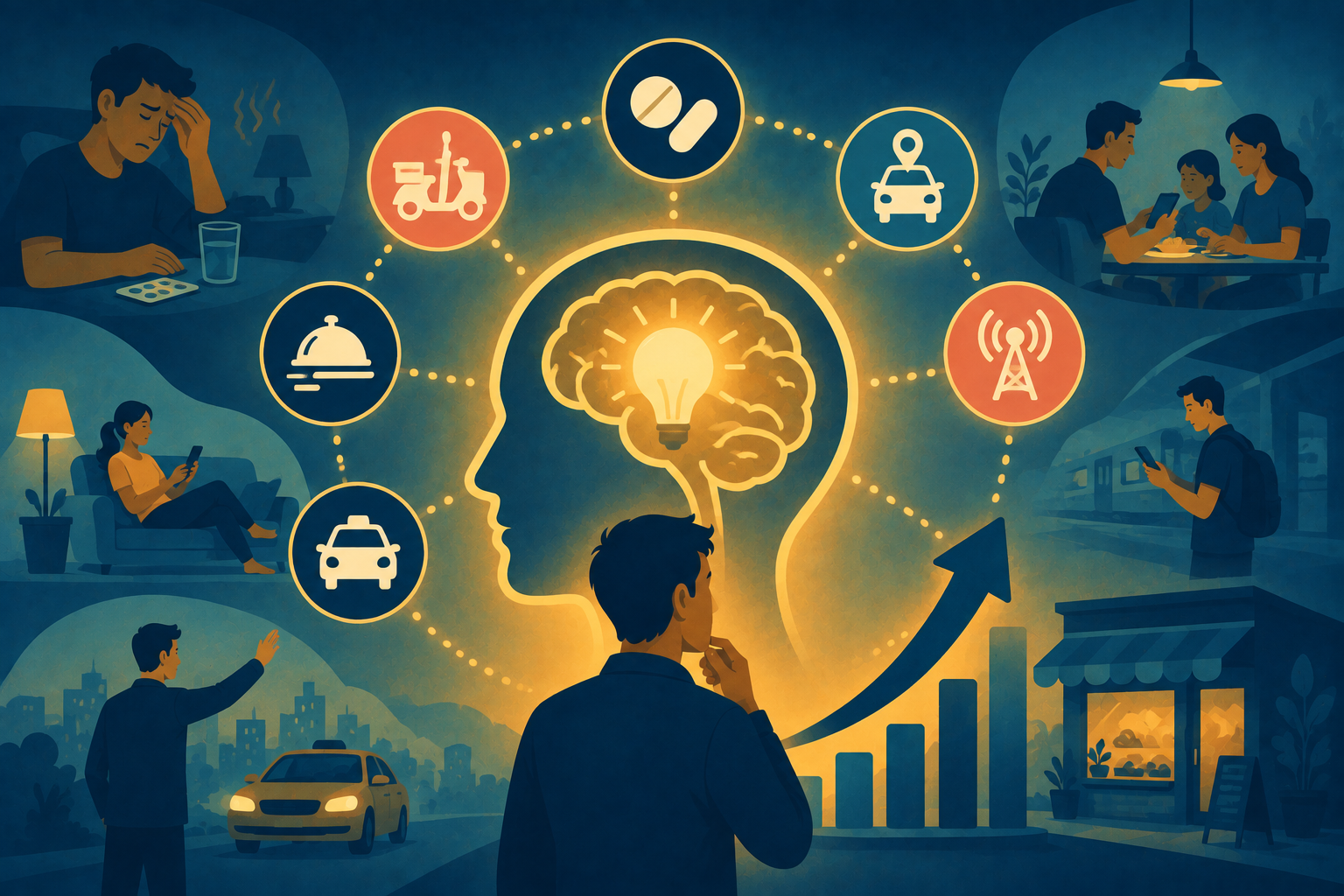
Customers choose familiar, easy-to-recall brands over discount-driven purchases.Getting a sudden headache while looking at a laptop screen in the office is very common. When this happens, a worker does not search the internet to compare the best pain relief formulas. Instead, that person turns to a colleague and asks if they have a Crocin or a Saridon.
Nobody checks the chemical ingredients printed on the back of the medicine label. The brain recalls a familiar name to solve the pain quickly. This instant recall is exactly what marketers call mental availability. It is the main reason one product wins the sale before the buyer even reaches the shop.
How Mental Availability Drives Sales
Many business owners mistakenly believe that having the best product will automatically make customers buy it. But real life works differently. Shoppers are busy, tired, and easily distracted. When someone wants to buy a basic item, they will never spend time comparing products.
Customers usually buy the first brand that comes to mind. This simple fact makes mental availability the most valuable asset a company can build, because it makes the buying decision feel completely effortless.
Consider how food delivery apps work in India today. When a family is too tired or lazy to cook, nobody sits down to analyse a long article about software features. A family member simply picks up the phone and taps the Zomato or Swiggy app.
These companies spend large amounts of money just to stay at the top of the buyer’s mind in those moments. They sponsor cricket matches and put up big billboards simply to boost their mental availability.
We see the same behaviour when people need to travel. If an office worker is late for a morning meeting, they do not search the local directory for taxi numbers. Their hand automatically opens the Ola or Uber app.
These companies understand that building mental availability means linking their service to the feeling of getting somewhere on time or needing a safe ride home. By owning those specific everyday moments, these brands become the default answer to a sudden travel problem.
Creating this level of memory requires a lot of strict discipline. A brand cannot keep changing its logo, colours, or core advertising message every few months. The human brain is built to remember simple, consistent cues.
Think of the classic Airtel ringtone. A person only needs to hear the first two seconds of that music to know exactly which telecom company is being promoted. These distinct audio and visual signals are the foundation of strong mental availability. They stay in memory far better than long, boring paragraphs about product quality.
Smaller businesses can easily use this same strategy to grow locally. A neighbourhood bakery does not need national TV ads to succeed. The owner just needs to connect the shop’s name with a specific daily habit, like evening tea time, or to serve guests with something quick and tasty.
By consistently reminding the neighbourhood, the shop can gradually build local mental availability. Over time, when someone thinks of a snack, that bakery shop will naturally come to mind instead of a random supermarket.
Relying on discounted prices is a very weak way to survive. A buyer who comes only for a low price will leave as soon as a rival offers a bigger discount. But when a business invests time in building its mental availability, price becomes a secondary issue. The customer chooses the product because it feels safe, familiar, and easy to recall.
Also read: How Cultural Relevance Evolves Across Generations
At the end of the day, a company does not need to prove it is technically better than every competitor. It only needs to be the easiest option to remember. When a business achieves high mental availability, it stops chasing buyers altogether. The customer’s own memory does the hard selling.
Loved this article? Read more insightful articles on Brand Custodian.
–Written by Rajnish Singh, a copywriter and strategist with a background in fast-paced journalism, who explores the gap between what brands promise and how consumers actually behave.