Context changes everything. Master the psychology of buying situations to position your brand for every single occasion.
Looking for a Shorter Overview?
AI Summary
Key Moments
Context overrides price sensitivity
Consumers choose premium options in specific situations despite normal budget constraintsTravel contexts break routine rules
Family trips and journeys suspend regular eating habits and health considerationsSocial occasions demand specific presentation
Office gifts and festival celebrations require different products than everyday purchasesMoment-specific needs drive brand selection
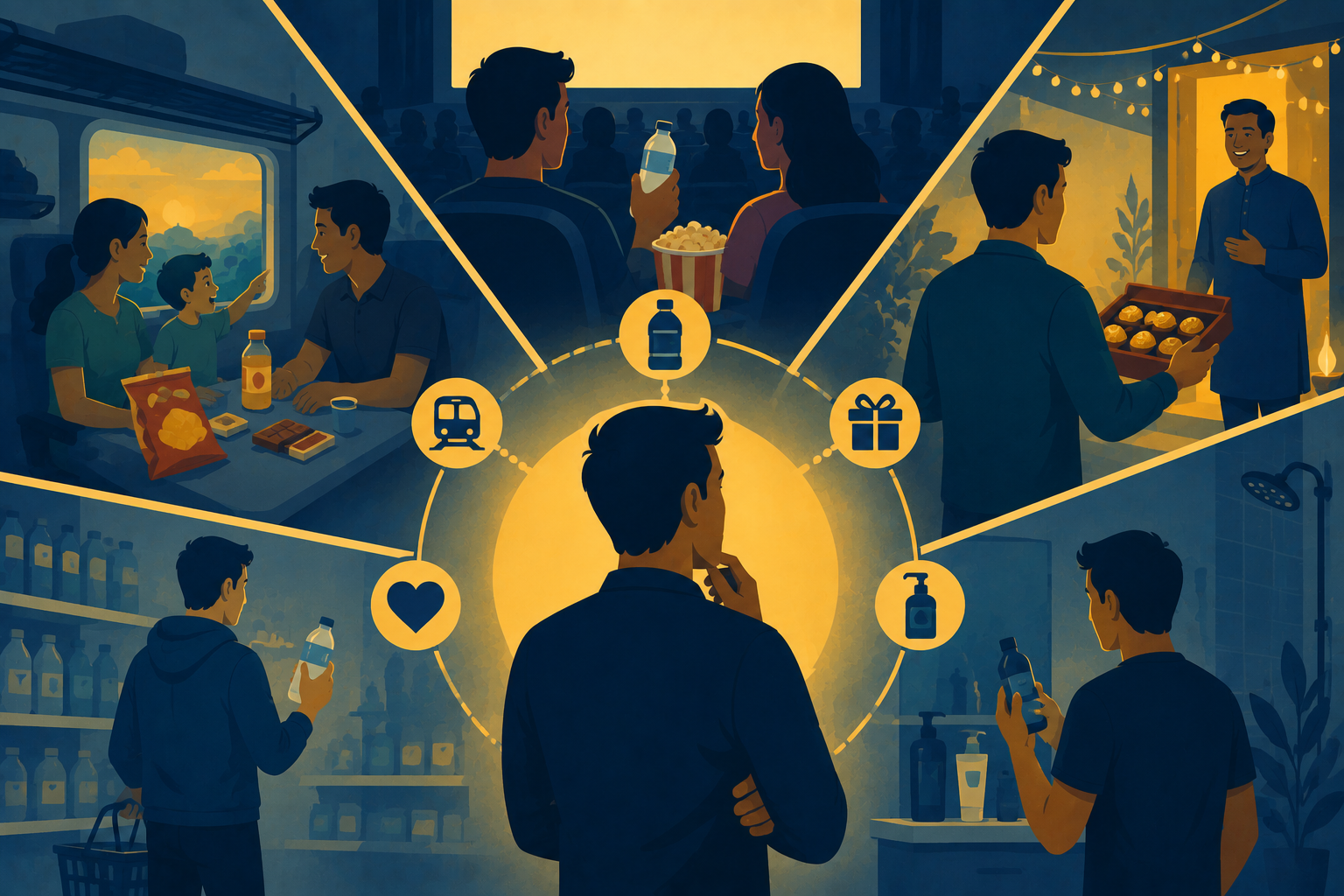
Situational factors like confidence and status influence product choices more than consistent preferencesNobody wants to pay eighty rupees for a regular bottle of water at the local store. A buyer will easily argue with the shopkeeper over a two-rupee difference on a packet of milk. But when the same guy goes to a movie on a date, he pays extra for the exact same water bottle without a single complaint. He knows cheaper options are available outside on the street.
However, inside the hall, the person just wants to relax and watch the movie with his friend. The water did not change. The buyer’s bank balance did not change. The only difference is the immediate environment. This sudden change shows exactly how buying situations control our daily spending habits. Understanding how different buying situations work is the secret to knowing why people switch brands and price limits so quickly.
How Buying Situations Change Our Daily Logic
When someone packs bags for a long train journey, it changes the normal rules of eating. At home, parents strictly tell kids to eat healthy food. They keep a simple packet of plain biscuits for evening tea. But the moment the family sits on a train berth, those strict rules completely disappear. The kids demand cold drinks, and the parents agree easily.
No one wants to argue on a fun family trip. Parents buy expensive packets of potato chips, branded fruit juices, and big chocolate bars from the station vendor. The daily limits on junk food simply disappear because travel feels like a holiday from all the responsibilities and rules.
Smart snack companies understand this well. They package and place their products specifically for these exact buying situations. A brand that ignores how buying situations work will miss out on huge sales at railway stations and bus stops across the country.
Look at how people buy sweets during festivals. On normal days, someone might buy a simple half-kilo of plain gulab jamun from a local ‘halwai’ for the family. It is cheap but tastes very good.
But if that same person has to visit their office boss for a Diwali dinner, the local shop is completely ignored. Instead, they go to a famous sweet shop and buy an expensive, gold-wrapped box of Ferrero Rocher chocolates. The buyer still loves the local sweet, but the occasion calls for a better gift to show respect. He doesn’t want to look cheap in front of his boss.
The imported chocolate box looks impressive and feels like a proper gift. The chocolate brand wins the sale because it perfectly matches these specific buying situations.
Even basic bathroom items depend on this rule. For daily morning showers, a college student usually uses a basic bar of soap. It cleans dirt, and that is more than enough for a regular college day. But when he has to go on a date with his crush, that same student will buy a premium face wash or an expensive shower gel.
A person wants to smell nice and feel very confident when meeting their crush. They spend extra money without thinking twice because the occasion matters. Companies do not just sell soap to clean hands. They sell the right product that fits different buying situations.
Many business owners get confused when a loyal customer suddenly buys from a rival company. They begin to think their own product quality has dropped or their prices are too high. But in reality, the customer has simply entered a very different setting. The local sweet shop is just right for a casual family dessert, but it does not fit as a formal office gift. People do not stay with one brand forever. They choose whatever suits the exact moment.
Also read: Why Brand Elasticity Determines Long-Term Growth
A brand does not need to win every part of a person’s life. A smart company studies these buying situations very closely. By preparing for different buying situations, a brand makes sure it is available exactly when the buyer needs it most.
Loved this article? Read more insightful articles on Brand Custodian.
–Written by Rajnish Singh, a copywriter and strategist with a background in fast-paced journalism, who explores the gap between what brands promise and how consumers actually behave.