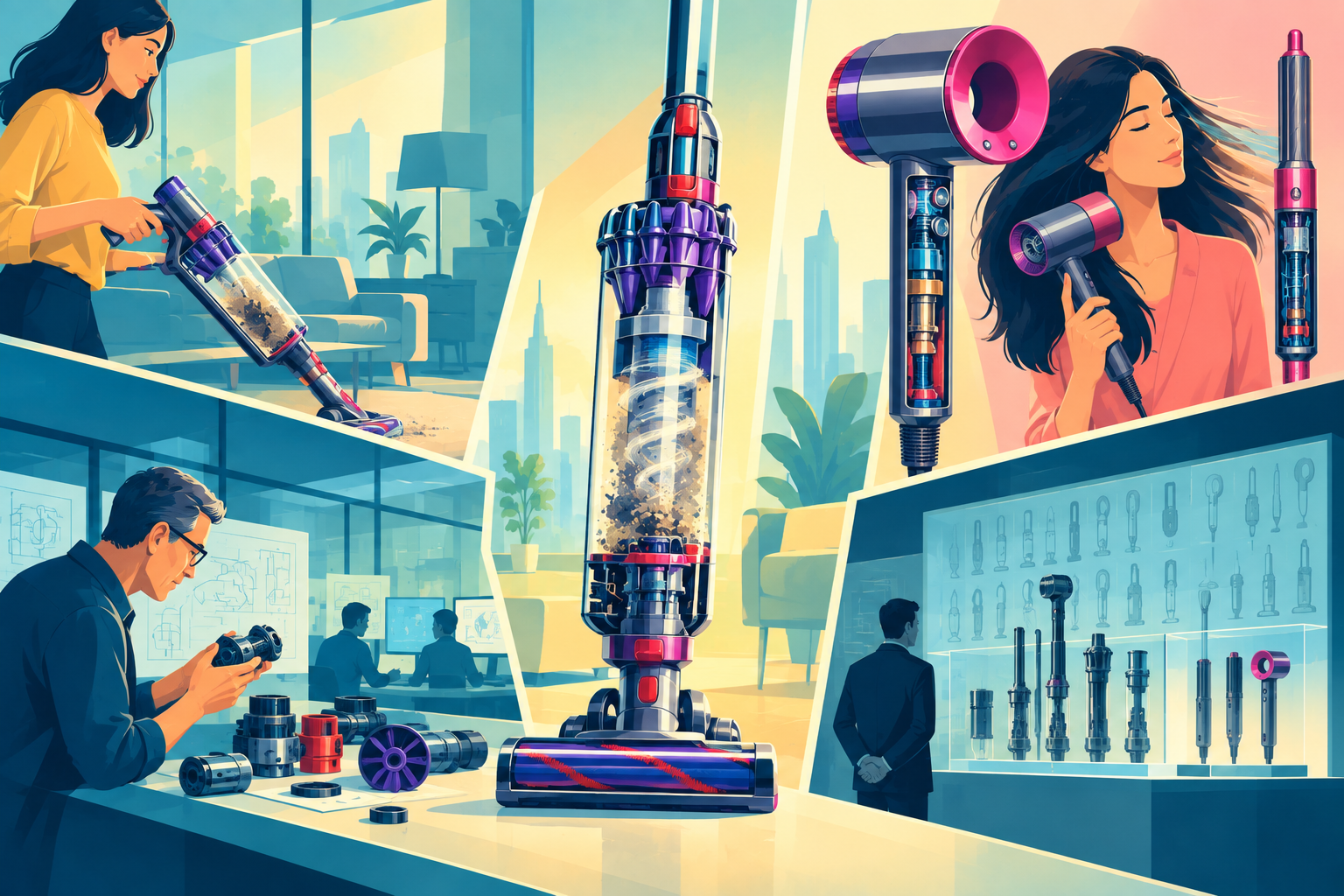
Stop hiding the mechanics. Learn how Dyson used brilliant engineering transparency to build a massive luxury empire.
Looking for a Shorter Overview?
AI Summary
Key Moments
Clear Vacuum Reveals Performance
The transparent dust bin lets users see dirt spinning, proving the vacuum works and building trust.Visible Motors Elevate Luxury
Dyson paints internal motors bright colors and showcases them, turning appliances into premium, status‑displaying products.Prototyping Failure as Proof Point
James Dyson built 5,127 prototypes, publicly sharing failures to demonstrate dedication and engineering rigor.Premium Pricing Justified by Transparency
Customers accept high prices for Dyson products because they can see the engineering quality firsthand.Most companies hide the messy mechanical parts of their appliances behind thick plastic, but the brilliant idea of engineering transparency took home cleaning in a completely new direction. In 1993, James Dyson built a vacuum cleaner with a transparent plastic bin so buyers could watch the dust spin inside it, refusing to hide motors or enclose internal components in opaque boxes.
The company refuses to hide its motors or enclose its internal wires in boxes. Instead, it paints the mechanical parts bright purple and red so the buyer looks directly at them. This simple engineering rule of physical transparency turned a boring daily cleaning tool into an expensive luxury item.
How Engineering Transparency Proves the Product Works
Before this clear machine appeared, people bought vacuum cleaners with dark-coloured bags. Users never knew whether the machine had actually picked up the dirt from the carpet. Dyson solved this practical problem by completely removing the dark cloth bag from the machine.
The clear plastic bin on the front of the machine is a perfect example of engineering transparency. When a mother pushes the heavy machine across her room floor, she immediately sees dust spinning inside the clear plastic tube. She knows the machine works perfectly because she can see the trapped dirt with her own eyes.
When a factory builds a tool this way, engineering transparency makes the buyer fully trust the brand. The buyer does not need to read a boring manual to understand the machine. She just watches the spinning dust and happily pays a high price at the store cash counter. Other brands tried to sell cheap machines, but buyers refused to trust a box that hides the dirt.
A traditional hair dryer is usually just a cheap plastic heater. Women used to put them away in drawers as soon as they finished drying their hair. Dyson changed this everyday routine by creating the Supersonic hair dryer and the Airwrap styling tool, painting them shiny silver and pink.
The engineers removed the heavy motor from the large top section and placed a small, coin-sized fast motor directly inside the bottom hand grip. They also left a large open hole straight through the centre of the top dryer head.
This unusual physical shape shows exactly how engineering transparency works. The brand shows buyers the air vents and tiny spinning metal blades fully in view. This clear presentation of engineering transparency makes an ordinary buyer feel as if she is holding a piece of premium scientific equipment.
Because the item looks like an expensive tool, buyers are happy to pay 40000 rupees for a single hair dryer without complaining. Women now leave the machine on the table just to show it to their friends.
Building clear machines takes a huge amount of hard work inside a factory. James Dyson built exactly 5127 different physical models before he finally sold his first bagless vacuum.
Other companies hide their broken machines. But Dyson does the exact opposite. The company tells everyone about the 5126 broken models because it proves the factory actually did the hard physical work.
The official James Dyson Foundation prominently teaches the “5,127” story to engineering students worldwide, redefining “failure” not as a disappointment, but as the collection of critical engineering data.
Today, the company spends millions of pounds on large research labs filled with real engineers testing fans and motors. This significant physical effort shows that engineering transparency requires real science, not just clever paper posters or television ads.
Also read: Zudio: How Value Retail Disruption Redefined Fast Fashion
In 2023, the brand collected over seven billion pounds in global revenue. It reached that huge number with the help of engineering transparency. A smart buyer will gladly pay more if a company physically shows him exactly how the machine spins and works.
Honest engineering transparency works because a normal person always respects a strong, well-built machine that hides nothing behind cheap plastic covers.
Loved this article? Read more insightful articles on Brand Custodian.
–Written by Rajnish Singh, a copywriter and strategist with a background in fast-paced journalism, who explores the gap between what brands promise and how consumers actually behave.