Admitting your product is terrible takes guts. Discover how Domino's used brand transparency to completely save their business.
Looking for a Shorter Overview?
AI Summary
Key Moments
Admitted Pizza Quality Failure
CEO Patrick Doyle publicly confessed the pizza was not good enough, marking a bold honesty moment.Implemented Recipe Overhaul
Kitchen staff replaced old recipes with thicker crust, garlic oil, better sauce, and improved cheese melt.Showcased Changes Transparently
Company filmed real cooks serving fresh pizza, proving improvements with visible, unedited proof.Dramatic Sales Recovery
Within three months, daily sales rose over 14%, launching Domino's to become the world's largest pizza seller.True brand transparency is when a business owner openly admits to buyers that their food is terrible. A hungry person opening a flat, square box expects hot, tasty food. But many years ago, buyers opening a Domino’s pizza box tasted something completely different.
The baked bread was dry, and the red sauce tasted exactly like cheap tomato ketchup. The company was losing customers because regular people refused to eat the bad food. To solve this huge problem, the managers used this exact brand transparency. Instead of hiding the bad taste with bright pictures, the factory told the absolute truth.
How Brand Transparency Fixed a Bad-Tasting Pizza
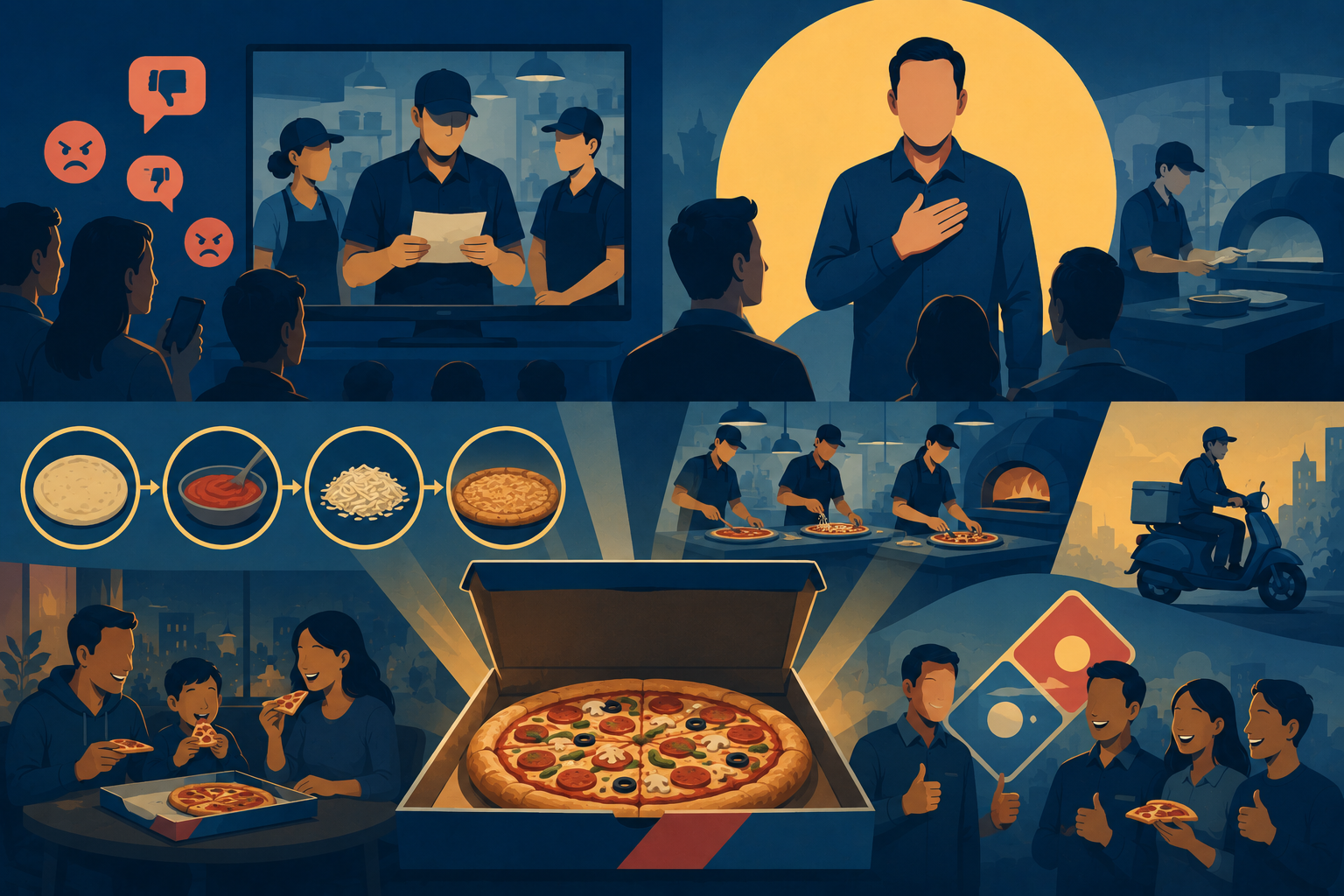
In 2009, people on the internet wrote very bad things about the pizza company. Regular buyers complained that the baked dough tasted like wet cardboard. Normal businesses hide these bad comments and print fake posters showing smiling actors eating perfectly sliced food. But this company used direct Brand Transparency on national television.
The office managers recorded a video of real kitchen cooks reading the angry letters aloud. This act of brand transparency shocked buyers completely. People sitting in their homes could not believe a wealthy food company would pay cash to show its own bad cooking on a public television channel.
The company’s top executive, Patrick Doyle, even stood in front of a video camera. Looking straight into the lens, he clearly said the pizza was not good enough to eat. This direct brand transparency showed that the big company was finally listening to angry customers.
After admitting the food was bad, the kitchen workers gave away all the old recipe books. The cooks completely changed the actual food inside the ovens. They made the bread thicker, rubbed real garlic oil on the outer edge, and added sweeter red tomatoes to the sauce. The staff even changed the grated cheese so it would melt better in the heat.
The business did not just secretly change the food. The managers used brand transparency to show the exact cooking changes to the public. They hired ad agencies to film local kitchen staff pulling hot, fresh pizzas out of the metal ovens without using fake food paint.
A buyer could see the melted cheese and dark baked spots on the bread right on his phone screen. This clear brand transparency made an angry buyer want to give the local shop one more chance. A person gladly spends cash when a shop owner fixes the bad taste and shows the new physical proof.
This new honest rule brought in a huge amount of money. Just three months after telling the hard truth in early 2010, the company saw its daily cash sales rise by more than 14 percent in America. Over the next ten years, the failing shop grew into the world’s biggest pizza seller.
This huge success shows exactly why brand transparency works much better than expensive fake videos. When a food company stops pretending to be perfect, regular people quickly open their wallets again. Today, a hungry buyer trusts the blue-and-red packaging because he remembers when the factory told the harsh truth.
Also read: WeWork: How Brand Hype Can Outrun Business Reality
A food business makes huge cash profits today because absolute brand transparency makes angry buyers walk back into the local shop. A company gets more regular customers simply by admitting the bread tastes bad, changing the flour itself, and promising to bake it better tomorrow.
Loved this article? Read more insightful articles on Brand Custodian.
–Written by Rajnish Singh, a copywriter and strategist with a background in fast-paced journalism, who explores the gap between what brands promise and how consumers actually behave.