Stop playing it safe. Learn how Burger King uses bold brand provocation to steal customers from its biggest rivals.
Looking for a Shorter Overview?
AI Summary
Key Moments
Whopper Detour Campaign
The 2018 app download stunt used a digital circle offering a one‑cent burger, driving over a million app installs.Moldy Burger Poster Stunt
Printing green‑fungus burgers proved real‑ingredient honesty and sparked massive public curiosity.Halloween Ghost Building
Covering a BK outlet as a ghost mocking McDonald’s earned free TV news coverage.Profit from Provocation
Publicly teasing rivals turns jokes into buzz, media attention, and direct sales for small brands.Most restaurant owners want buyers to stay inside their own shop. But one American burger company actually told buyers to walk to a rival shop instead. This strange move shows exactly how Brand Provocation works.
A clear Brand Provocation happens when a business does something unusual in public just to make regular people stop and look. The managers did not spend money on a normal television ad showing a smiling family eating a burger. They simply teased their biggest rival on the open street.
How Brand Provocation Drives Sales
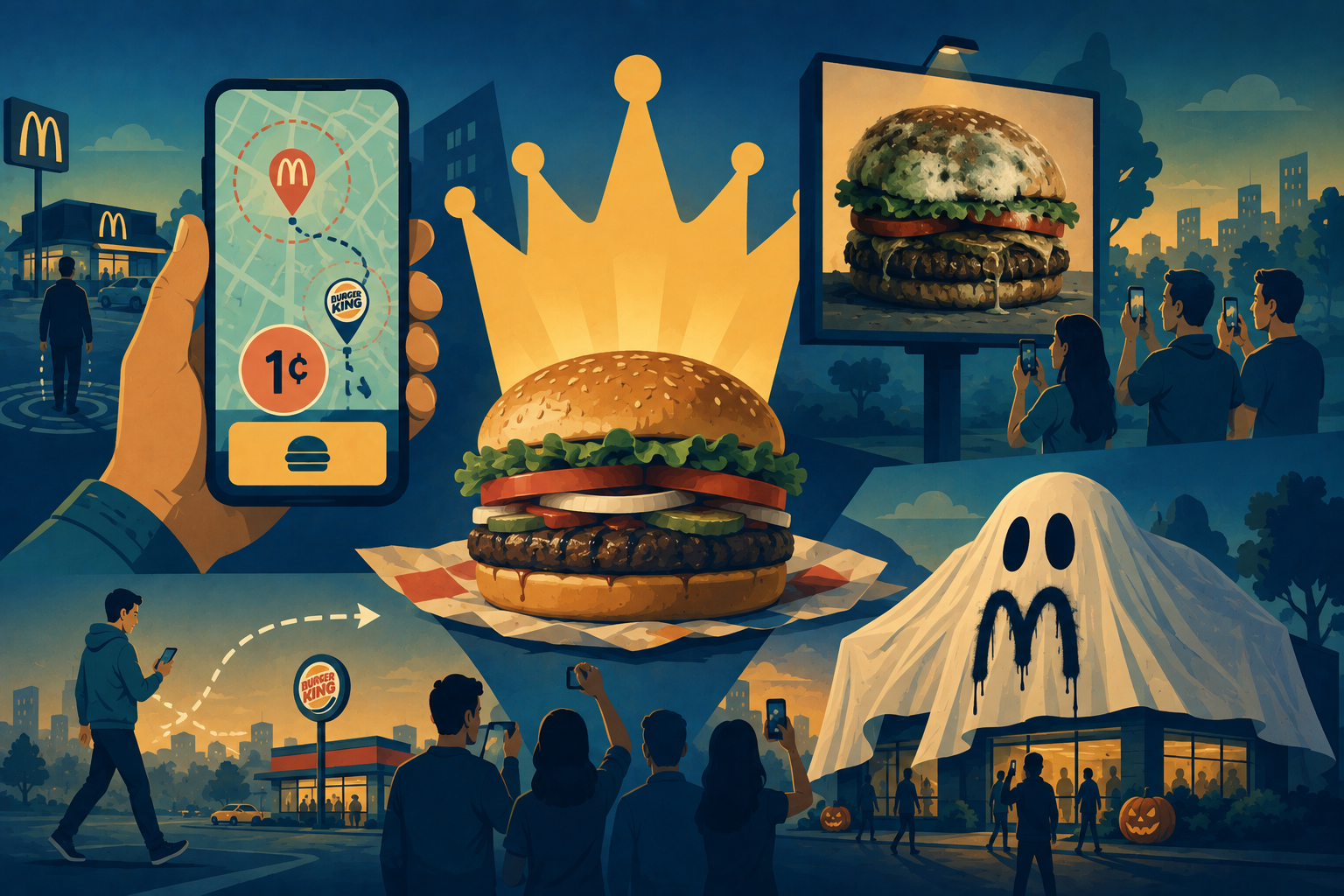
In December 2018, the burger company did something very unusual in public. They wanted more people to download their new mobile app, so they used direct Brand Provocation known as the “Whopper Detour”
The computer workers drew an invisible digital circle around fourteen thousand McDonald’s shops across the country. If a buyer walked inside that exact physical circle with his phone, the Burger King app showed a new button. The phone app allowed the buyer to order a large meat burger for just one cent.
The phone screen then showed the buyer a street map for walking away from the rival shop to pick up the cheap food. This clever Brand Provocation got over one million people to download the new app in just a few days. The office managers used a simple phone map trick to make buyers physically walk away from the rival shop.
Two years later, the same company did something else very strange. Every food shop wants its bread and meat to look fresh on large street posters. Burger King did the exact opposite. It printed large photos of its own burger covered in thick green and white fungus.
This clear brand provocation showed exactly what happens to real food after thirty-four days on a wooden table. People walking down the street stopped and pointed at the strange posters. Many took photos of the ugly green bread with their phones.
Most buyers felt a little sick looking at the green fungus. But this direct Brand Provocation proved a very important physical fact. The company showed the public that they had finally stopped putting artificial factory chemicals in their bread and meat. Real food goes bad quickly, while rival burgers stay looking new for months.
This same public joke also works with physical buildings. During the 2016 Halloween festival, shop workers in New York covered an entire Burger King building with large white cloth sheets. They cut two big holes in the cloth to make the building look like a tall ghost.
Then, they painted the rival McDonald’s name on the cloth with black spray paint. They even wrote a joke on the cardboard boxes inside the shop, reminding buyers that their meat cooks over a real fire.
Using strong brand provocation like this makes local news reporters bring their heavy television cameras to the shop for free. A simple white cloth over a building brings in more cash than a regular printed newspaper ad.
A smaller shop cannot earn more daily cash by staying quiet. Its managers know the company has fewer shops and less money than McDonald’s, so they use direct brand provocation to make people look at their mobile phone screens and city roads. A buyer remembers the public joke and happily buys a meat burger from the funny company.
Also read: Kodak: How Innovation Failure Can Destroy a Market Leader
Today, regular buyers actually wait to see what crazy trick the shop will do next. Strict Brand Provocation shows that a business can make huge daily cash simply by teasing its biggest rival in public.
Loved this article? Read more insightful articles on Brand Custodian.
–Written by Rajnish Singh, a copywriter and strategist with a background in fast-paced journalism, who explores the gap between what brands promise and how consumers actually behave.