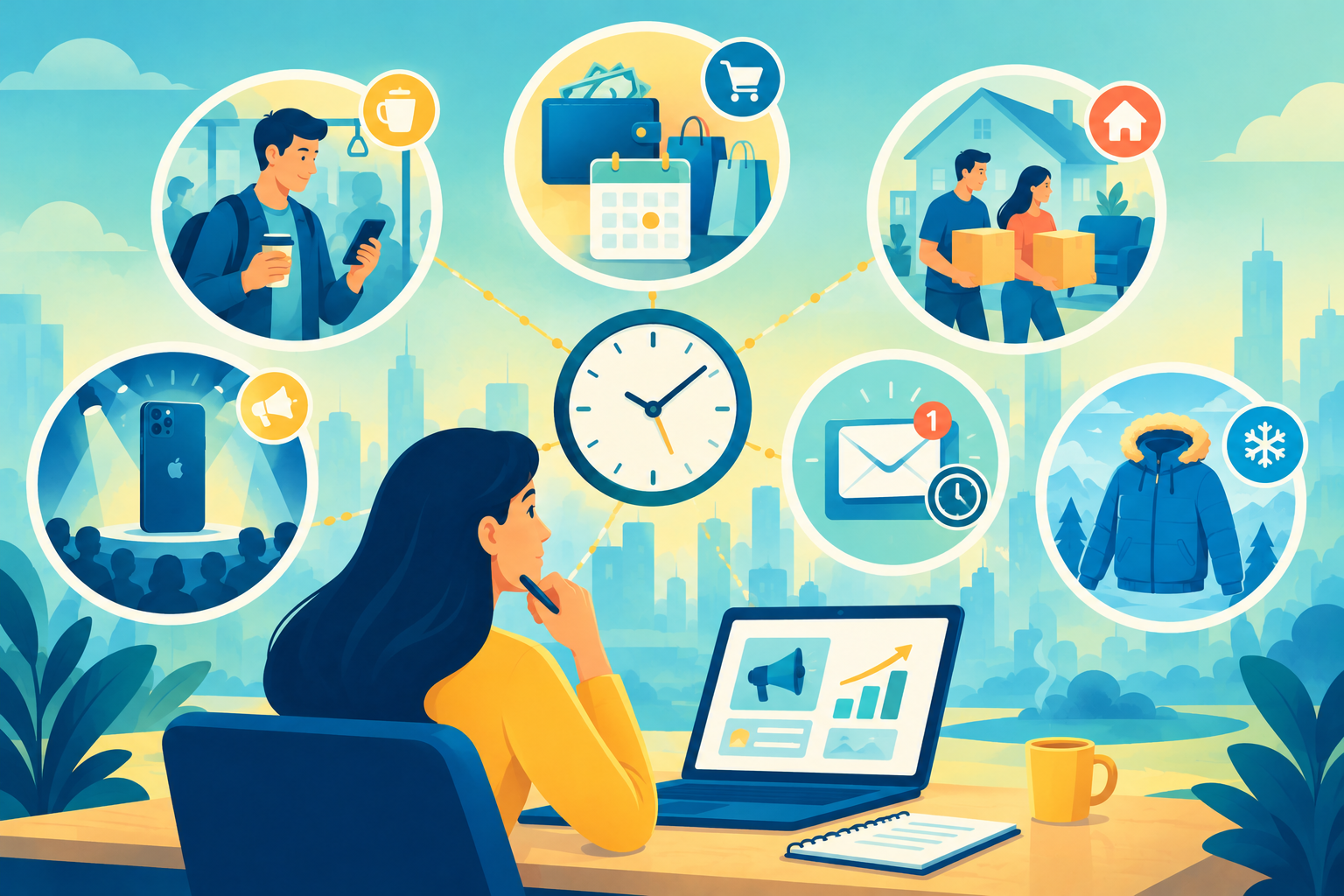
Poor scheduling is dangerous. See how mastering campaign timing turns ordinary ads into an unstoppable success.
Looking for a Shorter Overview?
AI Summary
Key Moments
Payday Spending Boost
Customers spend 30% more in first three days after payday, making this optimal timing for big purchases.Morning Routine Marketing
Sending coffee offers during morning commute captures customer attention when they actively need the product.Life Event Opportunities
New home movers become five times more likely to become loyal buyers, creating furniture marketing windows.Post-Launch Window
Avoiding September tech launches lets smaller brands capture attention in October after media focus shifts.Marketing managers often run digital advertisements every day, spending large amounts of money to attract new customers. Some businesses promote their products only during major seasons, while others waste their budgets by choosing campaign dates at random.
Smart marketers use careful Campaign Timing to match advertisements with customers’ routines and needs. Research from Experian suggests that messages delivered when people are most likely to act can increase sales by approximately 20%.
Effective Campaign Timing means understanding when customers check their messages, shop, and make decisions. Random promotions are easy to ignore, but well-timed campaigns are more likely to capture attention and generate purchases.
How Brands Master Campaign Timing with Daily Habits
Adults often follow predictable daily routines. For example, a tired worker may wake up at 7 a.m., drink coffee, and check their phone during the morning commute. Coffee shops can use this routine to improve their Campaign Timing by sending a discount message early in the morning.
When the worker sees the coffee offer at the moment they are deciding what to drink, they may place an order immediately. Sending the same message late at night would be far less effective because the customer is no longer thinking about coffee. Retailers should align their promotions with the time when customers are most likely to need the product, helping them make sales before competitors open.
Many employees are paid on a fixed date, often at the start of the month. Nielsen research and other studies suggest that shoppers spend about 30% more in the first three days after payday.
Smart businesses use this pattern to improve their Campaign Timing. Car dealerships, for example, may promote expensive vehicles when customers have fresh income available. Shoppers may feel more comfortable making premium purchases at this time, while advertisements shown in the middle of the month may receive less attention. Timing promotions around payday can help businesses reach customers when they are most ready to spend.
Families often purchase new homes, and moving into a house usually creates an immediate need for furniture. When a young couple signs a home contract, furniture retailers can use this moment to improve their Campaign Timing and promote relevant products such as wooden tables.
Verified marketing data points to a hard financial reality around personal life events. New movers become loyal buyers five times more often than stationary households. Retail industry data also shows a clear spending pattern. More than sixty percent of relocating buyers spend at least an extra one thousand cash dollars on household goods.
Furniture store managers reach these specific buyers at the exact moment they are physically relocating. The store sells useful physical products successfully. Buyers purchase new furniture exactly when they need these physical items.
Technology companies release new devices throughout the year, but major launches can dominate public attention. Apple, for example, typically introduces new iPhones in September, making it difficult for smaller companies to compete for media coverage during the same period.
A small electronics brand launching a laptop on the same day may receive little attention because news outlets and consumers are focused on Apple. This can waste the company’s advertising budget. A smarter approach is to delay the launch until October, when the media spotlight has faded. With better Campaign Timing, the smaller business has a greater chance of being noticed and attracting customers.
HubSpot has published research on the timing of email campaigns. Its data suggests that messages sent between 10 a.m. and noon can achieve open rates up to 45% higher.
This Campaign Timing works because employees have often finished their morning meetings and may check personal emails before lunch. By sending promotions during this quieter period, businesses can improve the chances that customers will notice and read the message, potentially increasing daily sales.
Business leaders should remember that poor Campaign Timing can waste an entire advertising budget. A company selling high-quality winter jackets will struggle if it promotes them during the hot summer months, when customers have no immediate need for warm clothing.
Also read: Can Brand Extensions Confuse the Customers a Brand Already Has?
Smart managers monitor weather patterns and launch their campaigns when temperatures begin to fall. When people feel cold, they are more likely to notice an offer for a winter jacket and make a purchase. Aligning advertising with real customer needs helps businesses protect their budgets and generate more reliable sales.
Loved this article? Read more insightful articles on Brand Custodian.
–Written by Rajnish Kumar, a copywriter and strategist with a background in fast-paced journalism, who explores the gap between what brands promise and how consumers actually behave.