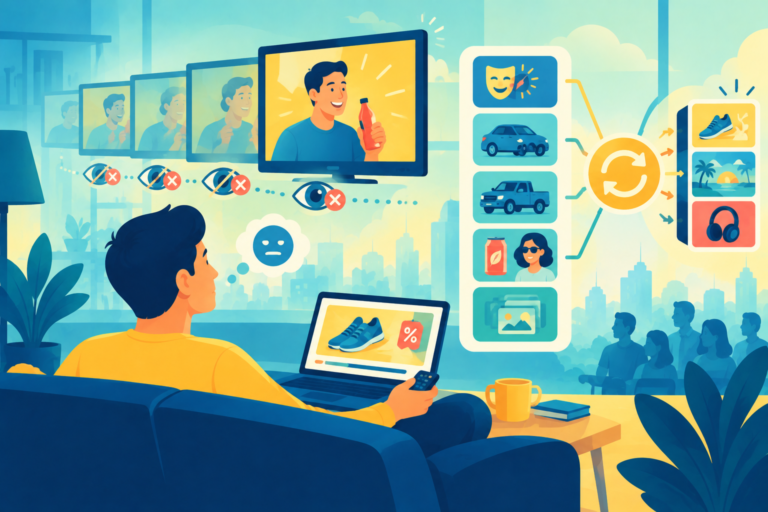
Generic marketing is dangerous. See how mastering visual storytelling turns ordinary images into an unstoppable success.
Looking for a Shorter Overview?
AI Summary
Key Moments
Desktop eye‑scan patterns
On large screens people scan content in an F‑shaped pattern, while mobile users focus centrally.Magazine visual depth
Printed pages encourage slower, detailed viewing, so ads can include rich backgrounds and intricate elements.TV motion advantage
Moving human elements in commercials capture attention faster than static clips on large TV screens.Mobile instant clarity
Users view images for only ~1.7 seconds, requiring central product placement and concise messaging.People view content on a wide range of screens every day, from small mobile phones to large televisions. Because each screen has a different size and format, businesses need to adapt their images to suit the platform. This practice is known as Visual Storytelling.
Research from the Massachusetts Institute of Technology suggests that the human brain can process a complete image in about 13 milliseconds. However, people may experience the same image differently depending on the screen they use. Effective Visual Storytelling requires businesses to match their visuals to the medium and present products clearly across different platforms.
How Smart Brands Master Visual Storytelling Through Eye Tracking
Research from the Nielsen Norman Group shows that people scan content differently depending on the screen they use. On large desktop monitors, their eyes often follow an F-shaped pattern, while on smaller mobile screens, they tend to focus more directly down the center.
If important information is placed outside these natural viewing areas, attention can drop significantly. Businesses should position key images, headlines, and product details where people are most likely to look. This approach works with natural viewing habits and helps keep customers engaged for longer.
Magazine readers hold printed pages in their hands and often study them in a quiet setting. When someone looks at a National Geographic photograph, they may spend several minutes noticing small details in the image.
This slower viewing experience changes how Visual Storytelling works. Printed photographs can include rich backgrounds and intricate elements because readers have time to explore them. Research from MRI-Simmons suggests that adults spend around 40 minutes reading a magazine. Businesses using print advertising can take advantage of this attention by including detailed visuals that reward careful observation.
Television viewers often sit several feet away from large screens in dim rooms, so television Visual Storytelling needs to capture attention quickly. A car company, for example, may use a 30-second commercial filled with camera movement and shots of the vehicle in motion.
Research from Nielsen suggests that advertisements featuring human movement can hold attention longer than static videos. Since viewers cannot touch the product through the screen, motion helps demonstrate how it looks and works. By showing the product clearly and dynamically, businesses can keep viewers engaged and communicate its value quickly.
Mobile users interact with small screens throughout the day, often while commuting in crowded places. Because they scroll quickly through images, mobile Visual Storytelling needs to be simple and immediately understandable.
Meta’s research suggests that users may spend only about 1.7 seconds viewing a single image. Businesses should therefore place the main product at the center and make the message clear at a glance. Small background details are easily overlooked, while overly complicated images can confuse viewers and cause them to move on before making a purchase.
Drivers pass outdoor billboards quickly, so Visual Storytelling in this format must be simple and easy to understand. Research from the Outdoor Advertising Association of America suggests that drivers have only a few seconds to notice and process a billboard safely.
Businesses should use one strong image and a very short message, ideally just a few large words. Drivers cannot study complex designs while concentrating on the road, so clear visuals are more likely to capture attention and communicate the product effectively.
Business owners should remember that using the same images across every platform can waste marketing money. A detailed magazine advertisement may not work on a highway billboard, just as a slow television commercial may fail to hold attention on a small mobile screen.
Also read: Why Does Brand Dilution Happen Even When a Business Is Growing?
Effective Visual Storytelling must be adapted to each medium and the way people view it. Photographers may need different angles, while designers may crop images differently for each format. When visuals match the viewer’s environment and attention span, customers can understand the message quickly, and businesses can improve their chances of generating sales.
Loved this article? Read more insightful articles on Brand Custodian.
–Written by Rajnish Kumar, a copywriter and strategist with a background in fast-paced journalism, who explores the gap between what brands promise and how consumers actually behave.