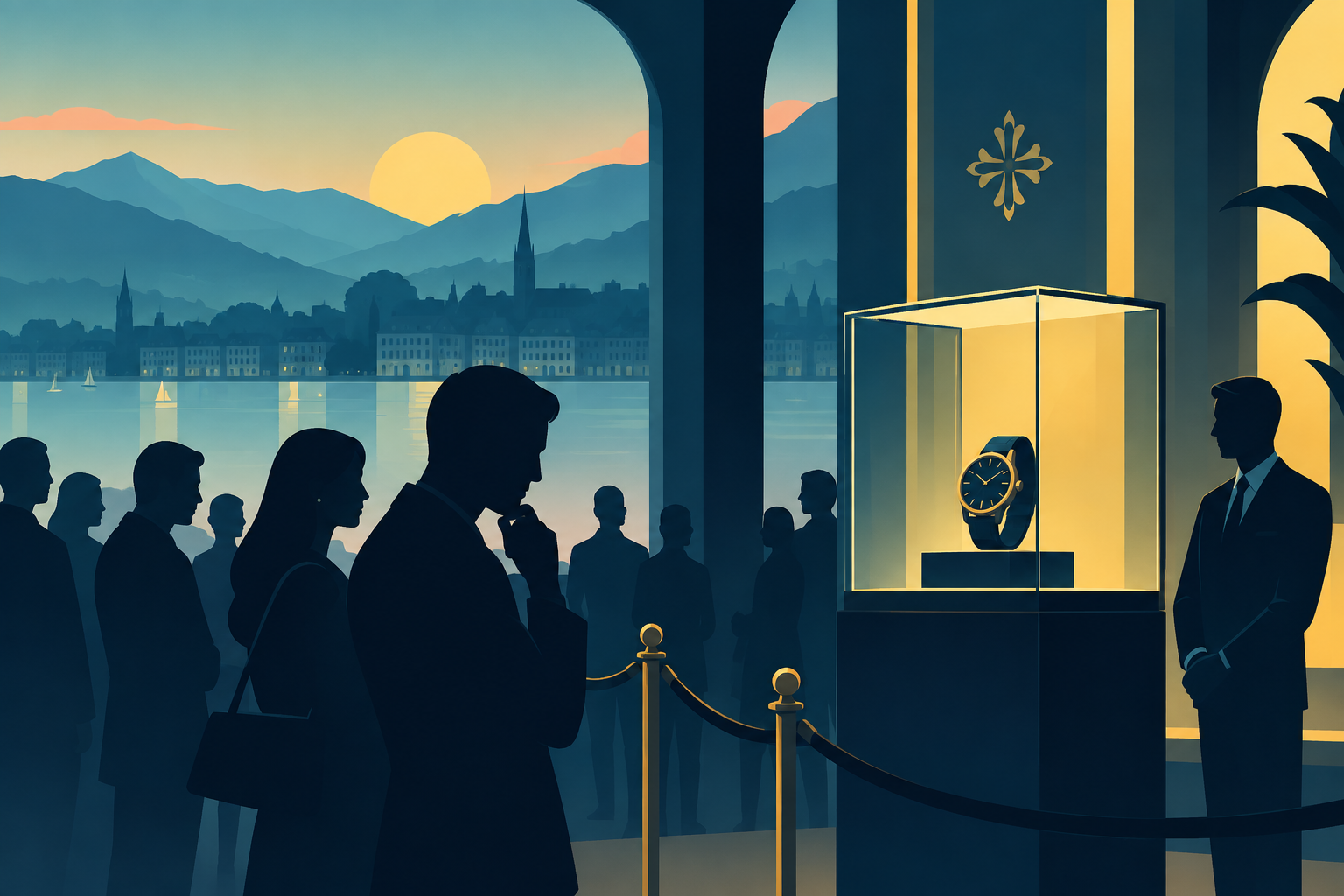
Patek Philippe shows how scarcity, craftsmanship and controlled access can turn luxury watches into objects of enduring desire.
Looking for a Shorter Overview?
AI Summary
Key Moments
Scarcity Shapes Perceived Value
Limited production and controlled availability make Patek Philippe watches more valuable by leveraging psychological scarcity.Craftsmanship Reinforces Exclusivity
The brand ties rarity to unrivaled watchmaking expertise, heritage, and technical mastery, giving collectors substantive reasons to desire limited pieces.Controlled Distribution Creates Selective Access
Through exclusive boutiques and authorized dealers, Patek Philippe curates who can obtain its timepieces, turning access into a status signal.Community Knowledge Deepens Appeal
Collectors form a niche community that values rare complications and design details, amplifying exclusivity beyond price.Luxury has always been about more than what a product can do. A luxury product becomes desirable when owning it feels like gaining access to something not everyone can have. Few brands demonstrate this principle as effectively as Patek Philippe. Founded in Geneva in 1839, the watchmaker has built its reputation not only on intricate craftsmanship and technical expertise, but also on the rarity and controlled availability of its timepieces. In a market where brands often try to put their products in front of as many people as possible, Patek Philippe has taken a very different route: make the product difficult to obtain, and the desire for it grows stronger.
Patek Philippe Understands the Psychology of Scarcity
At the heart of Patek Philippe’s appeal is a simple idea: limited availability changes how people perceive value. The brand produces its watches in relatively small quantities, with more than 150 references in its current collection made in small series ranging from a few dozen to several hundred watches. This is not scarcity created merely for marketing. Patek Philippe’s production philosophy is closely tied to the time, craftsmanship, and quality standards involved in making its watches. Every component is finished to demanding standards, while the company continues to preserve specialised forms of Genevan handcraftsmanship.
But scarcity has an effect beyond production. When consumers know that a product cannot simply be picked up whenever they want, the product starts to feel more significant. The waiting becomes part of the experience. The search becomes part of ownership. A watch that requires patience can feel more valuable than one that is immediately available.
Patek Philippe reinforces this perception through its carefully controlled distribution. The brand works through its own boutiques and a selected network of authorised points of sale rather than pursuing widespread availability. Its boutiques become more than retail spaces; they provide an environment where the brand can control how its watches are presented and how customers experience them. New releases can therefore be introduced within a carefully managed setting, often first reaching the collectors and customers who already have a relationship with the brand.
This creates an interesting shift in the traditional luxury buying process. Instead of the brand constantly asking, “How many watches can we sell?”, the experience suggests a different question: “Who gets access to these watches?” That distinction matters. Exclusivity turns a purchase into a form of recognition.
The appeal is also strengthened by Patek Philippe’s long history and technical credibility. The company has spent generations developing complicated movements and preserving crafts such as enamelling and hand engraving. Its reputation therefore does not depend on scarcity alone. If a product is difficult to obtain but offers little substance, scarcity eventually loses its power. Patek Philippe combines restricted availability with craftsmanship, heritage and technical achievement, giving consumers reasons to value what is scarce.
Also read: Aldi: How Private Labels Became a Retail Weapon
There is also a social dimension to the strategy. Collectors do not simply buy a Patek Philippe to tell time. They become part of a smaller community that understands the significance of particular references, complications, and design details. The knowledge required to appreciate the product adds another layer of exclusivity. The more people understand the difference between owning something expensive and owning something genuinely rare, the stronger the attraction becomes.
This offers a broader lesson for luxury brands. Exclusivity cannot be created simply by putting a high price on a product. Price can restrict access, but genuine desirability comes from a combination of scarcity, craftsmanship, identity, and experience. Patek Philippe has spent decades building all four.
The brand’s success ultimately shows that consumers do not always want products that are easy to find. Sometimes, the difficulty of getting something is precisely what makes them want it more. When scarcity is supported by real value, waiting does not weaken desire. It intensifies it. Patek Philippe has turned that principle into one of the most powerful strategies in luxury: make access limited, make the product worth waiting for, and let desire do the rest.