Famous logos cost you sales. See how Aldi mastered private labels to slash prices, speed up checkouts, and win loyal buyers.
Looking for a Shorter Overview?
AI Summary
Key Moments
Low‑cost private labels
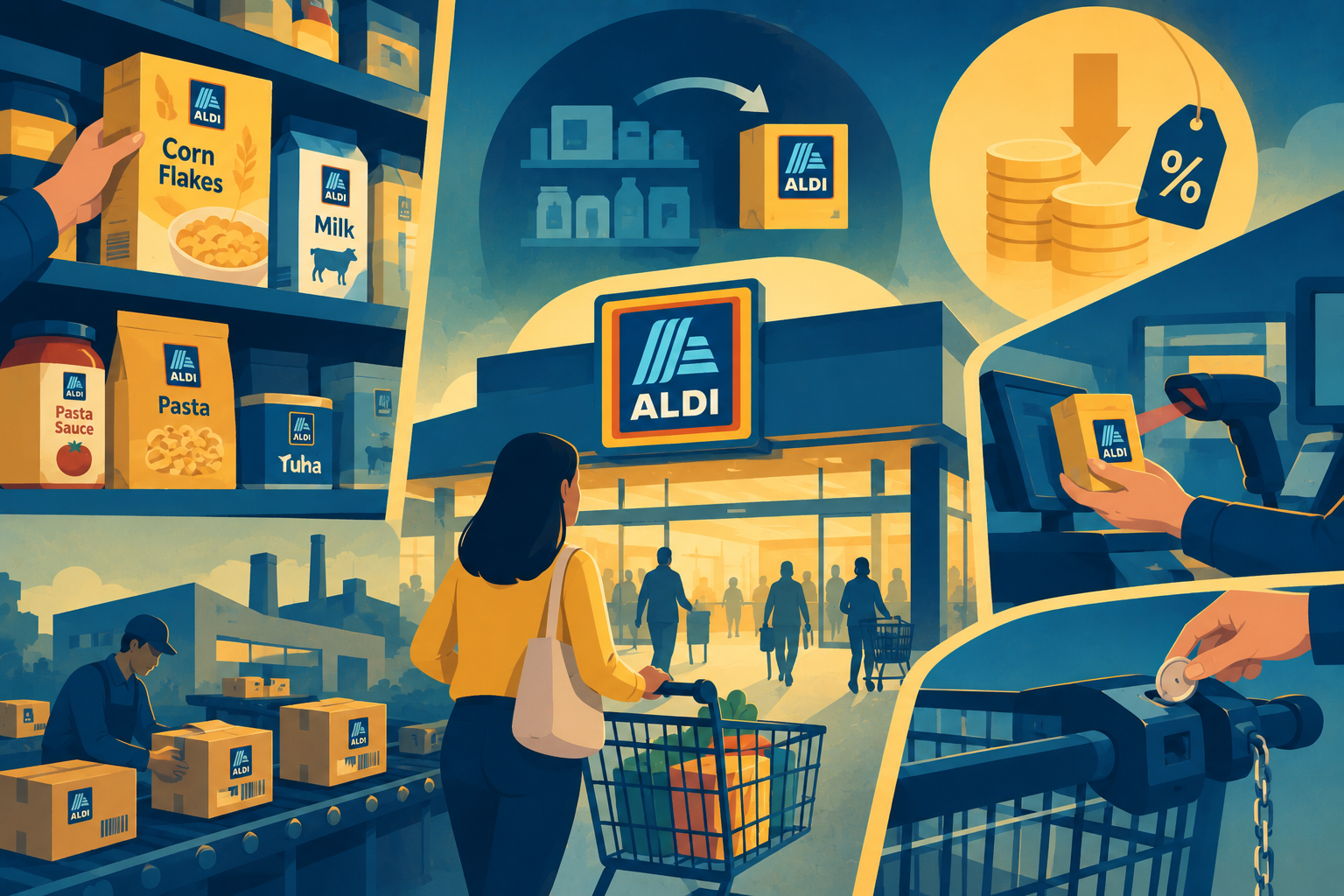
Over 90% of Aldi’s items are private labels sold at roughly half the price of name brands, saving shoppers up to $40 per trip.Streamlined store operations
Large boxes, barcodes on all sides, and quick scanning cut labor and checkout times dramatically.Self‑service cart system
A coin‑locked cart requires a deposit, returning it after use and eliminating staff‑collected empties.Industry‑wide shift
Major rivals are dropping brand items and launching their own private labels to stay competitive.Most grocery stores want to sell famous brands. They place Coca-Cola cans and Oreo boxes near the front door. But one German grocery store does the exact opposite. A customer walking into an Aldi store will almost never see a famous brand name. Instead, the shelves are filled with private labels.
Using private labels happens when a shop owner buys plain food directly from a factory and puts his own store name on the boxes. This simple physical choice completely changed how people buy their basic grocery items.
How Private Labels Bring In More Cash
In 1946, two brothers, Karl and Theo Albrecht, started a small food shop in Germany. They aimed to sell cheap, basic food to hungry workers. By the 1960s, they realised that selling famous brands cost too much. Normal supermarkets carry more than thirty thousand different items. But the German brothers used strict private labels to keep their daily spending very low.
Today, the shop stocks only about 1400 to 1700 items daily on its shelves. More than ninety percent of these items are Private Labels. The shop owner does not pay for expensive television ads to sell the food, and because of that, he can sell almost all the items for half the usual price. The factory that produces items for famous brands often produces the exact same food for Aldi. The factory workers simply put the same items into Aldi boxes.
Buying these private labels means the buyer gets the same quality without paying for the expensive brand logo. A mother buys a yellow box of corn flakes for her children and saves hard-earned money. When a family sees that they can save forty dollars on a single shopping trip, they quickly stop caring about famous names.
Selling these private labels also makes the physical shop run much faster. In a normal shop, workers spend hours arranging famous soap boxes so the printed faces look perfect on the shelf. Aldi workers do not waste time unpacking small items. The food comes in large brown cardboard boxes. The worker just cuts the top of the box and places the whole heavy box directly on the shelf.
These Private Labels also have thick black barcode lines printed on all sides of the box. This lets the worker at the billing counter slide the items across the scanner quickly without searching for that barcode. This speed means shorter checkout lines for the buyer and fewer paid workers for the shop owner.
The shop even changes how buyers use the shopping carts. To unlock a cart, a buyer must insert a real coin into the handle. When he finishes shopping and returns the cart to the front door, the metal slot gives his coin back. This physical rule means the shop owner does not have to pay a worker to collect empty carts from the car parking area.
Today, thousands of these types of shops exist around the world. Major rival supermarkets are now copying this same store rule to avoid losing money. They are gradually removing other brands’ items and printing their own private labels to keep shoppers from leaving.
Also read: Yahoo: How Brand Focus Can Determine Whether a Giant Stays Relevant
This everyday shopping habit shows that ordinary people care more about saving money than showing off famous logos. Grocery businesses make huge profits today because simple private labels give hungry buyers good food without the high cost of television advertising.
Loved this article? Read more insightful articles on Brand Custodian.
–Written by Rajnish Singh, a copywriter and strategist with a background in fast-paced journalism, who explores the gap between what brands promise and how consumers actually behave.