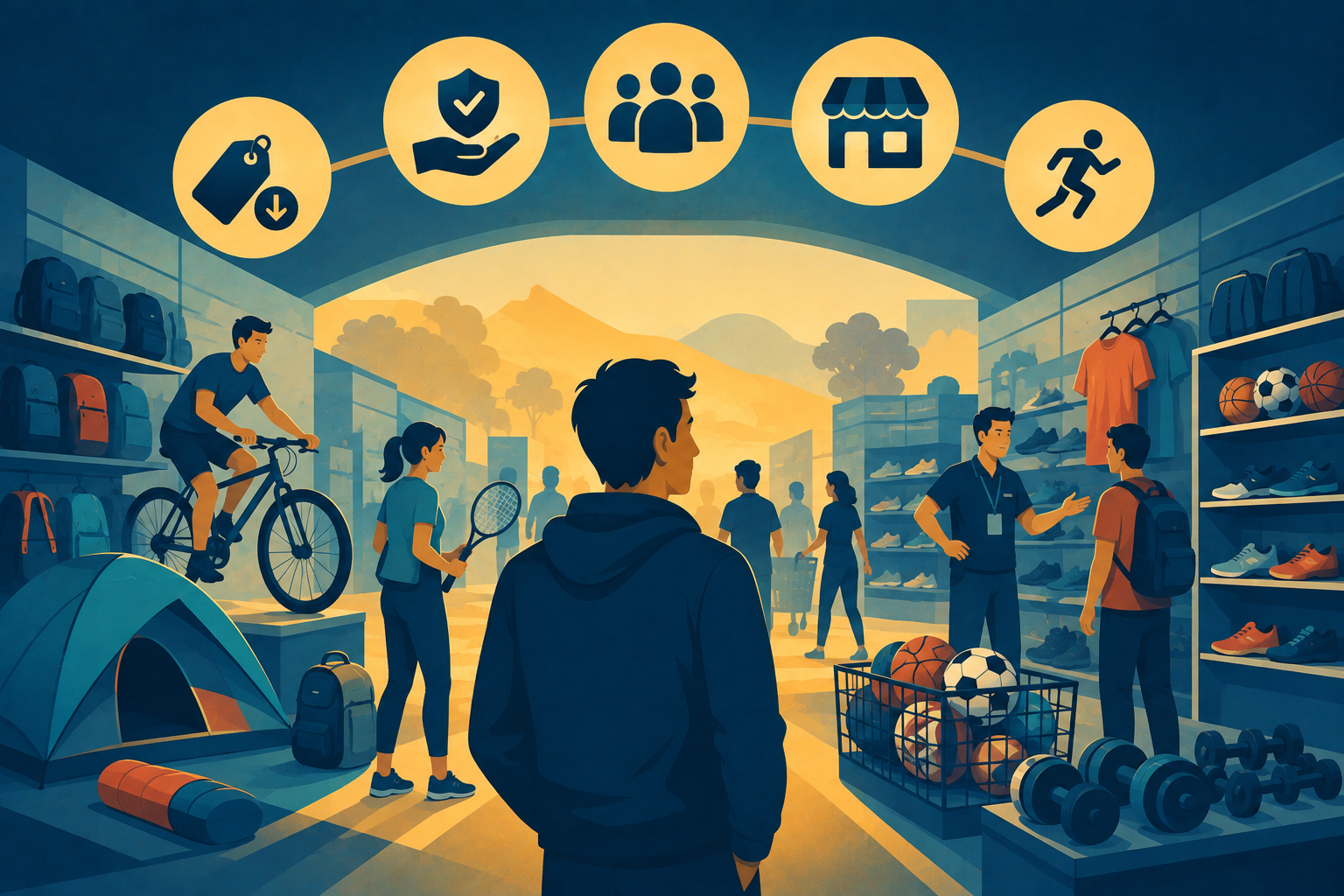
Fitness should never be a luxury. See how Decathlon branding made sports accessible through affordable in-house design.
Looking for a Shorter Overview?
AI Summary
Key Moments
In-house Brand Strategy
Decathlon's Quechua, Kipsta, and Domyos brands eliminate middleman costs by designing and manufacturing products directlyHands-on Store Experience
Open playground approach allows customers to test sports equipment physically, removing shopping fear and encouraging experimentationExpert Staff Guidance
Store employees are experienced athletes who provide authentic equipment advice rather than aggressive sales tacticsLean Marketing Approach
Minimal advertising spend and word-of-mouth reputation keep costs low while building genuine customer trustBuying sports gear used to be very expensive for ordinary people. A simple tennis racket often costs as much as a budget smartphone. If someone wanted to play football just on the weekend, they had to think twice before spending their hard-earned money. This high price tag kept many people at home, even if they wanted to play.
This is exactly the problem Decathlon branding solved for ordinary consumers. By completely changing how sports gear was priced and displayed, the company made fitness highly accessible without becoming too expensive.
This clear mission began decades ago. Michel Leclercq opened the first store in 1976 near Lille, France. His plan was simple: put equipment for many different sports under one roof, keep prices extremely low, and help more people start playing. That simple idea is what built Decathlon’s branding into what it is today.
Why Decathlon Branding Wins the Market
When buyers visit their large stores, it feels completely different from a generic sports retail store. Most premium shops keep expensive items like shoes and footballs behind glass counters, and customers are afraid to even touch them for fear of getting them dirty.
However, Decathlon’s branding encourages the opposite behaviour. Shoppers can ride bicycles down the aisles, bounce basketballs, and test camping tents right on the floor. This open-playground approach removes the fear of shopping. It makes beginners feel completely welcome, even if they have never played a sport before.
Staff in these stores also take a very refreshing approach. They are not aggressive salespeople trying to meet a monthly target. They are usually young athletes who actually play the sports they sell. If a father wants to buy a simple swimming kit for his child, the staff member guides him to the most appropriate option instead of recommending expensive professional gear.
This honest customer service builds deep trust and perfectly reflects Decathlon’s branding. The buyer feels safe, knowing nobody is trying to trick them into spending extra money.
But how do they keep prices so low without going out of business? The core strength of Decathlon branding comes down to making its own gear. Instead of paying huge fees to famous global labels, the company designs, tests, and sells products under its own names. Quechua covers mountain and hiking needs, Kipsta handles team sports like football, and Domyos focuses on everyday fitness gear.
Because the brand handles the entire process, from manufacturing to sales, it avoids the extra costs that big sports brands usually add. This lets them sell a reliable backpack for just a few hundred rupees while keeping the business profitable.
Another reason their prices stay so low is their quiet advertising strategy. Big sports companies spend millions of dollars hiring famous sports personalities and film stars for TV ads. Those heavy marketing costs are eventually passed on to customers through higher retail prices.
When you look at Decathlon branding, you see a completely different path. The company rarely spends money on celebrity endorsements or flashy billboard campaigns. Instead, it relies on word of mouth and the actual physical experience inside the store. A happy customer buying a cheap, durable winter jacket naturally tells friends about it.
Affordability Meets Lasting Quality
There is a big difference between being cheap and offering real value. If a product breaks after two weeks, the buyer will never return, no matter how low the original price was. The real strength of Decathlon branding is being affordable and offering great quality.
A basic cotton T-shirt bought from their store can easily survive months of rough washing and daily gym use. Customers realise they are getting long-lasting quality for very little money, and they simply stop shopping anywhere else.
Breaking into the fitness market once required a lot of money and serious dedication. Today, anyone can pick up a new hobby simply by walking into a Decathlon store. A business does not always need famous faces or luxury price tags to become an industry leader.
Also read: How Cultural Relevance Evolves Across Generations
By focusing entirely on everyday affordability and a welcoming store experience, Decathlon Branding proves that offering real value to ordinary people is the smartest growth strategy of all.
Loved this article? Read more insightful articles on Brand Custodian.
–Written by Rajnish Singh, a copywriter and strategist with a background in fast-paced journalism, who explores the gap between what brands promise and how consumers actually behave.