A brand name that became the dictionary word for glue. See how Fevicol branding completely conquered its product category.
Looking for a Shorter Overview?
AI Summary
Key Moments
Earned Carpenter Trust
Fevicol branding began by earning carpenters’ trust rather than selling directly to shops, turning professionals into brand ambassadors.Iconic Humorous Ads
Television spots featuring an overloaded bus and the 'Dum laga ke haisha' tagline used extreme comedy to showcase adhesive strength and spread the brand culturally.Cultural Phrase Adoption
The name Fevicol entered everyday Indian vernacular, used as a generic term for glue and a metaphor for inseparable relationships, even appearing in Bollywood lyrics.Sustained Consistency Outlasts Competitors
By keeping a single core promise for over sixty years, Fevicol created an unbreakable consumer habit that cheaper alternatives cannot displace.When a wooden chair breaks in an Indian home, nobody asks the carpenter which ‘synthetic resin adhesive’ he will use. That chemical term does not even exist in the vocabulary of a normal household. The house owner simply asks the carpenter to apply some glue and fix the joint.
More often than not, people say the brand name instead of the word glue. This complete takeover of a product category is no accident or luck. It is the direct result of smart Fevicol branding. Understanding the everyday logic behind Fevicol branding shows exactly how a business can dominate its category completely.
How Fevicol Branding Captured the Market
Fevicol’s story began in 1959, when Balvant Parekh and his brother launched a synthetic white adhesive under the company Pidilite. At the time, Indian carpenters usually used animal fat glue. That traditional glue was messy, smelt bad, and was not very reliable. Fevicol offered a much cleaner and stronger alternative.
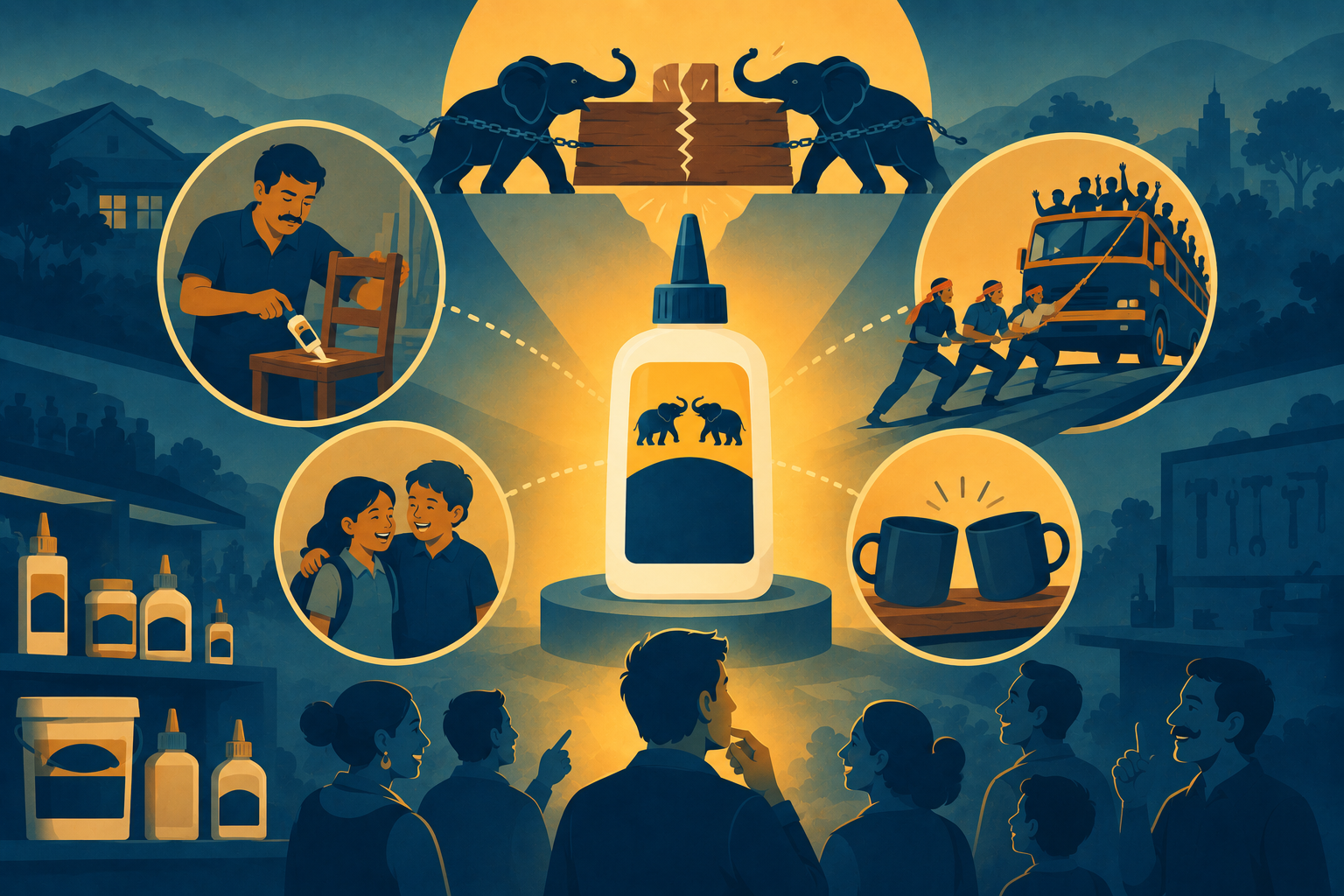
However, most companies try to sell their products directly to shop owners. Early Fevicol branding did something completely different. The company went straight to the carpenters. It treated these woodworkers with respect, formed local clubs for them, and showed them how to use the product properly. Once the carpenters trusted the glue, they naturally recommended it to every family they worked for.
But being known among professionals was only half the fight. To become a household name, the company also needed ordinary people to remember it. So Fevicol branding smartly took the next step with visual advertising. The famous logo showed two elephants trying to pull a piece of wood apart. That simple image clearly conveyed strength without needing many words.
Later, the brand worked with the Ogilvy agency and created television campaigns full of humour. These ads never bored the viewer with boring technical facts. Instead, they showed their product’s adhesive power in funny and extreme situations.
People still laugh when they remember the famous ad of an overloaded wooden bus in Rajasthan, with passengers stuck to every single part of it. This ad was so brilliant that it even won a Silver Lion at the Cannes advertising festival in 2002.
Another classic advertisement used the catchy line “Dum laga ke haisha” while showing men struggling to pull apart a glued joint. Viewers laughed and instantly understood the core message. The glue held so well that even funny, extreme efforts could not break the joint. Successful Fevicol branding repeated this exact style of over-the-top comedy in different stories over the years.
Over time, this consistent messaging turned the product name into an everyday phrase. If two close friends are always seen together, someone will jokingly say they are glued together with Fevicol. When Bollywood creates a movie song about sticking together, the writers use the brand name directly in the lyrics, just like the massive hit song “Fevicol Se” from Salman Khan’s Dabangg 2.
This cultural acceptance is the ultimate prize for smart Fevicol branding. The company no longer just sells white glue in a plastic tub; it sells the very idea of a permanent relationship.
Many modern businesses grow bored with their own marketing very quickly. They want to change their logos and taglines every few years to look fresh. For more than sixty years, this adhesive company has kept the same core promise. Because the business remained incredibly focused on a strong, unbreakable joint, multiple generations grew up hearing the exact same message.
Many competitors have tried to enter this category with cheaper options, but breaking this level of consumer habit is nearly impossible. A local contractor will not risk his daily reputation just to save a few rupees on an unknown glue. The sheer power of Fevicol branding acts like a thick wall that keeps competitors out.
Owning a specific product benefit takes real patience. A business cannot become a daily habit through cheap discounts or aggressive sales calls. By respecting the actual user, using local humour, and never changing the core message, brilliant Fevicol branding proves that keeping things simple is the best way to win.
Also read: How Identity Signals Shape Consumer Preferences
When a brand becomes the only word people use to describe a problem, the business practically runs itself.
Loved this article? Read more insightful articles on Brand Custodian.
–Written by Rajnish Singh, a copywriter and strategist with a background in fast-paced journalism, who explores the gap between what brands promise and how consumers actually behave.