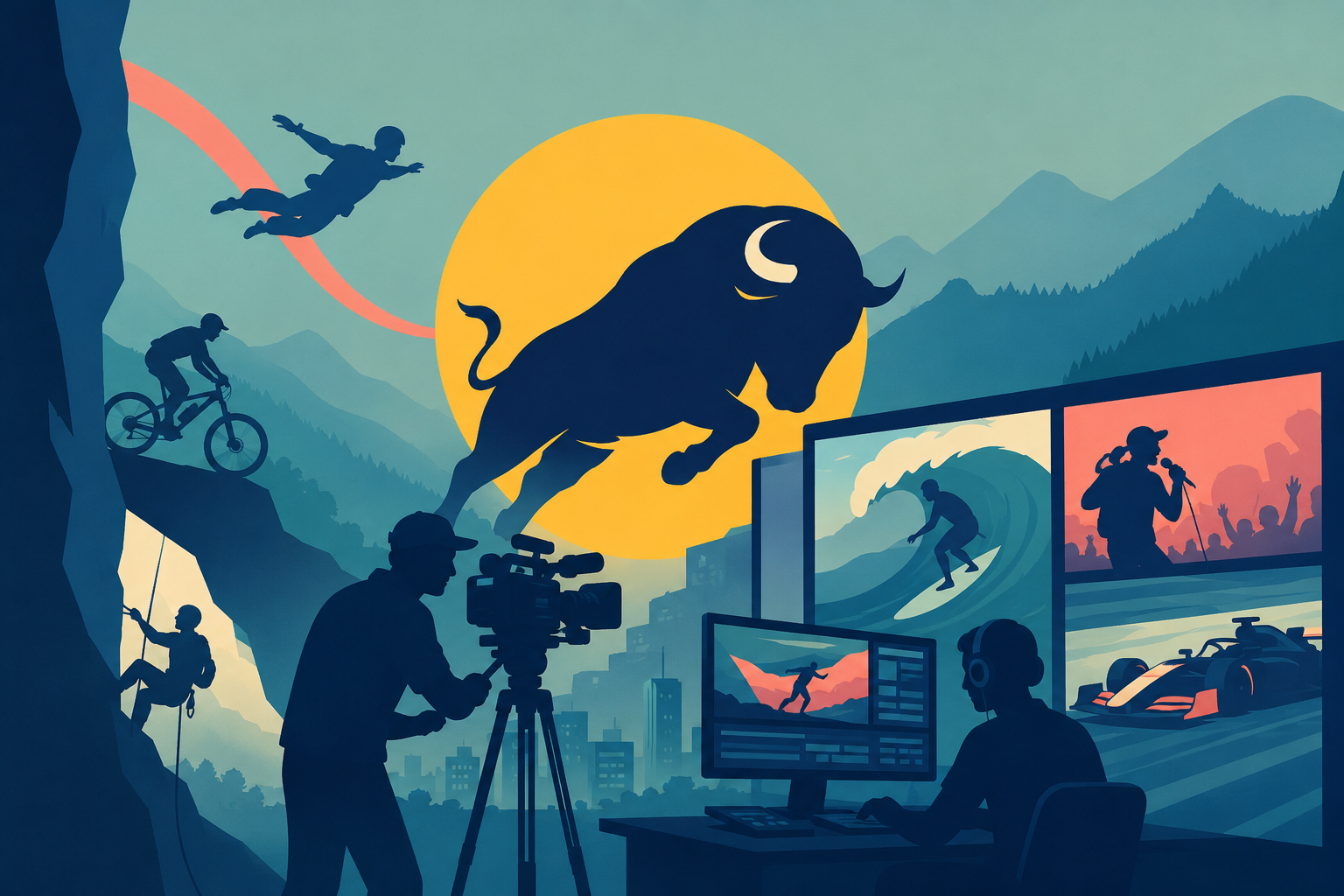
Discover how Red Bull became a media powerhouse by creating content, experiences and culture that built a brand beyond energy drinks.
Looking for a Shorter Overview?
AI Summary
Key Moments
Shift from Traditional Advertising
Red Bull stopped treating content as promotional and built an entire media ecosystem around genuine audience interest.Branded as Experience Creator
The company evolved from selling energy drinks to creating memorable adventures and cultural moments.Media House Formalization
Red Bull launched Red Bull Media House in 2007 to professionalize content production and distribution across multiple platforms.Long-term Content Strategy
Success came from patient investment in owned intellectual property rather than short-term marketing campaigns.Most brands create content to support their marketing. Red Bull flipped that idea on its head. Instead of treating content as a promotional tool, it built an entire media ecosystem around stories people genuinely wanted to watch, read and share. The energy drink became almost secondary to the experience the brand created.
Today, Red Bull is recognised as much for breathtaking sporting moments, documentaries, films and digital content as it is for the drink itself. That wasn’t an accident. It was the result of a long-term strategy that focused on earning attention instead of buying it. By consistently creating entertainment around adventure, culture and human achievement, Red Bull built one of the world’s most powerful examples of content-led branding. The company even formalised this approach by launching Red Bull Media House in 2007, bringing its growing media operations under a dedicated business focused on producing and distributing premium content.
How Red Bull Turned Content Into Its Biggest Competitive Advantage
When Red Bull entered the market in 1987, it faced a difficult challenge. Energy drinks were an unfamiliar category in many countries, and traditional advertising alone would not have been enough to build lasting demand. Rather than spending all of its efforts convincing consumers why the drink was different, the company chose to build a brand that represented excitement, ambition, and pushing limits.
That philosophy led Red Bull to invest heavily in athletes, extreme sports, motorsports, music and cultural events. Instead of placing its logo on existing moments, it increasingly created those moments itself. Whether it was sponsoring cliff divers, producing mountain biking films or organising world-famous events, the brand became the storyteller rather than just the advertiser.
Perhaps the defining example of this strategy was Felix Baumgartner’s Red Bull Stratos jump in 2012. Millions watched as Baumgartner jumped from the edge of space, breaking records while creating one of the most memorable branded events in modern marketing. People tuned in because the event itself was extraordinary, not because they wanted to watch an advertisement. The Red Bull branding was naturally embedded into an experience that audiences actively sought out.
Over time, this approach expanded far beyond individual campaigns. Red Bull Media House began producing documentaries, feature films, live broadcasts, magazines, podcasts and digital programming across sports, culture and lifestyle. The company distributes content through television, streaming platforms, social media, YouTube, print publications and partnerships with broadcasters worldwide. In many cases, the content generates its own commercial value through licensing and distribution while continuing to strengthen the parent brand.
One of the biggest reasons this strategy works is that Red Bull rarely interrupts consumers. Traditional advertising often competes for attention by breaking into what people are already watching. Red Bull creates the thing people choose to watch in the first place. The focus remains on remarkable stories, elite athletes and incredible achievements, with the product naturally sitting in the background.
This also gives the brand remarkable consistency. Whether someone watches a Formula 1 race, a surfing documentary, a snowboarding competition or a short film on YouTube, they experience the same underlying message. Red Bull stands for performance, adventure, creativity and human potential. That consistency reinforces brand identity without relying on repetitive product advertising.
There is another important lesson here for marketers. Red Bull did not become a media company overnight. It invested patiently for years, building credibility, production capabilities and distribution channels before many brands were even thinking seriously about content marketing. Instead of chasing short-term campaigns, it committed to creating intellectual property that it owned and could continue benefiting from over time.
Many brands now talk about becoming publishers, but few have demonstrated the level of commitment that Red Bull has. The company doesn’t simply produce marketing assets. It develops stories, events and experiences that audiences would willingly consume even if the logo disappeared. That difference explains why its content often feels like entertainment first and advertising second.
Ultimately, Red Bull proves that the strongest brands don’t just communicate messages. They create worlds people want to be part of. By becoming a genuine media company rather than relying solely on conventional advertising, Red Bull built deeper consumer relationships, stronger cultural relevance and a competitive advantage that extends far beyond the energy drink aisle. For marketers, the lesson is clear: the brands that consistently create value through compelling stories often become the ones people remember long after the advertising ends.