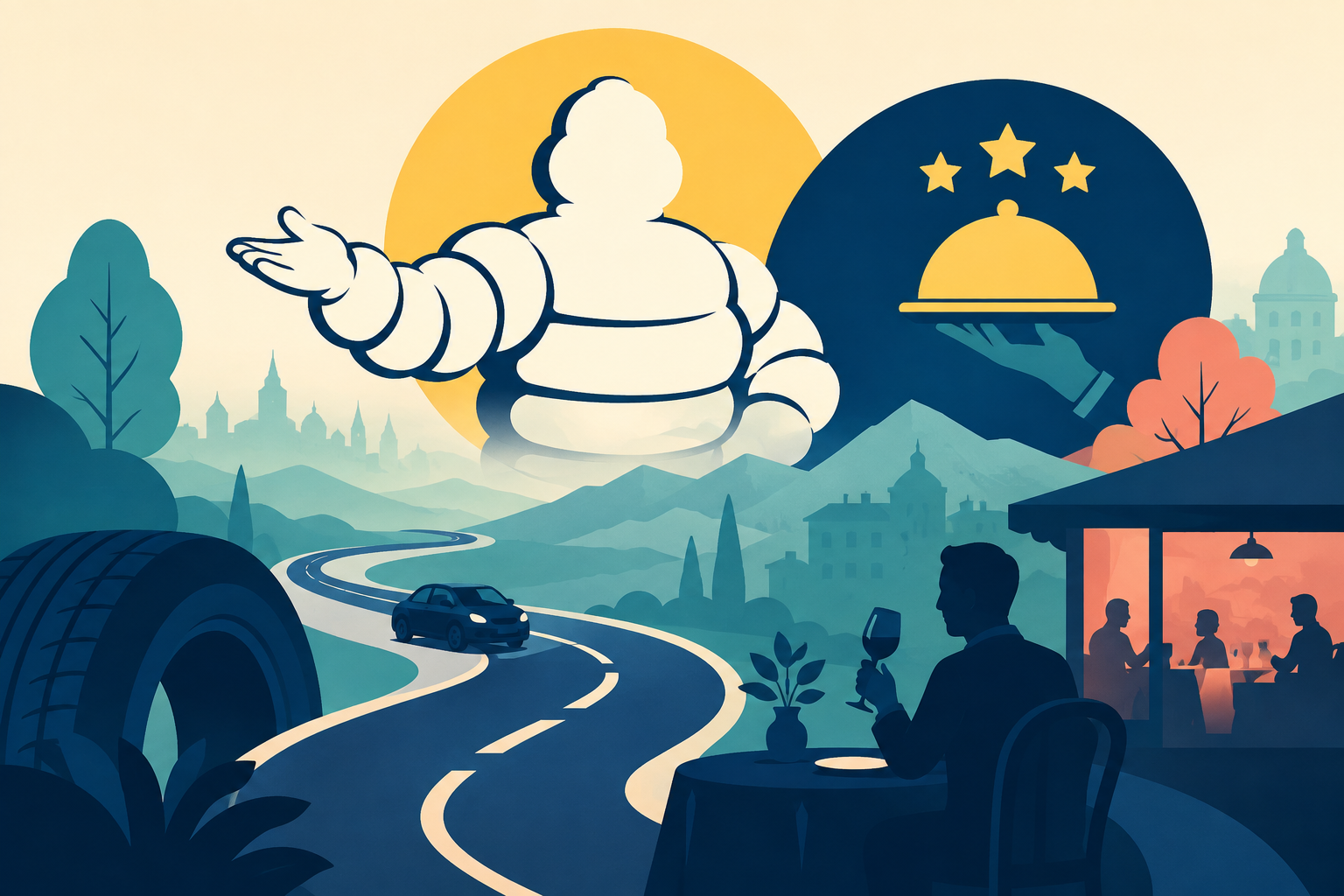
Discover how Michelin built global authority beyond tyres by earning trust through the Michelin Guide and lasting brand value.
Looking for a Shorter Overview?
AI Summary
Key Moments
Anonymous Inspectors & Star System
Michelin introduced secret evaluators and a 1‑3 star rating in 1926, establishing consistency as the benchmark for quality.Paid, Ad‑Free Guide
In 1920 Michelin started charging for the guide and removed ads, signaling that users value paid, independent recommendations.Experience‑First Brand Narrative
The Michelin Guide avoided tyre promotion, positioning the brand as an enabler of memorable journeys rather than a product seller.Authority Amplifies Parent Brand
Earning Michelin stars became a global culinary honor, strengthening the overall Michelin reputation for quality, precision and trust.When people hear the name Michelin today, many think of fine dining before they think of tyres. That is remarkable considering Michelin began as a tyre manufacturer. Yet over the past century, the company has built one of the world’s most respected symbols of quality without ever leaving its original business behind.
The story of Michelin is not about diversification for the sake of growth. It is about understanding that authority is earned by consistently creating value beyond the product itself. By helping people travel with confidence, discover great restaurants and trust independent recommendations, Michelin transformed its brand from a manufacturer into a cultural institution.
How Michelin Built Authority That Extended Far Beyond Tyres
The Michelin Guide was first published in France in 1900 by brothers André and Édouard Michelin. At the time, there were fewer than 3,000 cars on French roads. The brothers understood a simple business reality: if more people travelled by car, they would eventually need more tyres. Rather than advertising their products directly, they produced a free guide containing maps, repair instructions, petrol stations, hotels and places to eat. It was designed to make road travel easier and encourage people to drive more.
What started as a practical marketing initiative gradually evolved into something much bigger. As restaurants became one of the guide’s most valued sections, Michelin invested heavily in making its recommendations credible. In 1920, the company began selling the guide instead of giving it away, believing that people value what they pay for. It also removed advertisements, reducing commercial influence and reinforcing the guide’s independence.
The real turning point came when Michelin introduced anonymous inspectors. Instead of accepting paid placements or public reviews, inspectors visited restaurants discreetly, paid for their meals and evaluated establishments against consistent standards. In 1926, Michelin introduced its famous star ratings, later expanding them into the one, two and three-star system that remains in use today. The stars became a global benchmark because they represented consistency rather than popularity.
This is where Michelin demonstrated a lesson many modern brands still overlook. Authority cannot be claimed through advertising alone. It must be earned through a process that people believe is fair, rigorous and independent. Over decades, chefs, travellers and food enthusiasts came to trust Michelin because the company consistently protected the integrity of its recommendations.
Interestingly, the Michelin Guide rarely promoted tyres directly. Instead, it reinforced the company’s broader purpose of enabling memorable journeys. The brand shifted the conversation away from what it sold, and towards the experiences it made possible. Great brands often achieve greater relevance when they stop talking exclusively about their products and start becoming valuable participants in their customers’ lives.
Also read: Why Delayed Gratification Creates Premium Brands
The long-term impact has been extraordinary. Today, earning a Michelin Star is one of the highest honours in the culinary world. Restaurants proudly display the recognition, chefs build careers around it, and travellers plan holidays based on Michelin recommendations. The guide has become an authority in an industry entirely different from Michelin’s original business, yet it continues to strengthen the parent brand’s reputation for quality, precision and trust.
From a branding perspective, Michelin succeeded because it played the long game. It did not launch a campaign hoping for immediate sales. It built an ecosystem that genuinely benefited its audience, knowing that trust compounds over time. Every reliable recommendation strengthened the guide’s credibility, and every positive experience reinforced the Michelin name itself.
This approach feels particularly relevant today. Many brands focus on generating attention through viral campaigns, influencer partnerships or short-lived trends. While these tactics may create visibility, they rarely create authority. Authority comes from becoming a dependable source of expertise that customers willingly return to.
Michelin reminds us that the strongest brands are not always the loudest. Sometimes, they become influential by helping people make better decisions, even when those decisions are not directly about the product they sell.
For marketers, the lesson is clear. Lasting brand equity is built when a company creates value that extends beyond its category. Michelin did not become famous because it made tyres. It became iconic because it earned trust in a completely different domain, and in doing so, elevated everything its name came to represent.