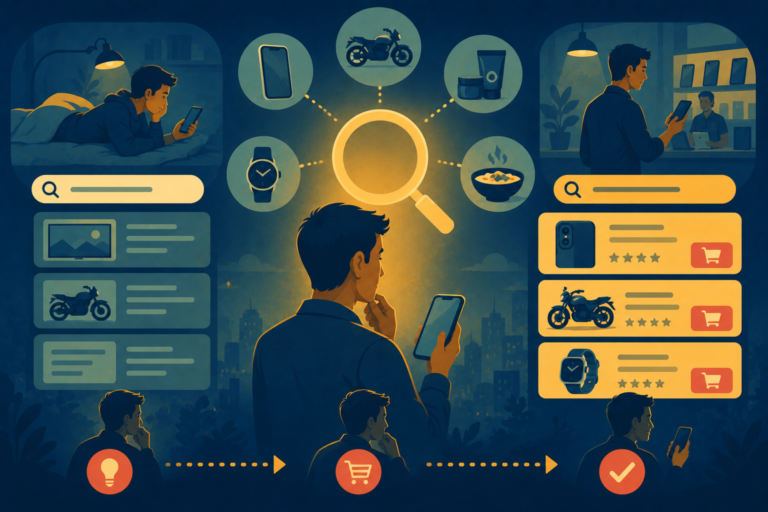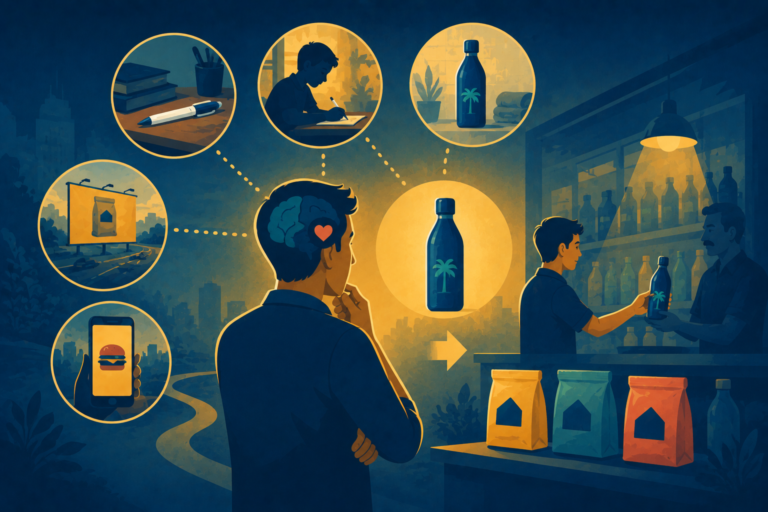
Discover why consumer habits drive lasting retention while loyalty programmes often fail to create genuine customer loyalty.
Looking for a Shorter Overview?
AI Summary
Key Moments
Bribes don't build habits
Discount incentives create temporary loyalty but cannot form lasting consumer habits.Habit wins over points
Embedding a product into daily routines eliminates cognitive load, securing permanent user attention.Gamification misleads
Reward points and tiers attract users briefly but lack the daily friction needed for true retention.Action-driven wiring
Aligning with existing daily actions zeroes cognitive effort, turning usage into an automatic reflex.Ask any retention head in a Gurugram D2C startup how they plan to keep their customers from running away, and they will give you the exact same answer.
They will proudly unveil a complex, multi-tiered rewards system. Platinum tiers. Redeemable coins. Birthday discounts.
They genuinely believe that if they bribe a customer enough, they have successfully engineered a consumer habit.
They are dead wrong.
They are confusing loyalty with simple mathematics.
You Cannot Bribe a Consumer Habit into Existence
Let’s be brutally honest. A customer swiping your card for a 10% discount is not loyal to your brand. They are loyal to the discount.
The exact millisecond a competitor across the street offers 11%, your customer is gone. Your expensive rewards ecosystem is completely useless because it relies on the buyer making a conscious, rational calculation every single time they interact with you.
Real retention does not happen in a spreadsheet. It happens when the brain completely shuts off.
You win when your product becomes a blind consumer habit. It is the exact moment the user reaches for your app, your beverage, or your software before they even realise they have a problem to solve.
Let’s understand this through an example of the Indian fintech market.
Look at the bloodbath in Indian fintech.
A few years ago, Google Pay and PhonePe burned billions in venture capital, giving away digital scratch cards. Every time you paid a local auto-rickshaw driver, you got ₹15 cashback. That was a pure bribe to acquire users.
But what happens today?
You pay the local vegetable vendor in a crowded Mumbai market, and you get absolutely nothing in return.
No cashback. No digital fireworks on your screen. But you still pull out your phone and scan the faded QR code taped to the cart.
Why?
Because the action bypasses your rational brain and becomes a hard-wired consumer habit. You don’t calculate the financial benefit anymore. Your thumb simply knows exactly where the scanner icon is on your home screen. The behaviour is completely locked in.
Gamification is Not Retention
You can see this exact crisis playing out with premium reward platforms like CRED.
They gamified credit card payments beautifully. They offered massive jackpots, luxury trips, and millions of virtual coins. It was the ultimate loyalty programme on steroids. But historically, the user only opened the app once a month when the billing cycle ended.
The founders quickly realised a terrifying truth. You can have the most beautiful rewards ecosystem in the country, but if you do not trigger a daily consumer habit, you do not actually own the user’s attention.
That is exactly why these platforms are now desperately pushing into daily UPI payments and utility bills. They need the daily friction. They need the muscle memory.
Also read: Why Brand Recall Is Becoming Harder Than Ever
Stop Bribing, Start Wiring
This is where most marketing budgets go to die.
Founders waste months designing VIP tiers instead of fixing their core user journey. They hire expensive consultants to figure out exactly how many digital coins equal one rupee.
If you force your customer to remember a promo code to justify using your product, you have already lost.
You cannot buy a consumer habit with a discount code. You have to anchor your product to an existing, daily action. It must require zero cognitive load to execute.
So kill the complex points system. Look at your actual product experience on the ground.
Are you a conscious, calculated decision? Or are you a reflex?
Because loyalty programmes just rent market share. But a deeply ingrained consumer habit buys absolute market dominance.
– Written by Rajnish Singh, a copywriter and strategist with a background in fast-paced journalism, who explores the gap between what brands promise and how consumers actually behave.