People hate to think and love to click next. Learn how default bias makes your brand the automatic choice.
Looking for a Shorter Overview?
AI Summary
Key Moments
Understanding Default Bias
Default bias is the tendency to accept pre-selected options to save time and effort.Digital Interface Defaults
Tech companies leverage default settings in browsers and apps to maintain market dominance.Financial Services Exploitation
Banks use default bias to automatically add insurance products and other services.Monetization Through Defaults
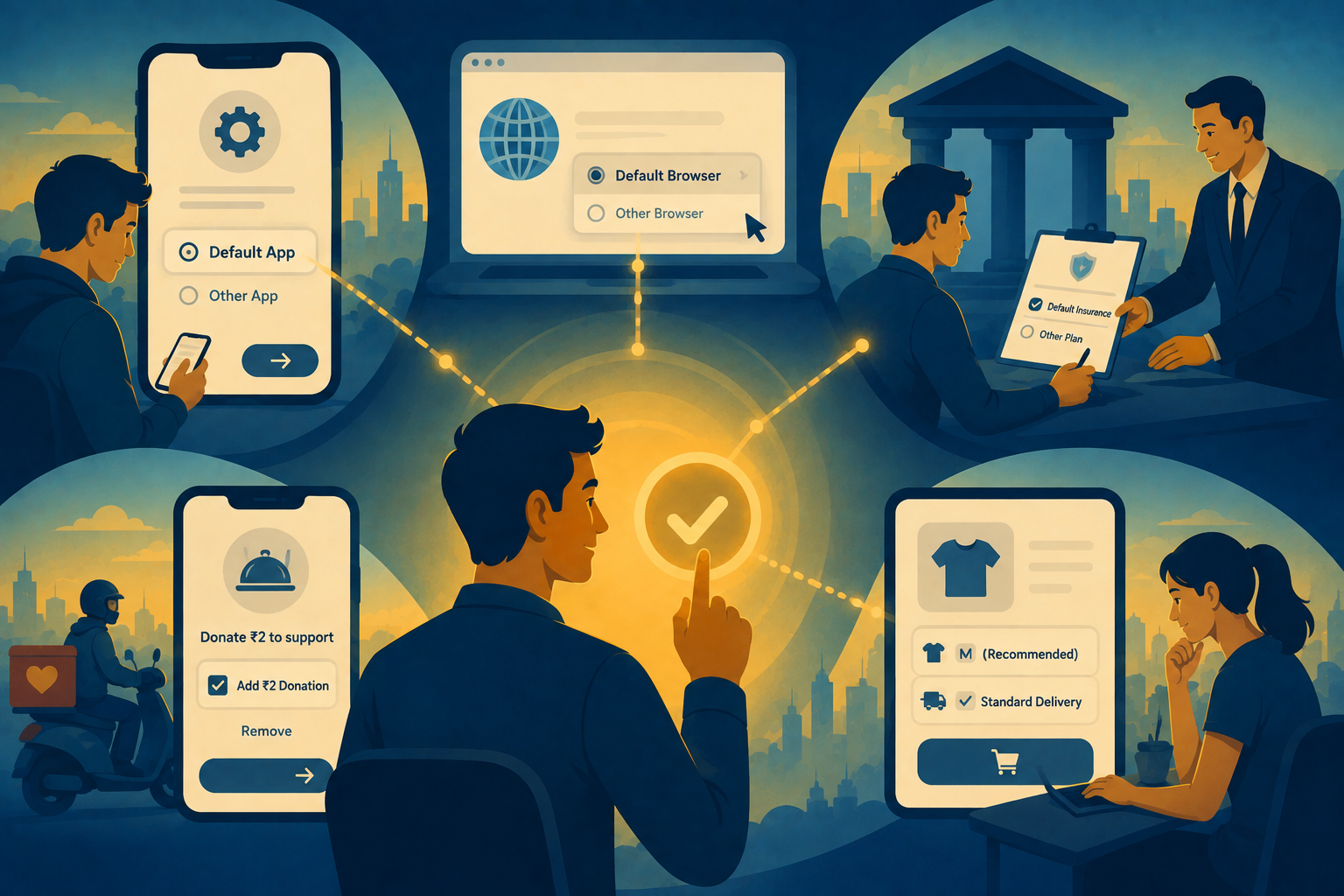
Companies subtly increase payments through pre-checked options like donations in apps.When someone buys a new smartphone, the shopkeeper usually opens the box and helps set it up. During setup, the buyer must choose a search engine or map app. Most people just click Next and accept whatever is already selected on the screen. They do not want to spend a few extra minutes downloading a different map app.
They just want to use their phone as soon as possible. This lazy but normal habit is called ‘default bias’. Because of default bias, people gladly stick with the standard option given to them. For big companies, becoming that automatic choice is the fastest way to gain millions of daily users without spending extra money on advertising.
How the Automatic Choice Wins the Market
Look at how office workers use their computers. When someone buys a new laptop, it comes with a built-in internet browser. The screen automatically opens this specific browser every time the person clicks a web link.
A user can easily download another browser for free in two minutes. But most people never change these settings. They just accept the factory setting and continue doing their office work.
This happens clearly because of default bias. People simply want to save time. When a brand becomes the automatic choice, it keeps rival companies away. Buyers do not even look at other options because changing settings feels like extra work.
We see the same thing with local bank accounts. When a young man gets his first job, he opens a salary account at a nearby bank branch. The bank clerk gives him a basic debit card and a specific health insurance form. He signs the paper without comparing different insurance policies online.
He accepts the bank’s automatic offer. Using default bias helps the bank sell extra products very easily. The customer chooses the standard option just to avoid the extra headache.
Food delivery applications also use this trick every single day. When a family orders online, the application automatically adds a small donation amount of 2 rupees at the final payment page. There is always a small button to remove it. But taking it off requires an extra click and a little bit of thinking. Many people simply leave the extra amount in place and pay the final bill.
The app uses default bias to raise the total payment. If that small donation were not selected from the start, very few people would actually click the button to add it. People tend to accept whatever is already checked on their mobile screen.
Many new businesses fail because they ask the buyer to make too many choices. When a website asks a customer to fill out five different forms just to buy a shirt, the customer gets irritated and closes the page.
Good brands do the exact opposite. They pre-select the most popular shirt size and the fastest delivery option. They use default bias to make the buying process very simple. A customer will gladly pay for a product if the company makes the decision easy for them.
Also read: Why Cultural Capital Makes Brands More Desirable
A business does not always need to prove it is the absolute best in the market. Sometimes, it just needs to be the easiest option available right now. If a company can make its own product the automatic choice, regular buyers will naturally stick with it for years.
Beating default bias is very hard for rival companies. Once a buyer gets used to a daily routine, they rarely want to change it. Using default bias properly gives a brand regular sales for a very long time.
Loved this article? Read more insightful articles on Brand Custodian.
–Written by Rajnish Singh, a copywriter and strategist with a background in fast-paced journalism, who explores the gap between what brands promise and how consumers actually behave.