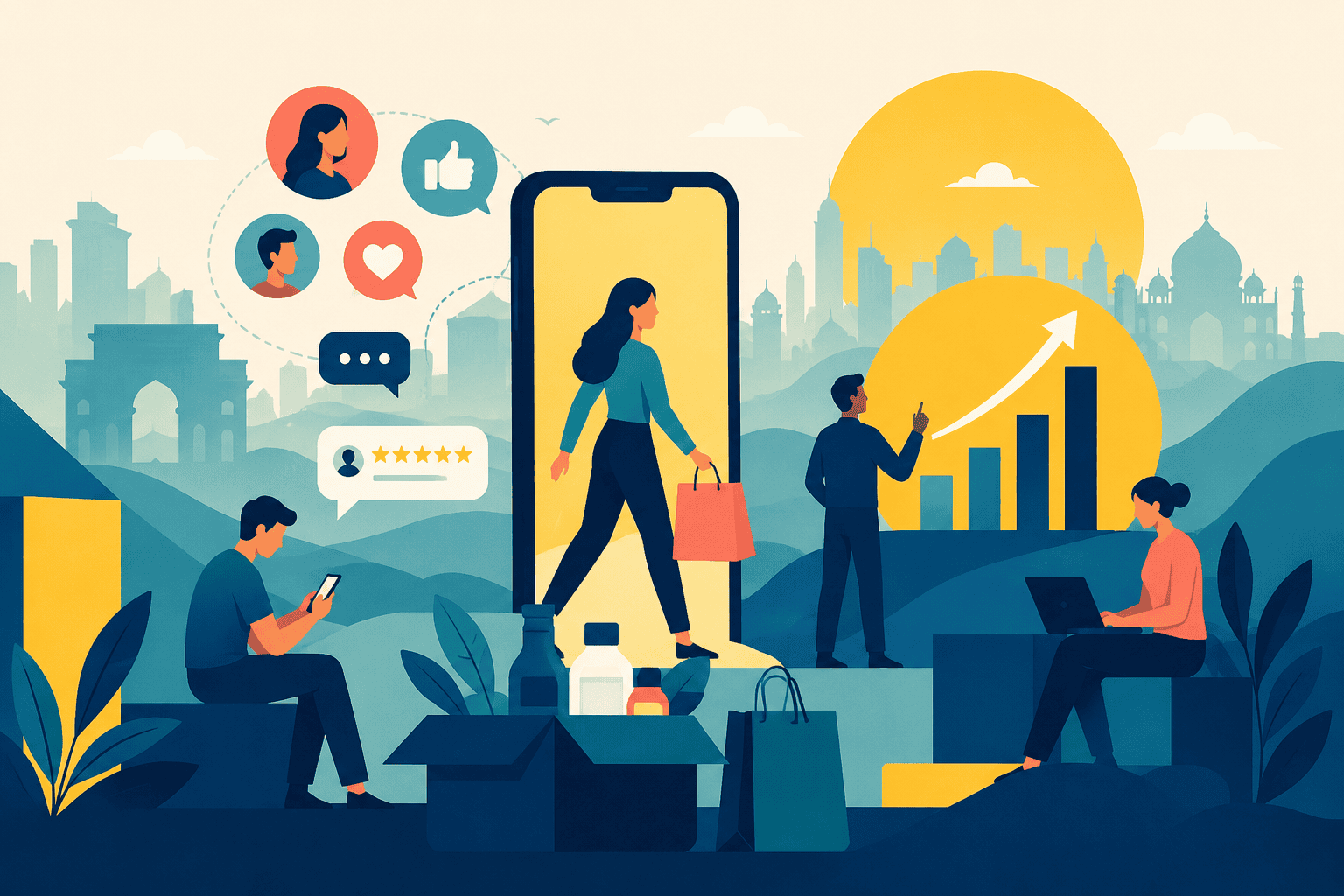
D2C Marketing is transforming Indian brands through speed, authenticity and customer-first strategies that drive lasting growth.
Looking for a Shorter Overview?
AI Summary
Key Moments
Real‑time data trumps traditional research
D2C brands use Instagram comments, WhatsApp chats and product reviews to instantly gauge customer sentiment.Lightning‑fast iteration
Testing five ad creatives in a day and seeing results by Monday replaces months‑long TV campaign cycles.Authenticity over polish
Micro‑creators, founder storytelling and transparent responses build trust, especially with Gen Z.Marketing becomes the whole experience
Packaging, delivery speed, unboxing and customer service are all brand touchpoints that shape perception.Go into any supermarket today, and you’ll still see shelves filled with legacy brands. But open your Instagram feed, and it’s a completely different story.
D2C brands, from skincare and fashion to healthy snacks and pet food, have quietly become some of the most influential marketers in India. What’s fascinating isn’t just what they’re selling, but how they’re selling it. Their approach to D2C marketing is reshaping how brands build relationships, launch products, and grow in an increasingly digital world.
Why D2C Marketing Is Changing How Brands Grow in India
Unlike traditional companies that built their brands through television commercials and extensive distributor networks, D2C brands have grown up in a digital-first world. They don’t need annual consumer research reports to understand their customers. Instead, they gather real-time feedback through Instagram comments, product reviews, WhatsApp conversations and customer support interactions. Every customer interaction becomes a valuable source of insight.
Perhaps the biggest advantage of D2C marketing is speed. A traditional television campaign can take months to plan, produce and launch. A D2C brand, on the other hand, can test five different Instagram creatives on a Friday afternoon and know by Monday morning which one generated the most sales. Data has replaced assumptions, allowing brands to make faster and more informed decisions.
This agility has forced even established companies to rethink their own marketing processes. Another reason D2C brands are succeeding is authenticity. Instead of relying solely on polished celebrity endorsements, many collaborate with micro-creators, showcase customer testimonials, and embrace founder-led storytelling. Consumers are no longer just buying a product; they’re buying into the story, values and people behind the brand. This is especially true for younger audiences.
Gen Z doesn’t want to be sold to. They want transparency. They expect brands to respond to comments, acknowledge criticism, and show the people behind the business. Authenticity has become a competitive advantage rather than a marketing buzzword.
D2C brands have also blurred the line between marketing and customer experience. Packaging, delivery speed, unboxing experiences, loyalty programmes and customer service are all part of the brand experience. Every interaction is an opportunity to strengthen brand perception.
The lesson extends far beyond start-ups. You don’t have to be a D2C company to adopt a D2C marketing mindset. Listen to customers quickly. Experiment constantly. Measure everything. Above all, focus on building communities rather than simply accumulating audiences.
Most importantly, remember that today’s consumers expect brands to evolve as quickly as the platforms they use. India’s D2C boom isn’t just creating successful new companies. It’s creating a new generation of marketers—one that’s comfortable with experimentation, obsessed with customer feedback, and unafraid to challenge decades-old marketing conventions.
That’s a marketing playbook worth paying attention to.