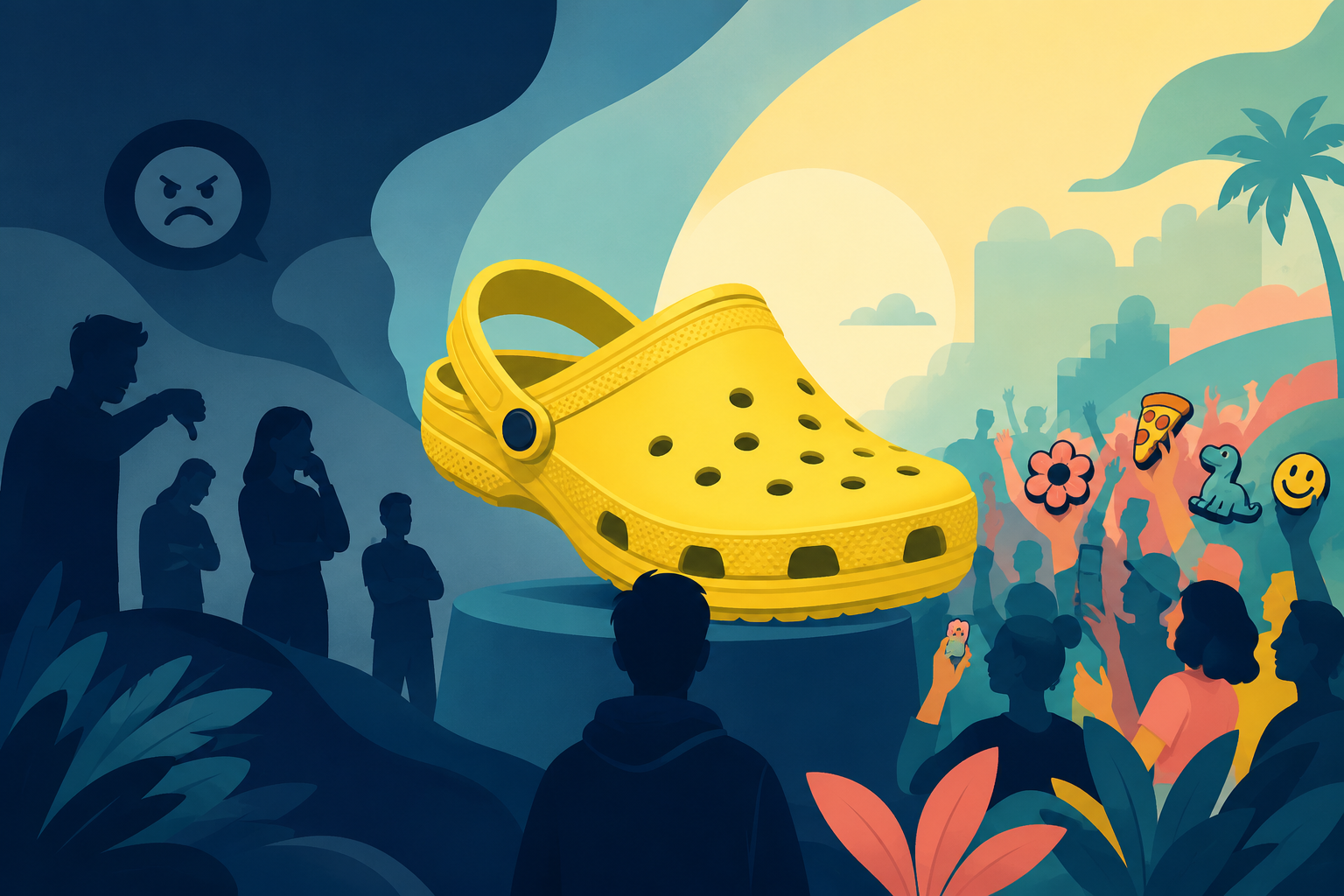
Discover how Crocs transformed from a mocked clog into a global brand by embracing its uniqueness, culture, and self-expression.
Looking for a Shorter Overview?
AI Summary
Key Moments
Embrace 'Ugly' Philosophy
Crocs adopted 'Ugly is cool' to align with Gen Z's comfort and irony preferences.Jibbitz Personalization
Acquired Jibbitz charms in 2006, transforming basic shoes into customizable style statements.Strategic Collaborations
Partnered with Balenciaga, KFC, and celebrities to create buzz and cultural relevance.Social Media Virality
Leveraged Instagram sharing of absurd designs to generate free publicity and brand awareness.A decade ago, wearing a pair of Crocs in public was almost treated like a social crime. People mocked the giant, rubbery clogs. Fashion magazines called them an eyesore. By 2008, the company was losing money so rapidly that it barely avoided bankruptcy.
When a product is mocked this relentlessly, most corporate boards panic. The standard playbook says that if the public hates your design, you change it immediately. Hire an expensive design agency, remove everything people dislike, and launch something sleeker that resembles Nike or Puma.
But Crocs’ leadership did the exact opposite.
Instead of distancing themselves from the criticism, they embraced it. The company stopped trying to convince the world that Crocs was a serious footwear brand.
In doing so, it engineered one of the biggest brand comebacks in modern retail history.
How Crocs Turned Criticism into a Competitive Advantage
Instead of making the shoe prettier, the company leaned into its so-called ugliness. The marketing team realised that younger consumers no longer cared about rigid, traditional fashion rules. Gen Z valued two things above all else: comfort and irony.
If wearing bright yellow rubber clogs annoyed fashion critics, younger buyers wanted to wear them even more. Crocs adopted a simple philosophy: Ugly is cool.
The brand took the very reason people criticised the product and transformed it into a badge of individuality.
The real turning point, however, wasn’t just a shift in attitude. Crocs cracked consumer psychology by introducing Jibbitz, the small plastic charms that fit into the holes of the clogs and allow customers to personalise their footwear.
Ironically, Crocs didn’t invent them.
A mother named Sheri Schmelzer created Jibbitz in 2005 simply to entertain her children. Crocs recognised the opportunity and acquired her small business in 2006 for $10 million. That acquisition paid for itself many times over.
A plain rubber clog is just a shoe. A clog covered in tiny pizza slices, Marvel characters, anime icons, or alphabet letters becomes an expression of personality. Much like social media profiles, people enjoy showcasing who they are.
By selling inexpensive charms, Crocs transformed a basic product into a blank canvas. Customers no longer just bought a pair of shoes—they designed them. That sense of ownership created a far deeper emotional connection with the brand.
To strengthen its comeback even further, Crocs launched some of the internet’s most unexpected collaborations. It partnered with luxury fashion house Balenciaga to create a platform clog that became one of fashion’s most talked-about products.
The brand even collaborated with KFC to launch clogs inspired by fried chicken, complete with a fried chicken scent.
Then came partnerships with global stars such as Justin Bieber, Post Malone, and Bad Bunny, making the once-ridiculed rubber clog culturally relevant almost overnight.
It was absurd, but that was precisely the point.
The brilliance of Crocs’ branding lies in the fact that it stopped apologising and started giving people a reason to look. Every bizarre collaboration generated weeks of free publicity because people couldn’t resist sharing photos online.
Also read: How Brand Valuation Reflects More Than Financial Performance
Instead of relying solely on traditional advertising, Crocs let Instagram and X users do the marketing for them.
Today, the company generates billions in annual revenue. Its stock has soared, and the brand achieved this without fundamentally changing the shape of the original clog that once threatened its future.
Most struggling businesses try to repair a damaged reputation by distancing themselves from what makes them different. In the process, they dilute their identity in an attempt to appeal to everyone and ultimately stand for nothing.
The lesson from Crocs is remarkably simple.
A business doesn’t need universal approval to build a successful brand. It needs to understand what makes it distinctive, embrace that uniqueness with confidence, and give its customers meaningful ways to express it.
– Written by Rajnish Singh, a copywriter and strategist with a background in fast-paced journalism, who explores the gap between what brands promise and how consumers actually behave.