What is sensory branding? Learn how brands use sound, smell, and touch to trigger instant recognition and boost sales.
Looking for a Shorter Overview?
AI Summary
Key Moments
Scent Creates Immediate Memory Links
Brain processes smells directly connecting to memories and emotions, making scent one of the most powerful branding toolsSound Triggers Brand Recognition
Distinctive audio cues like Netflix's 'ta-dum' and Intel’s five-note jingle create global brand awareness instantlyTouch Signals Quality and Value
Weight, texture, and physical interaction with products like glass perfume bottles or laptop adjustments create perceived valueMulti-sensory Branding Drives Loyalty
Combining all senses creates memorable experiences that make customers return for the feeling, not just the productMost advertising relies entirely on what people can see. Companies spend massive budgets on colourful logos, bright billboards, and flashy video commercials. But humans experience the world using five senses, not just one.
When a business only targets human eyes, it misses huge opportunities to build lasting memories. This is exactly why sensory branding has become so important for modern companies. Instead of just showing a product, businesses now design how their items smell, sound, and feel.
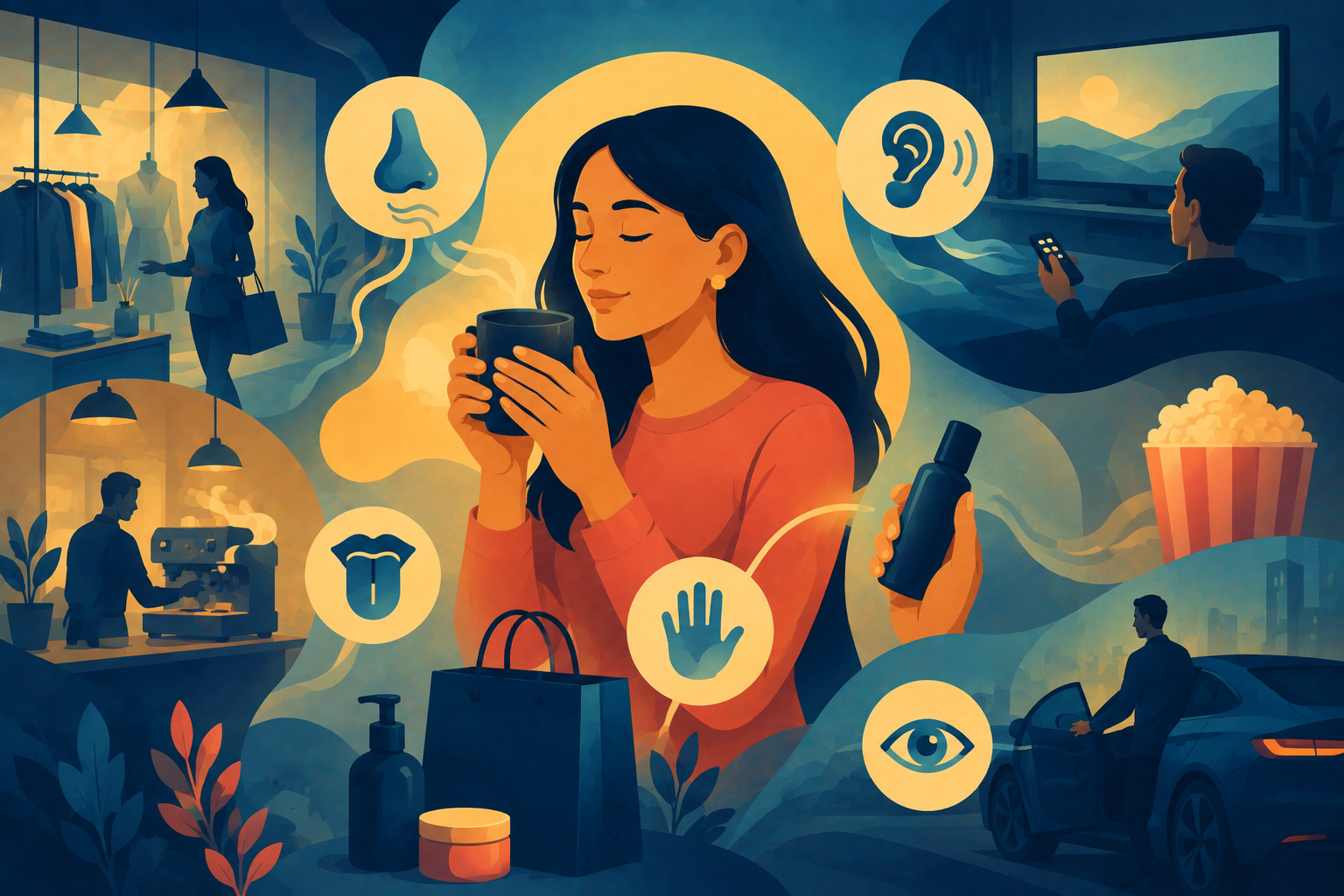
Think about walking past a movie theatre. Long before anyone sees a popcorn machine, the smell of warm butter reaches them. That scent instantly makes people want to buy a snack. This is not an accident; it is a well-planned basic form of sensory branding.
By hitting multiple senses at once, companies skip right past logic and trigger an instant bond. This approach creates a physical reaction that a simple visual advertisement can never achieve.
How Sensory Branding Shapes Customer Choices
Scent is one of the most powerful tools a company can use. Human brains link smells directly to memories and feelings. Retail stores understand this completely. When buyers walk into a premium clothing shop, they often smell a specific cologne. Store managers spray that exact fragrance through air vents in every one of their stores worldwide.
Coffee shops intentionally vent the smell of roasted beans onto the street to draw morning commuters inside. Effective sensory branding ensures that even if a shopper is blindfolded, that person will know exactly which brand they are visiting. Keeping customers inside a shop longer usually leads to higher sales.
Sound plays an equally important role in how buyers remember a brand. For example, every time a person opens the Netflix app, a specific, deep chime “ta-dum” plays before a movie starts. That two-second audio clip is recognised globally. A computer processor called ‘Intel’ did the exact same thing years ago with a simple five-note sequence.
Mobile phone makers use this trick every single day. When a classic Apple or Samsung ringtone goes off in a public place, people instantly know which phone a person is about to pull out of a pocket. Nobody even has to see the physical device first.
Good sensory branding uses these short sounds to trigger instant brand recognition. Consumers do not even need to look at a television screen to know what product is being advertised. Audio cues do all the hard work.
Touch also changes how people value physical items. If a person picks up a heavy, glass perfume bottle, it instantly feels expensive. If that exact same liquid comes in a thin plastic bottle, a buyer will refuse to pay a high price.
Weight and texture signal quality. A smart technology company uses sensory branding to encourage customers to interact with its devices.
In retail stores, employees tilt laptop screens at a very specific angle. To see a screen properly, a customer must physically touch the metal computer and adjust it. Physical contact makes buyers feel a sense of ownership before they even purchase an item.
Small details matter when a company wants to stand out in a crowded market. Even fast-food restaurants use this strategy. Loud sizzling noises from meat cooking on a grill make waiting customers even hungrier.
Grocery stores spray water over fresh vegetables because it makes them look even fresher and newly picked, even if it does nothing to improve actual taste. A luxury car manufacturer will spend months engineering a specific clicking sound a car door makes when it shuts.
That solid, heavy click tells drivers their vehicle is safe and well-built. This level of sensory branding proves that every single physical interaction between a customer and a product matters.
When businesses combine visual, sound, smell, and touch, results are incredibly effective. A simple logo can easily be forgotten. However, a person rarely forgets how a specific store smells or what sound a favourite app makes.
Also read: Why Marketing Funnels Don’t Reflect Real Consumer Behaviour
When a brand nails this, people don’t just remember it; they get attached to it. Customers end up coming back not just to buy a product, but to repeat an experience they actually enjoy.
Loved this article? Read more insightful articles on Brand Custodian.
–Written by Rajnish Singh, a copywriter and strategist with a background in fast-paced journalism, who explores the gap between what brands promise and how consumers actually behave.