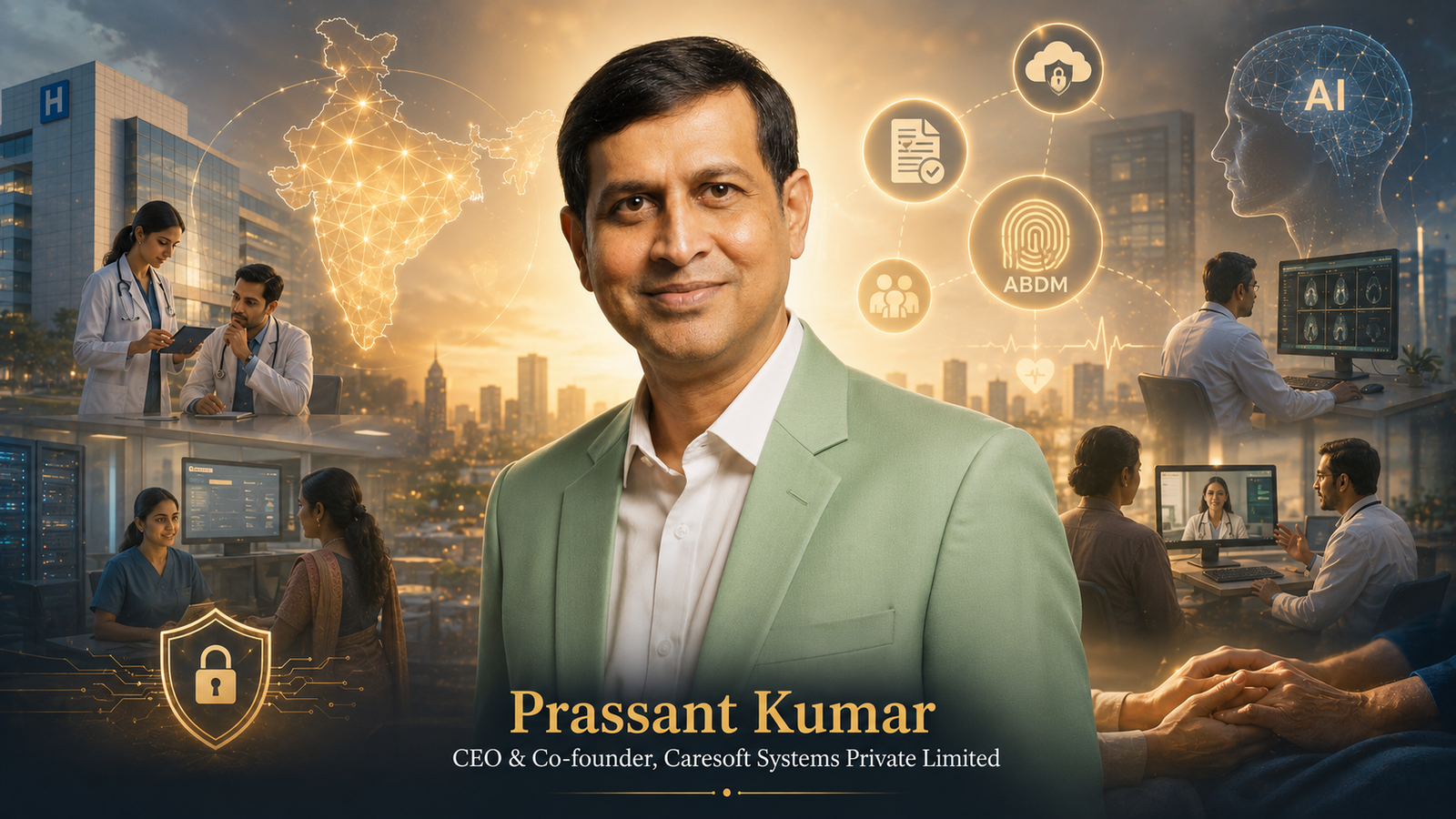
How 25 years of healthtech transformed Indian hospitals, and why people, trust and usability remain central to lasting change.
Looking for a Shorter Overview?
AI Summary
Key Moments
Shift from paper to bedside tech
Technology moved from billing back‑office tools to real‑time clinical care at the patient’s bedside.Cloud replaces on‑premise servers
Hospitals now rent intelligence via SaaS, allowing even small nursing homes to access enterprise‑grade software.Human adoption remains the bottleneck
Success depends on trusted local champions; software fails when nurses and doctors find it slower than paper.Underserved small hospitals need focused solutions
Most innovation targets large chains, leaving 25‑bed clinics in Tier‑2/3 cities without affordable, simple tools.A founder’s view of how technology reshaped Indian hospitals, and why the hardest problems were never technical.
When I started building software for hospitals, most of them ran on paper. Patient registers were thick ledgers, bills were handwritten or typed, and the medical records room was a maze of files that only one or two long-serving staff members could navigate. For many hospital owners, “computerisation” meant a desktop in the billing section. Anything beyond that was seen as an expense, not an investment.
Twenty-five years later, I watch hospitals book appointments on WhatsApp, share lab reports on patients’ phones, and link records to a national digital health ID. The transformation is real. But after more than two decades of building technology for 1,000+ hospitals in India and abroad, I’ve learned that the story of healthtech is not only about what changed. It is equally about what stubbornly stayed the same.
What has changed
Technology moved from the back office to the bedside. Early hospital software was about billing and accounts: making sure money was counted correctly. Today, technology sits at the centre of clinical care: doctors’ notes, nursing charts, lab and radiology workflows, pharmacy, and discharge. Digital tools now shape the patient’s actual care, not just the hospital’s revenue.
Hospitals moved from owning servers to renting intelligence. For years, every hospital needed its own server room, backup routines, and an IT person to keep things running. Cloud and SaaS have changed that. A 30-bed nursing home in a small town can now access the same quality of software as a large city hospital, paying monthly instead of investing lakhs upfront. This shift, more than any single feature, will decide whether digital healthcare reaches all of Bharat.
Patients became digital before hospitals did. Today’s patient compares hospitals on Google, expects reports on WhatsApp, and gets frustrated when asked to fill the same form twice. Patient expectations are now pushing hospitals towards technology faster than any vendor pitch ever could.
The government became an enabler. The Ayushman Bharat Digital Mission (ABDM) has done something the private sector alone could not: create common digital rails for health records. For the first time, a patient’s history can follow them from one hospital to another. There is a learning curve, and compliance can feel like a burden, but the long-term direction is clear and right.
AI arrived, with both promise and noise. Voice-to-text documentation, intelligent reporting, and predictive insights are no longer science fiction. But hospitals need to separate genuine value from hype, and technology companies have a responsibility not to overpromise.
What still hasn’t changed
Adoption is a people problem, not a software problem. The best software fails if nurses find it slower than paper, or if doctors feel it gets in the way of patients. Every successful implementation I have seen had one thing in common: someone inside the hospital who believed in the change and led it. Technology does not transform hospitals. People using technology do.
Small hospitals remain underserved. India’s healthcare is delivered largely by small and mid-sized hospitals and nursing homes, especially in Tier-2 and Tier-3 cities. Yet much of the industry’s innovation is still designed for large corporate chains. The real opportunity, and the real responsibility, lies in building affordable, simple tools for the hospital that has 25 beds, not 500.
Data still lives in silos. Despite decades of digitisation, many hospitals still run separate systems for billing, lab, pharmacy, and records that barely talk to each other. Integration remains the unglamorous work that makes or breaks digital healthcare.
Trust is still earned slowly. Hospital owners buy technology the way they choose a doctor: through referrals, reputation, and relationships. Startups entering this space often underestimate how long the sales cycle is. In healthcare, trust is built over years and can be lost in a single failed go-live.
Also read: When Brands Stop Shouting, What Happens to Marketing?
Lessons for the next generation of healthtech founders
If I could share three lessons with anyone building in this space today, they would be these:
- Solve for the user who has the least time. Design for the nurse on a night shift and the doctor seeing 60 patients a day. If it works for them, it works.
- Build for Bharat, not just India’s metros. Affordability, simplicity, and local support will matter more than feature lists.
- Stay long enough to earn trust. Healthcare rewards consistency. The companies that last are the ones that keep showing up after the software is installed.
The next 25 years
India has a rare opportunity. With digital public infrastructure, a young tech talent pool, and a massive unmet need, we can build a healthcare technology model the world learns from. Indian healthtech is already serving hospitals across Africa, the Middle East, and beyond.
But the goal was never technology for its own sake. The goal is simpler: that every patient, in every town, receives care that is faster, safer, and more dignified because the systems behind it work.
We have come a long way. The most important work is still ahead.
What has been the biggest technology shift in your hospital? I’d love to hear from readers.
Written by Prassant Kumar, CEO and Co-founder of Caresoft Systems. He is a healthtech entrepreneur, angel investor, and startup mentor.