Discover how a copywriter adapts to an AI-driven world, balancing technology, creativity and human emotion to create meaningful brand content.
Looking for a Shorter Overview?
AI Summary
Key Moments
Career Evolution in AI Era
Anjali transitioned from copywriter to content consultant over 20 years as technology transformed the industry.AI as a Tool, Not a Replacement
She illustrates that AI functions like a knife‑its outcome depends entirely on the human wielding it.Unique Human Value in Content
AI cannot replicate the emotional nuance and brand‑specific personalization that human creators bring to content.Enduring Power of Original Writing
She concludes that genuine, emotionally resonant writing remains irreplaceable regardless of technological advances.When I drive around Pune city, I see hundreds of billboards with taglines shouting for eyeballs and selling a dream, wooing a life goal, or creating a need where none exists in a prospective customer’s mind. As I read superlative words and adjectives pulled from dictionaries to describe a new home, jewellery, or job opportunity, I can’t help but wonder… does this really work?
Flashback to 2005, when I began my journey as a Copywriter. A title that drew attention because, back then, being able to write good copy was a valuable skill. It was a time when you couldn’t prompt an AI-based chat app to spit out an entire video script, an impressive brochure, or even a tagline in under 60 seconds. I would spend an entire day coming up with quirky punchlines or advertising campaigns stored on a server in my own brain! One would also get tagged as a type of copywriter based on which sector one wrote for the most. For example, a Real Estate Copywriter, a Finance Copywriter, or a Technical Writer. It would become your forte.
Since then, I have built my career on the written word. Words meant to connect with the reader and make them curious to learn more. From 2005 to 2026, my role evolved from Copywriter at an advertising agency to Creative Advertising Manager at a radio station, to Account Manager at a social media firm, to my current role as a Content Marketing Consultant.
Over these 20 years, my generation has seen technology introduced and evolve at a phenomenal rate. I was sent to a ‘computer class’ to learn how to use MS Word and Excel, where the computer would take about 7–10 minutes to start up with a DOS prompt, not 30 seconds with just the flip of a laptop lid. Today, people use AI tools on their super-fast devices to deliver content in mere seconds. What would take me an entire day can be done in about 30 minutes or an hour.
Isn’t this a challenge for your role? Won’t AI take over your job? What will you do if everyone starts creating their own content? I have been asked these questions many times. The answer I might not elaborate on with others is here for you to read.
Also read: How I Market “The Oven Guy” on a Shoestring Budget
Yes, AI has brought many challenges to traditional advertising and marketing professions like design, writing, proofreading, editing, and so on. But at the end of the day, it is still a machine that cannot think like a human. Yes, it can curate a piece for you by looking at content that millions of other humans have created. Still, it cannot add the emotion that you know needs to go with a particular social media post, article, or visual. That is where I can still add value to my clients. Personalising content to match the brand voice. Adding a touch of colour that’s unique to a brand’s identity, or placing a specific object in a frame while shooting and editing videos from scratch.
AI is a tool, very much like a knife. AI will either use the knife to stab someone or cut a juicy apple. It all depends on the human wielding the tool. As a Content Marketing Specialist, I use AI tools to understand global trends, conduct research, and build broad structures that I can then personalise for my clients or projects.
In conclusion, my love for writing will always remain, no matter how much technology evolves. My thoughts, ideas, and emotions are mine to share with the world. If ChatGPT generated this article, you might not feel that nostalgic ‘me too’ feeling you felt when I spoke about Super Mario! Am I right? Creating content that connects can only come from a space of thinking, imagining, and creating something original.
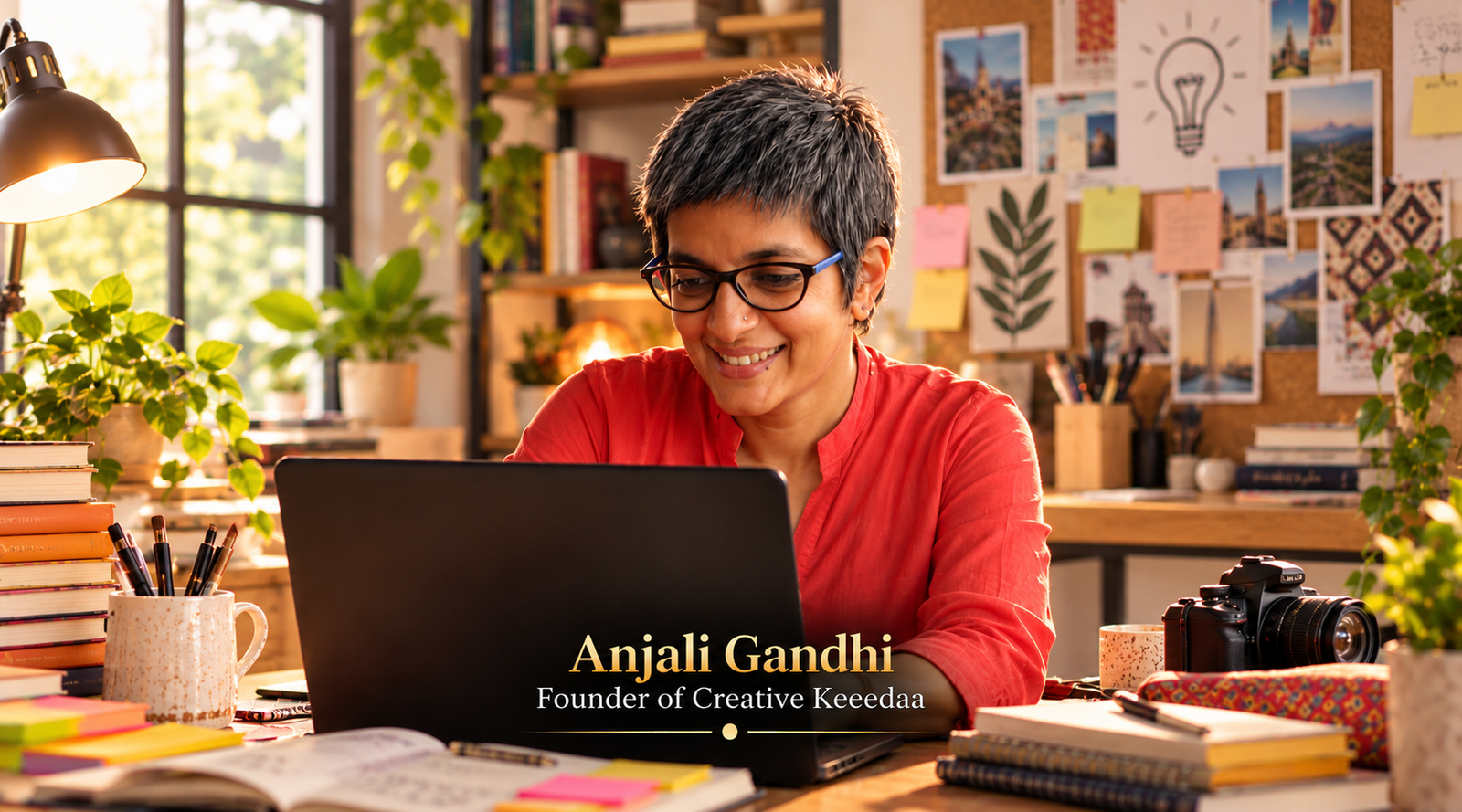
– Written by Anjali Gandhi, Founder of Creative Keeedaa, and a brand and communications professional with 20+ years of experience across advertising, content, social media, digital marketing, radio, events, and integrated brand communications. She is a diverse content writer who has worked for global clients and also loves writing about life’s philosophies and the stories of people she gathers from her travels around the country.