Are direct web sales hurting you Discover why channel conflict is the ultimate distribution threat?
Looking for a Shorter Overview?
AI Summary
Key Moments
Direct Online Sales Trigger Conflict
Brands opening their own websites undercuts retailers and leads to channel conflict.Pricing Disparities Cause Friction
Different retailers charging varied prices for the same product creates channel conflict.Exclusive Product Allocation Creates Unfairness
Giving new designs only to large retailers alienates smaller partners and fuels conflict.Coordinated Strategies Preserve Partnerships
Clear distribution policies, pricing alignment, and joint digital campaigns reduce conflict and boost sales.Manufacturers often sell their products through several retail partners to reach more customers. But when those partners compete for the same local shoppers, it can create Channel Conflict and strain their relationships.
Resolving Channel Conflict quickly helps businesses protect partnerships and avoid unnecessary competition. McKinsey research suggests that customers who shop across multiple channels spend 10% more online and 4% more in stores than customers who use only one channel. When partners work together, businesses can serve these customers more effectively and capture the additional sales.
How Brands Navigate Opening Direct Internet Websites in Channel Conflict
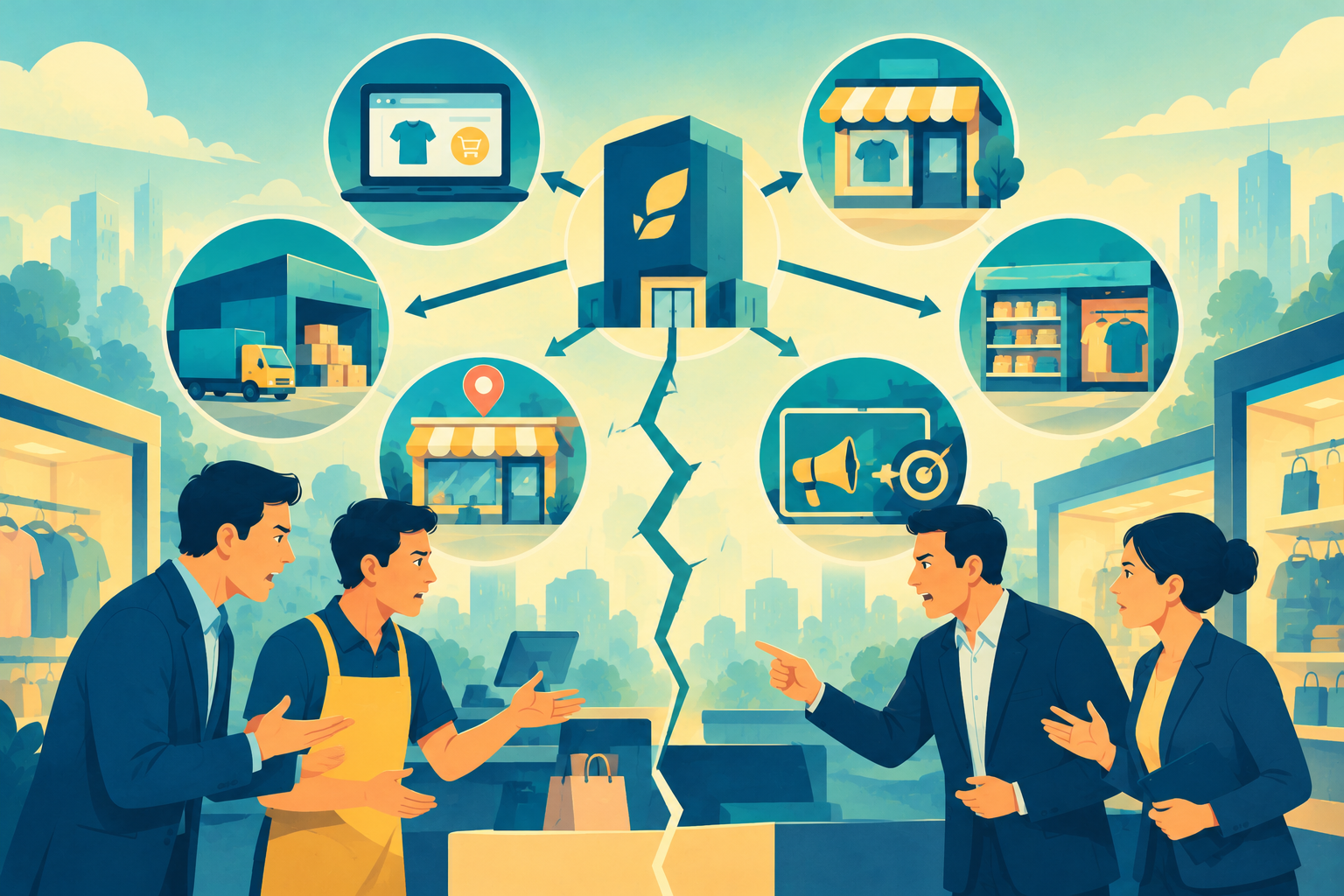
Manufacturers sometimes open their own websites to sell directly to customers, even when local retailers carry the same products. If a clothing company begins selling shirts online at different prices or under different terms, store owners may feel undercut. This can lead to Channel Conflict.
Forrester reports that more than 75% of brand manufacturers are concerned about potential Channel Conflict with retail or wholesale partners as they expand their digital sales. If retailers stop ordering, the brand may lose valuable wholesale sales. Clear pricing and coordination with retail partners can help businesses manage this conflict.
When different retailers charge different prices for the same product, it can create Channel Conflict. For example, shoppers may choose a supermarket selling soap for $2 over a pharmacy charging $3, leaving the smaller store at a disadvantage.
As we discussed in our previous article about Revenue Growth Management, manufacturers can help reduce this tension by coordinating pricing and promotions with retail partners. When retailers can compete fairly, they may be more willing to maintain their relationship with the manufacturer and continue placing wholesale orders.
A shoe manufacturer might give a new red design exclusively to a large national retailer while withholding it from smaller local stores. Local retailers may see this as unfair, creating Channel Conflict. If shoppers can find the shoe only at the larger chain, smaller stores may lose customers and reduce future orders from the manufacturer.
To protect relationships with retail partners, manufacturers should set clear distribution policies and communicate how new products will be allocated. Fair, consistent access can help retailers feel supported and encourage long-term partnerships.
A television manufacturer and a local electronics store may both run online ads to reach the same shoppers. If they bid against each other for identical search terms, they can drive up advertising costs and create Channel Conflict.
To avoid competing for the same audience, manufacturers and retailers can coordinate their digital campaigns. Working together can reduce wasted ad spend and help both businesses attract customers more efficiently.
A coffee bean manufacturer may sell directly to a local restaurant, while a distributor also tries to supply that same customer. This overlap can create Channel Conflict, making the distributor feel undercut and less willing to carry the manufacturer’s products.
To reduce disputes, manufacturers can define clear territories or customer responsibilities for each distributor. Setting expectations in advance can help partners work together and support more reliable sales.
A luxury watchmaker’s retail partners help shape how customers perceive its products. If expensive watches are displayed on cluttered tables in discount stores, premium retailers may feel the presentation conflicts with the brand’s image. This can create Channel Conflict and weaken the customer experience.
Also read: Why Does Creator Licensing Matter When Brands Reuse Influencer Content in Advertisements?
To protect its standards, the watchmaker should choose retail partners carefully and assess how they display the products before signing agreements. A well-matched retail environment can support the brand’s positioning and its relationships with partners and customers.
Loved this article? Read more insightful articles on Brand Custodian.
–Written by Rajnish Kumar, a copywriter and strategist with a background in fast-paced journalism, who explores the gap between what brands promise and how consumers actually behave.