Stop making customers feel insecure. Learn how Dove used honest beauty marketing to completely change the advertising industry.
Looking for a Shorter Overview?
AI Summary
Key Moments
Dove switched from fake models to real women
The brand stopped using airbrushed actresses and started featuring authentic everyday women in marketing.The 2004 street poster campaign
Dove printed massive photos of ordinary women with real skin showing, challenging conventional beauty standards.The Evolution video exposed makeup tricks
A viral video revealed how heavy makeup and computer editing create unrealistic beauty images.The drawing test experiment
A psychological test showed women perceive their faces more negatively than strangers do.Most soap companies pay handsome actresses to stand in front of a camera. When an ordinary woman looks at a printed magazine, she sees a fake face with no spots or wrinkles. This old habit makes buyers feel bad about their own skin when they walk into a shop. But one white soap company decided to change exactly how Beauty Marketing works.
True Beauty Marketing happens when a factory stops using computer tricks and simply shows a normal human face. Instead of paying famous movie actors, the managers asked regular women walking down the street to stand in front of their cameras.
How Dove Beauty Marketing worked
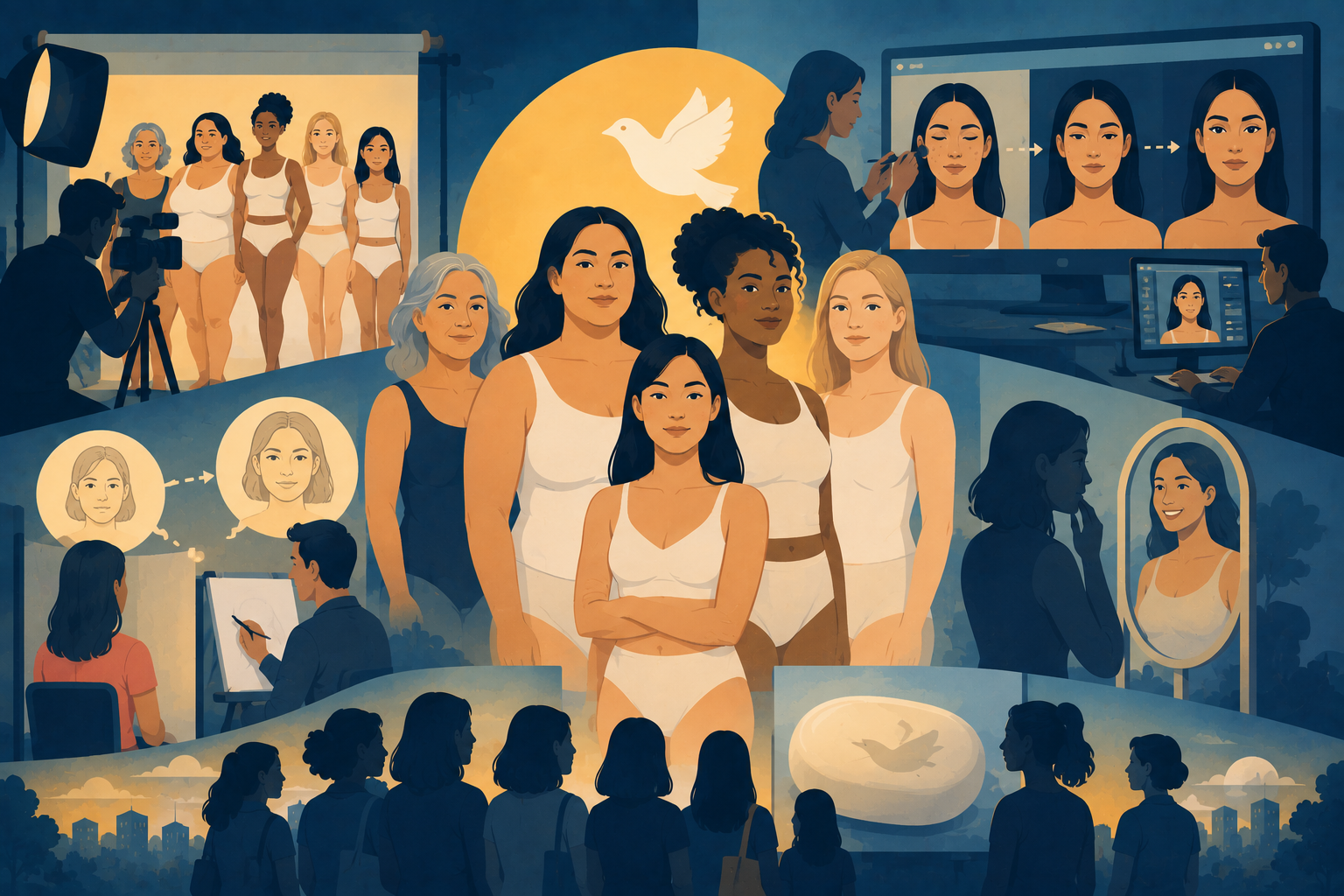
In 2004, the Dove soap brand did something very unusual on large street posters. Most companies hide wrinkles and dark marks by using computer software to hide spots on a photo, but this company used direct beauty marketing to show real human skin. The factory printed huge photos of ordinary women wearing simple white cotton underwear.
These women were different sizes, had grey hair, and showed real skin marks. Next to their large faces, the company printed words on the paper asking whether the woman was “fat” or “fabulous”. This honest Beauty Marketing made regular shoppers stop walking and look closely at the large paper posters.
Two years later, the office managers paid for a short television video called “Evolution”. The screen showed an ordinary woman sitting in a chair. A fast video showed makeup workers putting thick makeup on her face and hot irons on her hair. Then, the video showed computer workers making her neck longer and her eyes bigger on a screen.
They even removed every tiny dark mark from her cheeks. This clear beauty marketing proved to buyers that the perfect faces on street posters are completely fake. A soap company actually spent its own money to show buyers how the picture trick is done.
The managers carried out another physical test a few years later. They hired a man who draws faces for the police. Sitting behind a curtain, he drew a woman after hearing only her description of her own face. Then he drew the same woman again, this time after listening to a stranger describe her. The second drawing always looked much happier and nicer.
This specific drawing test showed women that they think their own faces look worse than they really do. When buyers watched this drawing test on their phone screens, they quickly shared it with their friends.
Using real faces instead of fake actors brought in huge cash for the factory. Before this change, the company made about $2.5 billion a year. Ten years later, yearly cash sales had reached four billion dollars. This huge increase in money proves that honest Beauty Marketing really makes a buyer open her purse.
A regular woman doesn’t want to feel bad when buying a simple white bar of soap made with milk. She gladly pays cash to a company that tells her she already looks good enough.
Today, many other companies try to copy this marketing process. They also feature regular women in their television ads. But buyers still trust the white soapbox the most because it was the first to do it.
Also read: Gap: How Logo Failure Turned a Rebrand Into a Crisis
This daily buying habit shows just how strongly Beauty Marketing keeps cash coming into the shop. A business gets more daily buyers simply by turning off the computer software and using a real photo of a normal human face. The factory makes huge daily cash today because its Beauty Marketing never prints fake faces for the person buying the soap.
Loved this article? Read more insightful articles on Brand Custodian.
–Written by Rajnish Singh, a copywriter and strategist with a background in fast-paced journalism, who explores the gap between what brands promise and how consumers actually behave.