Fear makes buyers seek safety. See how understanding confidence cycles lets companies adapt their marketing when the market tightens.
Looking for a Shorter Overview?
AI Summary
Key Moments
Trust Drives Spending in Downturns
Buyers tighten budgets and only invest in brands they fully trust during low-confidence periods.Growth Requires Timing to Confidence Peaks
Top brands launch premium products when consumers feel financially secure to drive rapid expansion.Marketing Messages Must Shift with Mood
Companies pivot from luxury features to durability and value when confidence falls, and back to status when it rises.Data on Economic Signals Informs Strategy
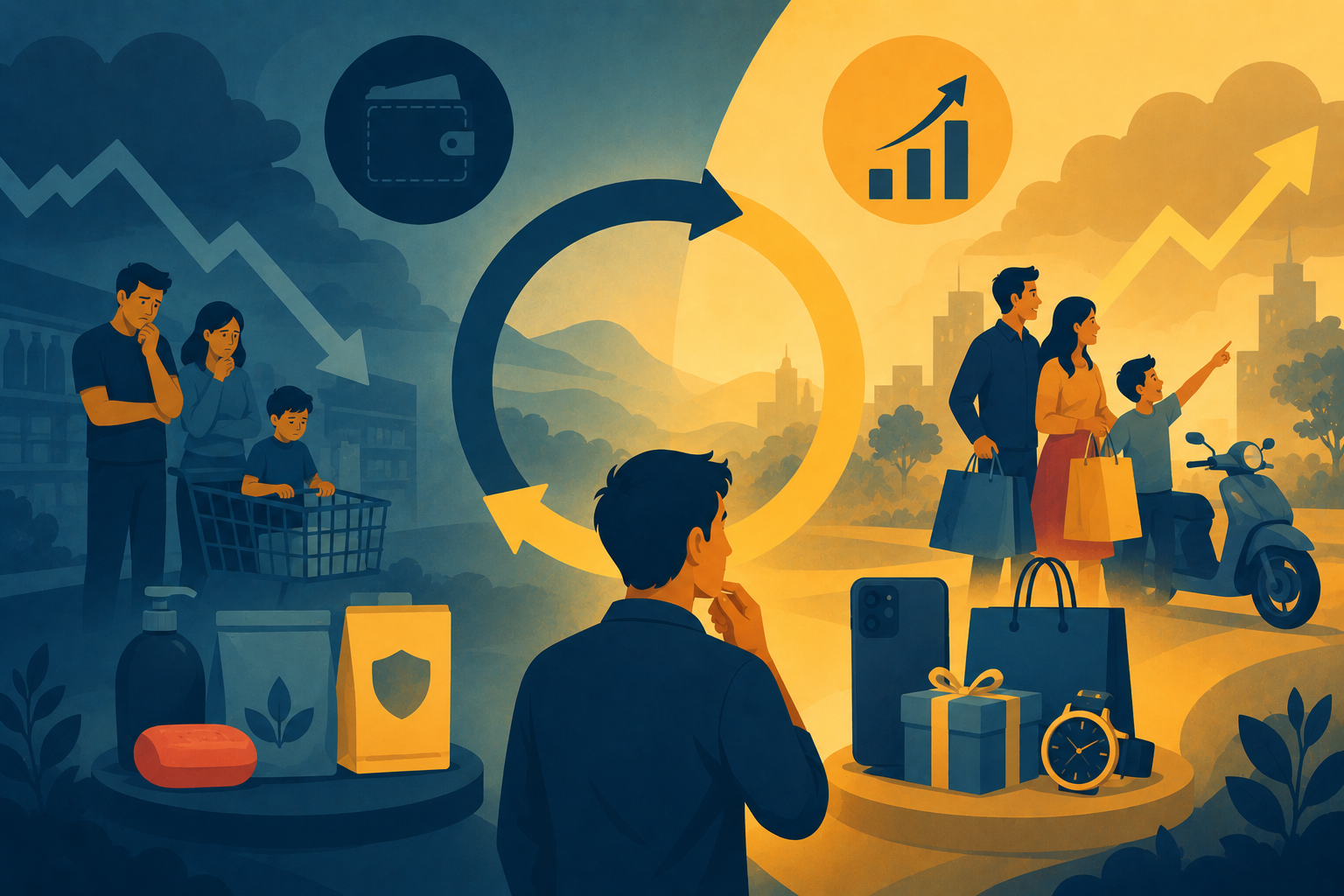
Monitoring job news, salary trends, and sentiment helps firms decide when to push growth versus play safe.Think about how a middle-class family decides to buy a new motorcycle. If the daily news is full of reports about job cuts and rising prices, that family might delay their big purchase plan for a while and wait another year.
But if the local economy feels stable and yearly bonuses are announced, that same family will happily book a brand-new bike before the festival season begins. They feel safe spending their hard-earned money.
This simple shift in human behaviour is exactly what drives confidence cycles. When a business understands how this collective mentality works, it can survive tough times and grow much faster when the market becomes stable.
How Confidence Cycles Change Daily Shopping
Shopping is not always just about needing a physical item. It is often driven by how secure a buyer feels about their future income. During periods of rising confidence, people do not mind spending more than their actual income. A person might buy a lakh-rupee smartphone on EMI even if his monthly salary is only 30k.
When marketers see a stable economy, they launch higher-end products to match the positive mood. They focus their advertising on comfort, status, and lifestyle upgrades. However, the market never stays in this comfortable phase forever. When the news turns negative, buyers quickly limit their daily budgets. The desire to show off fades and is replaced by a strong need to protect their savings for emergencies.
During unstable periods, companies that refuse to adapt their marketing strategy can lose money very quickly. If a smartphone brand keeps promoting expensive models when people are focused on daily needs like paying rent, sales will naturally fall to zero. Smart businesses completely change their strategy during these slow months.
Instead of selling luxury features, these companies focus on durability and basic value. The advertisement reminds buyers that their new product will easily last five years without breaking down.
Some brands even offer smaller, cheaper packaging to help families afford daily essentials. Adapting to these shifting moods is the only way a brand can keep selling when the economy is tight.
Look closely at the fast-moving consumer goods sector for a perfect example of this survival tactic. When buyers worry about the future, they do not suddenly stop buying bathing soap or cooking oil. But the way they shop changes completely. Instead of trying a newly launched premium body wash, a shopper will return to a trusted, affordable brand like Santoor or Lifebuoy.
This shows that confidence cycles push buyers toward safety and familiar habits. A brand that delivers a dependable product at a fair price will usually win in cautious periods because it removes the fear of wasting money. In a slow economy, buyers only spend money on brands they completely trust.
Eventually, people stop worrying. As salaries rise and the job market improves, cautious behaviour begins to fade. The buyer who saved money for an entire year suddenly wants to feel rewarded for that discipline. Consumers feel bold enough to take a small financial risk again.
This is the best time for companies to introduce exciting new features, fresh packaging, and premium services. The fastest-growing brands are the ones that quietly track confidence cycles and launch their products exactly when people are ready to spend. They know exactly when to push for growth and when to play it safe.
Also read: Why Brand Optionality Creates Competitive Advantage
A business cannot control the national economy, but a smart company can easily control how it speaks to its buyers. By paying close attention to confidence cycles, a brand can always offer the right product at exactly the right time.
Mastering these confidence cycles ensures that whether a buyer wants a luxury upgrade or a reliable budget option, the business is ready to serve them. This kind of flexibility is what builds true long-term market leadership.
Loved this article? Read more insightful articles on Brand Custodian.
–Written by Rajnish Singh, a copywriter and strategist with a background in fast-paced journalism, who explores the gap between what brands promise and how consumers actually behave.