Feature matching is dangerous. See how beating consumer comparison turns ordinary items into an unstoppable success.
Looking for a Shorter Overview?
AI Summary
Key Moments
Comparison Overwhelms Decision Making
Too much product comparison leads to choice overload and decision fatigue.Brands Copy Instead of Innovate
Pressure to match features forces manufacturers toward identical designs.Excess Features Reduce Reliability
Adding unnecessary components complicates products and hurts user experience.Nintendo's Category Shift Strategy
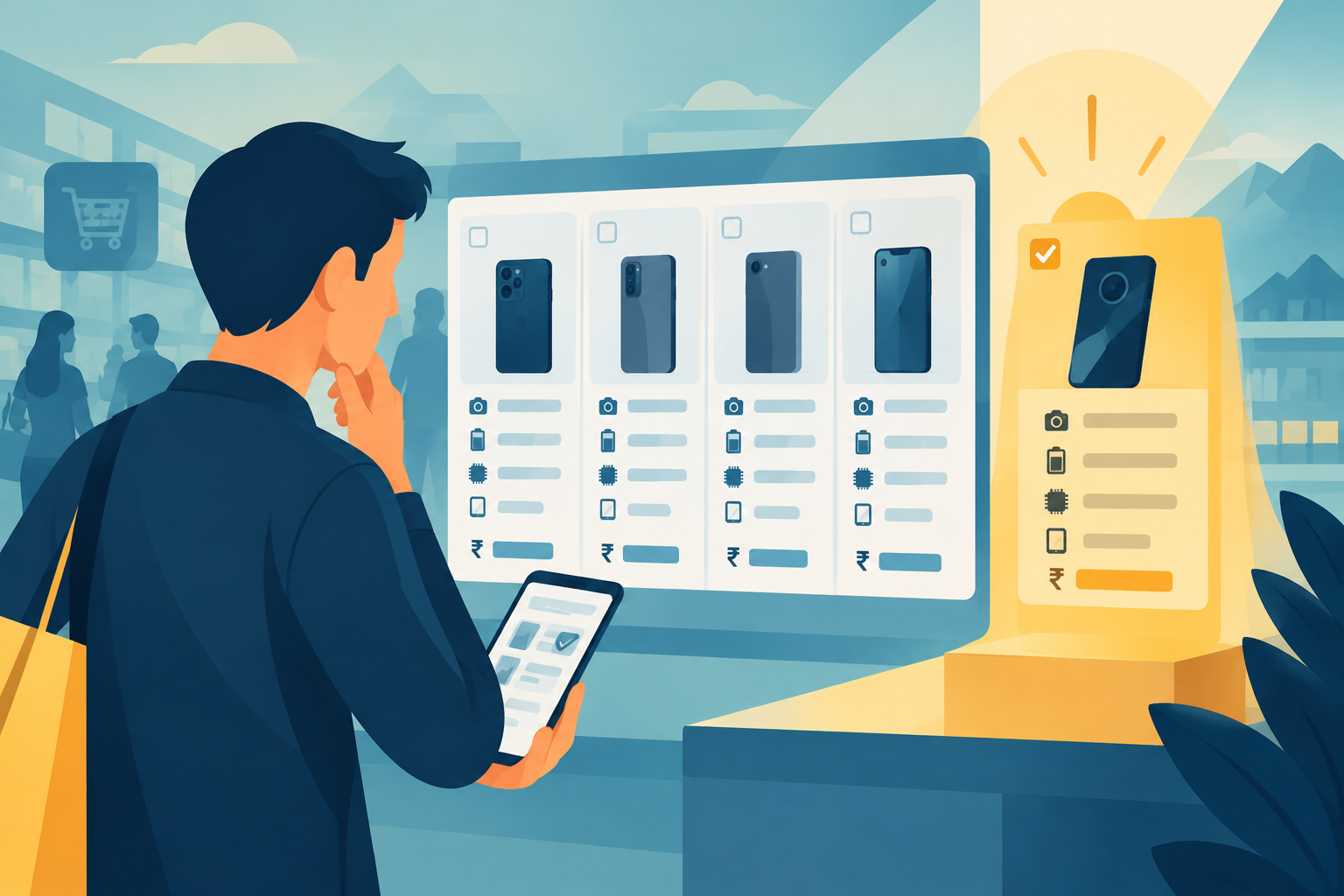
Creating a distinct product category avoids direct comparison.A shopper opens an online shopping app and searches for a new microwave oven. Each product has a small checkbox, allowing the shopper to select several items and compare their technical details in a single table.
This feature encourages immediate Consumer Comparison before the buyer has even seen or handled the actual appliance. When similar products appear side by side, it becomes harder for manufacturers to create a distinct identity. Behavioral economist Dan Ariely’s pricing research suggests that customers rarely judge a product completely on its own.
Instead, they compare it with the closest alternatives available on the screen. Frequent Consumer Comparison can make shoppers overlook unique brand features and focus mainly on finding the lowest price.
Danger of Direct Consumer Comparison Online
Mobile phone brands face this challenge every month. A company may launch a new device with a particular camera lens, only for three competitors to release phones with the same lens within a few weeks. Manufacturers often copy these features because online shopping platforms encourage direct Consumer Comparison.
If a brand leaves out a popular feature to create something different, shopping algorithms may rank its phone as a less attractive option. This pressure pushes manufacturers to produce devices with nearly identical designs and specifications.
As we discussed in our recent article about Product Naming, distinctive wording can influence customer expectations. However, constant Consumer Comparison often forces brands to imitate one another just to remain visible in search results, leaving shoppers to focus mainly on price.
Giving shoppers too much information can make it harder for them to choose. Shopping apps often display long lists of technical details, including battery capacity, processor speed, and screen resolution. While these figures may seem helpful, they can create excessive Consumer Comparison and leave customers feeling overwhelmed.
Psychologist Barry Schwartz’s research on choice overload suggests that having too many options can lead to confusion and decision fatigue. After comparing dozens of numbers, a shopper may feel too tired to make a purchase and simply close the app. Brands can lose sales when they provide endless specifications instead of highlighting one clear reason to choose their product.
A smart business can avoid excessive comparison by creating a completely different product category. Nintendo provides a good example with its gaming consoles. While Sony and Microsoft compete by offering faster systems and more powerful processors, Nintendo took a different approach with the Switch by focusing on portability rather than raw performance.
This hardware decision made direct Consumer Comparison more difficult. Shoppers could not easily place the Switch in the same category as larger, high-powered consoles. Effective Consumer Comparison usually requires two products to serve the same purpose in a similar way. By creating a distinct gaming system, Nintendo encouraged customers to judge the Switch on its own strengths and maintained strong sales without relying on lower prices.
Many companies try to increase sales by adding dozens of extra features to basic products. Engineers may install digital screens in washing machines or add internet connectivity to ordinary refrigerators simply to compete with simpler rival products during Consumer Comparison.
However, adding more electronic components can make products less reliable and harder to use. A customer may pay a high price, take the appliance home, and quickly become frustrated by its complicated controls. Matching a competitor’s specifications is useful only when the product performs well in everyday conditions. A smart manufacturer removes unnecessary features and focuses on dependable performance.
Loved this article? Read more insightful articles on Brand Custodian.
–Written by Rajnish Kumar, a copywriter and strategist with a background in fast-paced journalism, who explores the gap between what brands promise and how consumers actually behave.



