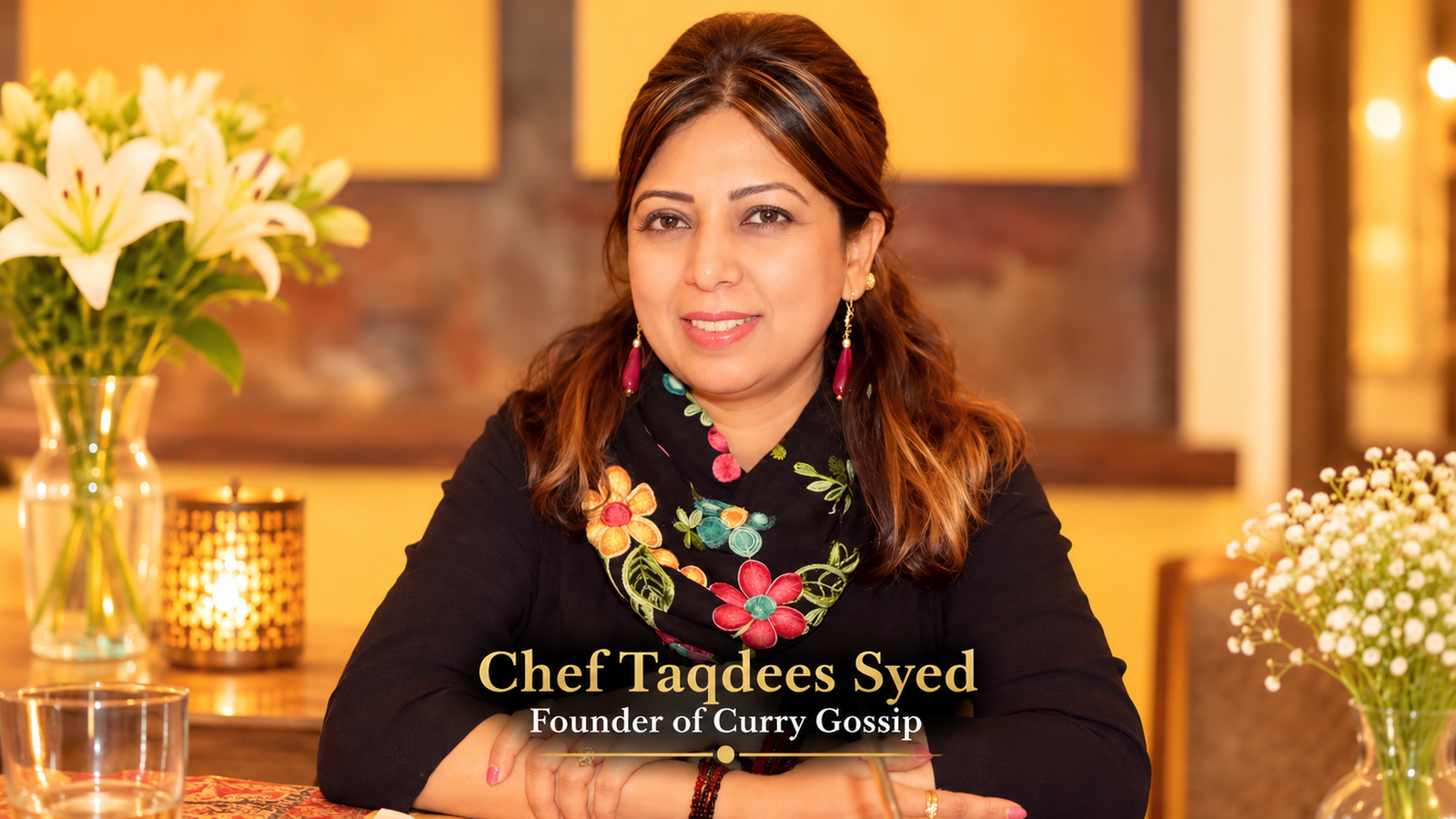
Discover how Chef Taqdees Syed built Curry Gossip in The Hague through authentic experiences, word of mouth and community.
Some brands begin with a business plan, a carefully researched target audience and a marketing budget. Others begin with something much simpler: a desire to bring people together.
Curry Gossip, my home dining experience in The Hague, Netherlands, belongs to the second category.
I have always believed that food is about much more than what is served on a plate. It carries memories, reflects cultures, connects generations and creates opportunities for conversations that might never happen otherwise. Growing up in Mumbai, I experienced this first-hand. Our home was rarely quiet, with family members, relatives and friends moving in and out. Food was always at the centre of these gatherings. Cooking was something I learnt from my mother and grandmother, and eventually, it became my way of expressing creativity.
My academic background is in Sociology and Urdu Literature, and I also hold a degree in Indian Fashion Designing. Although I have no formal culinary training, my love for art, design and storytelling has always influenced the way I approach food. I often think of my spice cabinet as a giant colour palette. Every ingredient has a purpose, every dish has a story, and every meal offers an opportunity to create something memorable.
I never imagined that these interests would eventually come together to create a dining experience in the Netherlands.
A Community Need That Became a Business
The idea behind Curry Gossip took shape during COVID-19. Like many people, I found myself thinking about the importance of community and the small things that make life feel connected. I began helping people in my local community by preparing home-cooked meals, particularly for those who needed them.
The response was incredibly encouraging. What started as an effort to help gradually developed into something bigger. People appreciated the food, but they also valued the familiarity, warmth and personal touch that came with it.
That response made me realise something important. There was an audience for the kind of food and experience I was creating. More importantly, there was a genuine need for spaces where people could connect over something as universal as a shared meal.
I eventually decided to take the next step, obtain the necessary licence and establish Curry Gossip as a home dining venture.
As the idea began taking shape, my brother-in-law, Misbah Syed, played an important role in helping me think about it from a business perspective. He offered valuable marketing advice and guided me on building a social media presence. His inputs helped me look beyond the kitchen and understand how to give the concept a clearer direction.
This was an important part of the journey. While the idea was born out of a personal passion and community response, turning it into a sustainable venture required planning, structure and an understanding of how to communicate its value.
For anyone building a business, there is something valuable in that approach. Sometimes, the strongest starting point is not identifying a market opportunity on paper, but recognising a need that already exists around you and finding the right people who can help you develop it.
The Experience Is the Brand
When people think about the food business, the immediate focus is often on the menu, presentation, pricing and location. These are important, but Curry Gossip has taught me that the experience surrounding a product can be just as significant as the product itself.
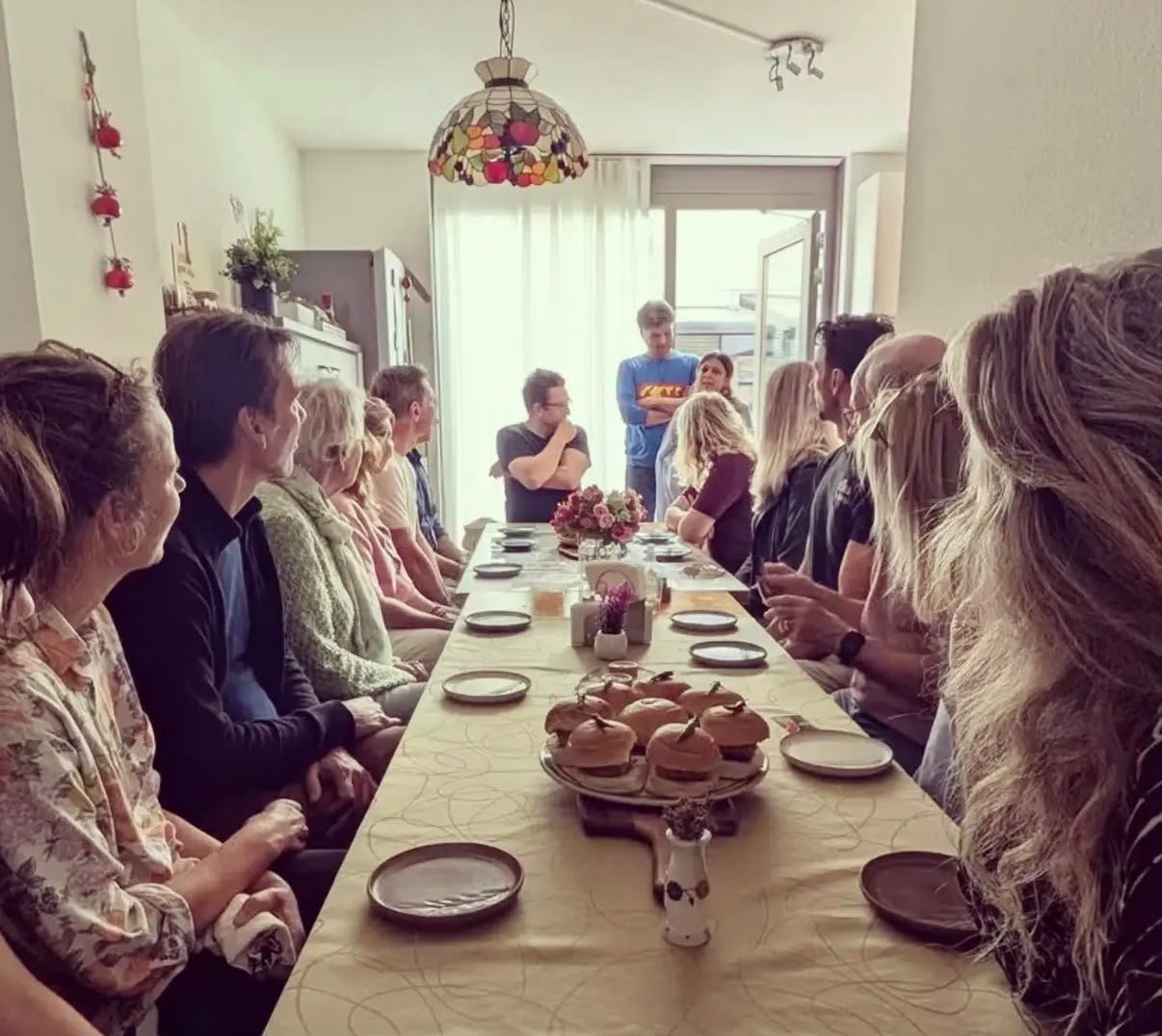
Curry Gossip is not a conventional restaurant. It is an intimate dining experience hosted in our home, where we welcome between two and six guests for a five-course meal. The same curated menu is served to everyone sharing the table that evening.
The limited seating is intentional. It allows us to maintain the personal nature of the experience and gives guests an opportunity to interact with one another.
Food is, of course, central to the evening. Our menu draws inspiration from cherished family recipes, memories of Mumbai and dishes discovered during our travels. From egg bhurji and bun keema to aloo parathas, shami kebabs and masala chai, the food reflects the flavours and traditions I grew up with.
However, what makes the experience different is everything that happens around the food.
Guests are encouraged to talk, share stories, discuss books, films and television dramas, and enjoy the lighter side of human interaction. We love a little gossip, playful teasing and conversations that continue long after a dish has been served.
We also welcome people from different nationalities and cultural backgrounds. In a city as multicultural as The Hague, the opportunity to bring strangers together around one table is particularly meaningful.
This is where I believe Curry Gossip has found its identity. We are not simply offering Indian food. We are creating an environment where people can experience Indian hospitality while discovering something about one another.
From a marketing perspective, this distinction matters. A product can be replicated, a recipe can be learned and a menu can be recreated. But the combination of a founder’s personality, the atmosphere, the conversations and the relationships built around an experience is much harder to imitate.
The experience itself becomes the brand.
Why We Never Needed to Spend on Marketing
One of the most interesting aspects of Curry Gossip’s journey is that I have never spent money on paid marketing.
There have been no elaborate advertising campaigns or paid promotions. However, that does not mean marketing was absent from the journey. Alongside the early business planning and marketing advice from Misbah Syed, we have used social media to give people a glimpse into our kitchen, our food and the experiences we create.
Over time, the biggest contributor to our growth has been something much more organic: word of mouth.
People come, enjoy themselves and share their experiences with others. Some return with friends, while others recommend us to colleagues, neighbours and family members.
Over time, these individual recommendations have helped build a community around Curry Gossip.
I do not think there is a secret formula behind this. It comes down to giving people an experience they genuinely want to talk about.
This experience has reinforced my belief that marketing does not always begin with visibility. It begins with the value people associate with a brand.
A business can spend considerable resources attracting attention, but attention alone does not guarantee trust or loyalty. The real test is what happens after someone experiences the product or service. Do they feel the experience was worth their time? Would they recommend it? Would they want to return?
For Curry Gossip, these questions have mattered more than the size of our audience on social media.
The testimonials shared by our guests, both on our website and social media platforms, are particularly meaningful to me. They represent experiences that people have chosen to talk about in their own words. That kind of feedback is valuable because it comes from genuine interactions rather than a carefully constructed brand message.
We have also had the opportunity to host distinguished guests, including Rob Jetten, who visited our home during his tenure as Minister of Climate and Energy Policy and later went on to become Prime Minister of the Netherlands, as well as Member of Parliament Mpanzu Bamenga.
These occasions have been special, but they have not changed what Curry Gossip stands for. Whether someone is a public figure or a guest discovering our table for the first time, everyone is welcomed with the same warmth.
There is an important lesson here for smaller businesses. Word of mouth is not simply a marketing channel that can be switched on. It is an outcome of consistently delivering an experience that people find worth sharing.
Building Trust Through Consistency and Transparency
Food is deeply personal. People want to know what they are eating, how it has been prepared and whether the ingredients meet their expectations.
This is something I take seriously.
Our kitchen philosophy places considerable emphasis on fresh, wholesome and responsibly sourced ingredients. We avoid artificial additives, trans fats, colours and preservatives. We also prepare our own spice blends, seasonings and rubs rather than relying heavily on commercially available mixes.
We cook with olive oil, mustard oil and pure ghee, while trying to incorporate seasonal and local ingredients wherever possible. We are not an entirely organic kitchen, but responsible sourcing and mindful cooking remain important to us.
I also believe in balance and moderation. I value wholesome food, humane sourcing and traditional cooking methods, but I do not believe that enjoying food should become a restrictive exercise. Food should nourish us, but it should also bring pleasure.
Our approach extends beyond the ingredients. We practise zero-waste dining and encourage guests to appreciate the food prepared for them.
There are also certain boundaries that come with hosting people in our personal space. We operate through reservations, communicate dietary restrictions in advance and maintain specific house guidelines. We do not serve alcohol, and we encourage guests to keep conversations respectful and inclusive.
Some of these decisions may seem restrictive from a conventional hospitality perspective. However, they help establish clear expectations and protect the experience we want to create.
For a small business, trust is built through these seemingly ordinary details. Transparency about ingredients, clarity about expectations and consistency in delivery can make a significant difference to how customers perceive a brand.
Also read: The Many Dimensions of Education Marketing
The Power of Being Different Without Trying to Be Different
As a home chef in the Netherlands, I could have approached Curry Gossip by trying to replicate the format of an Indian restaurant. Instead, I chose to create something that reflects who I am.
My experiences in Mumbai, my interest in design, my love for literature, my travels across Europe and the Middle East, and my family’s culinary traditions all find their way into the kitchen.
My husband, who works as a solution architect and is equally passionate about food and storytelling, is an important part of this journey. While I spend much of my time creating dishes and bringing artistic elements to the table, he enjoys exploring the stories behind ingredients and culinary traditions.
Together, we have built something that feels personal to us.
This is also why Curry Gossip does not try to appeal to everyone through a standardised offering. Our dining experience is designed for people who enjoy good food, meaningful conversations and the warmth of a shared table. The intimate format, reservation-only model and curated menu are deliberate choices.
In marketing, differentiation is often discussed in terms of positioning statements, competitive advantages and unique selling propositions. But sometimes, differentiation comes from having the confidence to build something that genuinely reflects your own values.
Customers can recognise when a brand is comfortable with its identity. They do not always need elaborate messaging to understand what makes an experience special.
What Curry Gossip Has Taught Me About Building a Brand
I never set out to become a marketing case study. I simply wanted to cook food that reminded people of home and create a space where strangers could become friends.
But the journey has taught me a few things about building a business.
First, start with a genuine purpose. A business becomes more meaningful when it addresses a real need rather than simply trying to enter an attractive market.
Second, understand that the customer experience extends beyond the product. What people remember is often the emotion associated with an interaction, not just its functional value.
Third, never underestimate the power of consistency. One memorable evening may bring someone through the door, but delivering that experience repeatedly is what builds trust.
Finally, allow your brand to have a personality. People connect with people, stories and shared experiences. A brand does not always need to sound polished or corporate to be taken seriously. Sometimes, being authentic is its greatest strength.
I still consider myself a home chef who loves experimenting, occasionally making a mess in the kitchen and climbing over furniture to get the right photograph of a dish. I am a combination of order and chaos, and perhaps that is reflected in Curry Gossip too.
Today, when guests from different parts of the world sit around our table, share stories and discover common ground over Indian food, I am reminded of why this journey began.
Curry Gossip has grown without a paid marketing budget, but it has never grown without marketing. The early guidance, business planning, social media efforts, every meal, every conversation, every returning guest and every recommendation have played a role in shaping its identity.
Perhaps that is the most important lesson I have learnt: the strongest marketing sometimes happens when a business stops trying to market itself and starts giving people something genuinely worth talking about.
After all, a good meal may bring people to the table, but it is the memories they create together that make them want to return.
– Written by Taqdees Syed, founder of Curry Gossip, whose approach to food brings together creativity, cultural influences and a passion for meaningful experiences. She believes in using food as a medium to connect people, celebrate traditions and create lasting memories around the table.